

Military Convoy for President Doumbouya’s Sierra Leone Visit Sparks Public Outcry
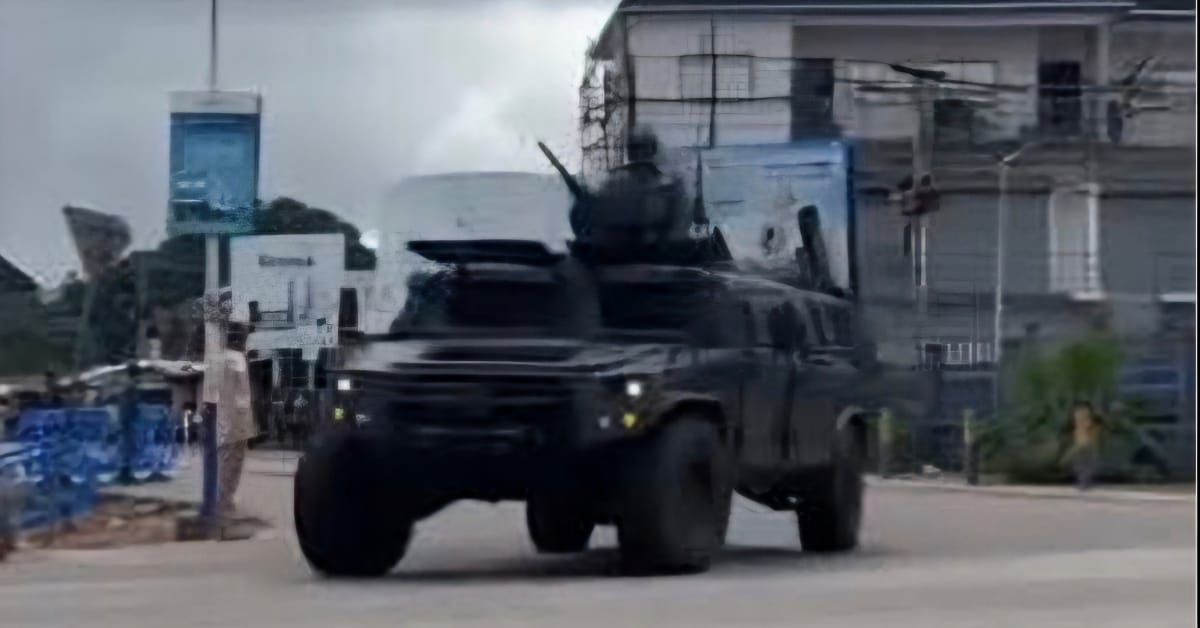
The security arrangements surrounding the visit of Guinea’s President Mamadi Doumbouya to Sierra Leone have generated public discussion, following the arrival of the Guinean leader with armoured vehicles and other security support.
The presence of heavy security equipment during the visit led to questions from some members of the public over whether such measures were necessary for a visiting head of state.
Responding to the concerns, Presidential Spokesperson Alpha Khan explained that the security arrangements were part of standard diplomatic practice and were made to accommodate the protection requirements of a foreign leader visiting another country.

The official stated that although President Doumbouya came to power through a military takeover in Guinea, he is currently recognised as the country’s head of state and his engagements with other nations are conducted through established diplomatic channels.
According to the explanation, Sierra Leonean authorities were informed ahead of the visit about the Guinean delegation’s security requirements, which reportedly included armoured vehicles, helicopter support, and naval security arrangements. The requests were reviewed and approved through relevant state institutions, including security agencies and foreign affairs authorities.
The official emphasised the close relationship between Sierra Leone and Guinea, describing the two countries as more than neighbouring states due to their shared history, cultural connections, and family ties.
“Guineans are not foreigners here. Guineans are part of Sierra Leone, just as Sierra Leoneans are connected to Guinea,” Presidential spokesman Alpha Khan said, highlighting the long-standing relationship between the two nations.
Addressing speculation surrounding the level of security provided for President Doumbouya, the official rejected claims that the measures suggested fear or any unusual intention by the Guinean leader. He argued that world leaders often travel with extensive security arrangements because of the responsibilities and risks associated with occupying the highest offices of state.
The representative referenced global examples, noting that major international leaders, including the President of the United States, operate with significant security protection as part of government responsibility to safeguard heads of state.
The official also clarified reports surrounding President Doumbouya’s early departure from the engagement, explaining that his schedule was influenced by travel arrangements and the need to return to Guinea before nightfall, rather than any disagreement or dissatisfaction.
The debate has renewed public conversations about diplomatic protocol, national security, and the balance between welcoming visiting leaders while maintaining public confidence in state decisions.
President Doumbouya’s visit forms part of ongoing regional engagement between Sierra Leone and Guinea, two countries connected by geography, history, and economic and cultural ties.