

World Bank Report Shows How AI in Sierra Leone is Bridging Critical Skill Gaps in Education
On a continent where only about a third of people use the internet and reliable electricity remains a luxury for many schools and clinics, a quiet transformation is underway. Artificial intelligence is already helping teachers prepare better lessons, health workers track essential medicines, and public servants do more with less — and Sierra Leone is emerging as a real-world testing ground for what’s possible.
A new World Bank report, World Development Report 2026: The Promise of Artificial Intelligence, points to Sierra Leone as proof that AI can deliver tangible benefits even in some of the world’s most resource-constrained settings. But the report also warns that without urgent investment in basic infrastructure, training, and local-language tools, the technology could widen the gaps between countries instead of closing them.
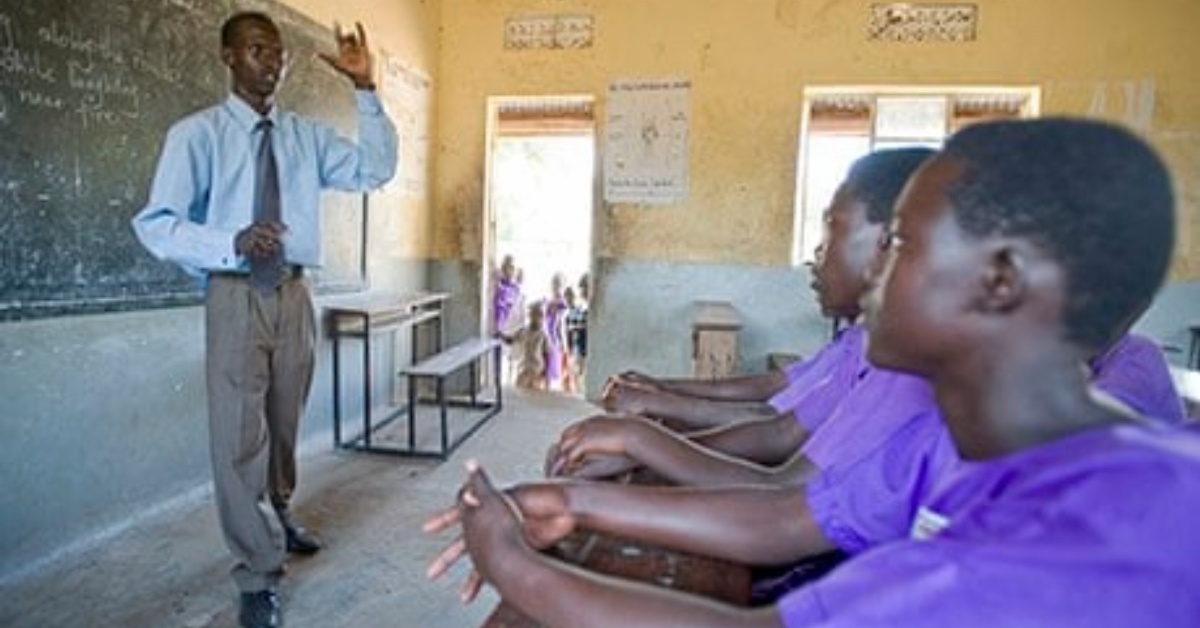
In Sierra Leone, where less than 10 percent of schools have electricity and barely 1 percent have internet access, teachers have increasingly turned to an AI assistant delivered through WhatsApp. More than 500 teachers across the country have used a chatbot called TheTeacher.AI, asking questions about lesson planning, subject content, and how to match instruction to students’ skill levels.

The results have been striking. Teachers in blinded evaluations rated the AI responses as more relevant, helpful, and accurate than results from a standard web search. And the economics are hard to ignore: each AI response consumed 98 percent less data than loading a typical web page, making it far cheaper for teachers who pay for mobile data out of their own pockets.

“Access to digital information is a driver of economic development,” the report’s authors note. But in much of Sub-Saharan Africa, cost and connectivity remain real barriers. AI delivered through widely used messaging apps offers a practical workaround.
The benefits extend beyond classrooms. In Sierra Leone’s health system, a machine learning tool used for supply chain management increased access to essential medicines by 19 percent, according to the report. In a country with severe shortages of trained health workers — just 6.4 per 10,000 people — such gains can save lives.
Meanwhile, researchers are developing low-cost, voice-enabled devices designed to work offline and in Krio, the most widely spoken language in Sierra Leone. The AISHA (AI Strengthening Healthcare Access) project uses a small, affordable computer to function like a “talking medical textbook,” allowing frontline health workers to ask questions and receive reliable, pre-vetted answers even where there is no internet. Field pilots are planned for dozens of clinics across the country later this year.
The World Bank report, released Tuesday, makes clear that this is just the beginning. Jobs in high-income countries are more than three times as likely to face automation risks from generative AI than jobs in developing economies — 14.2 percent compared with 4.5 percent. At the same time, 16.2 percent of jobs in developing countries could see meaningful productivity gains from AI.
“AI has thrown developing economies a lifeline, and they should seize it,” said Indermit Gill, the World Bank Group’s Senior Vice President and Chief Economist. “They do not need large models or big data centers to reap its benefits. By adapting small, low-cost AI tools to local conditions, they can bring better medical care, education, judicial services and agricultural extension within reach of millions.”
But the report warns that the window to act is narrow. Without deliberate action, the technology could deepen inequality, concentrate market power, and weaken trust in public institutions.
Sierra Leone is already moving. The country launched one of the world’s first national AI readiness assessments in partnership with the World Bank, evaluating its infrastructure, skills, and policy environment. The government has identified education, health care, and governance as priority sectors for AI-driven improvements.
“We are not asking how to fit AI into our systems; we are asking which national challenges can AI help us solve today,” said Salima Monorma Bah, Minister of Communication, Technology, and Innovation.
The challenges remain immense. Nearly 96 percent of 10-year-olds in Sierra Leone cannot read and understand an age-appropriate text. Only a tiny fraction of schools have electricity or internet access. Two-thirds of rural schools in Sub-Saharan Africa lack dependable internet.
But the World Bank says the basics can no longer be treated as separate from AI policy. Investments in electricity, connectivity, digital skills, and local-language data are the prerequisites — not the rewards — of AI adoption. A $137 million regional digital integration program approved earlier this year aims to connect 5.2 million people to broadband in Sierra Leone and neighboring countries.
“AI presents a once-in-a-lifetime opportunity to solve problems that have resisted solutions for generations,” said Gaurav Nayyar, Director of the World Development Report 2026. “Developing countries that build the foundations now — power, connectivity, skills, and institutions — will be positioned to adopt and adapt AI for their people”.
Yes it is good that Ai help teacher and health workers but how to use it wisely is the problem they need to get more education on it so that even the last health worker in far end can be able to use it from Samuel sankoh in magburaka