


 Post a comment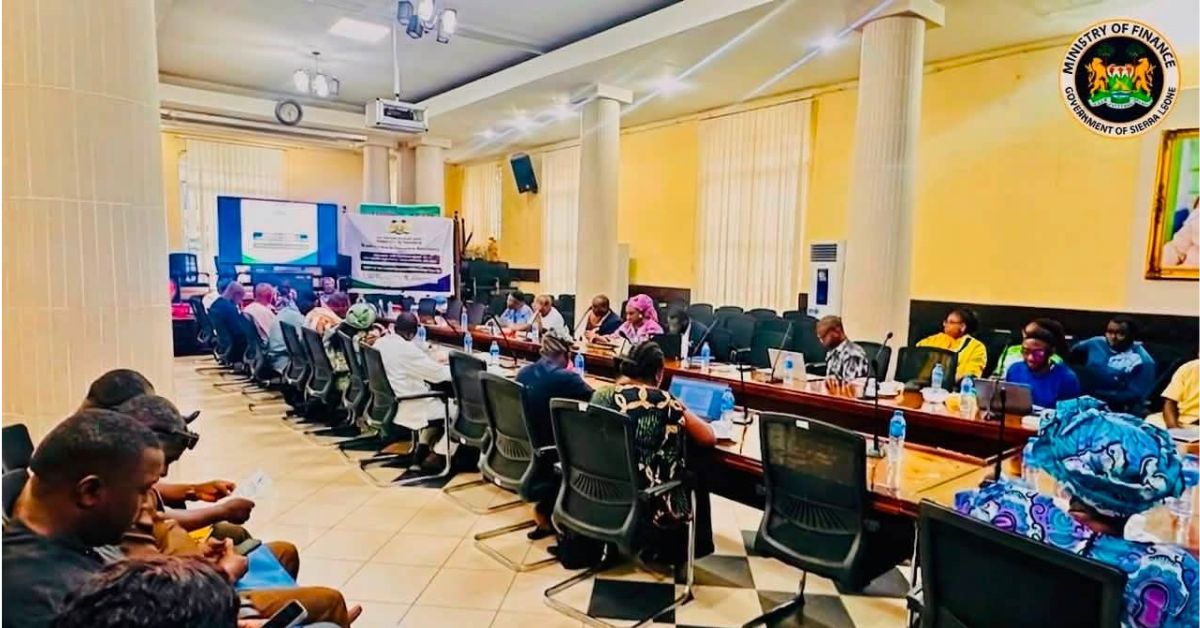
Sierra Leone’s Ministry of Finance has completed its final round of stakeholder consultations on a revised Public Financial Management (PFM) Act, marking a key step toward updating the country’s fiscal governance framework before submission to Cabinet and Parliament.
The closing session, held Friday at the ministry’s conference room on George Street in Freetown, brought together ministers, deputy ministers and their representatives as part of a broader reform process aimed at strengthening accountability, efficiency and oversight in the management of public resources.
Financial Secretary Matthew Dingie, who chaired the session, described the review as a critical milestone in ensuring that public financial management laws remain responsive to evolving economic, institutional and technological realities. He said all submissions and recommendations from stakeholders would be carefully documented and considered in refining the draft legislation.

Acting Minister of Finance Kadiatu Alie welcomed the reform process, calling it timely and necessary for reinforcing Sierra Leone’s fiscal governance system. She emphasised the need for a modern legal framework that supports stronger treasury management, improved fiscal planning, enhanced oversight mechanisms and better management of fiscal risks, while also integrating digital financial management systems.
Technical presentations by ministry legal officials and Public Financial Management consultants provided an overview of the 2016 PFM Act, the rationale for its revision, and key proposed amendments, including new, expanded and modified provisions designed to address existing gaps.
The session also featured extensive discussions, during which ministers, deputy ministers and their representatives offered comments, suggestions and concerns aimed at improving the clarity and effectiveness of the draft law. The ministry said all inputs would be compiled and factored into the final revision ahead of Cabinet consideration.
Officials described the engagement as the concluding stage of stakeholder consultations on the bill, which will now proceed to Cabinet for review and, if approved, onward submission to Parliament.


