


 Post a comment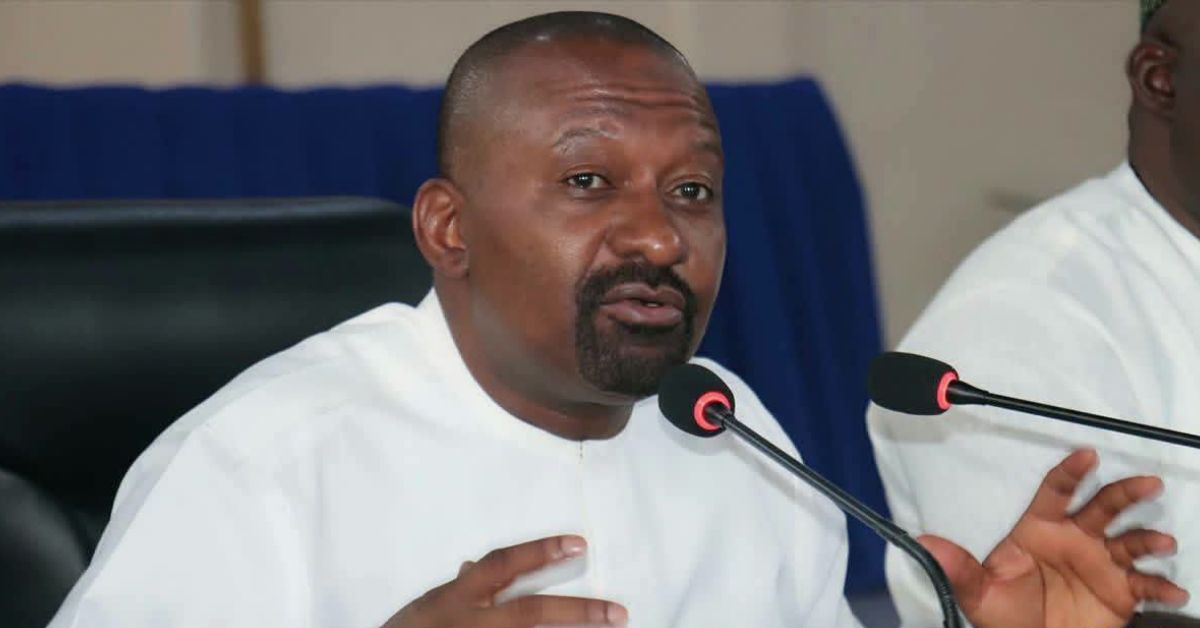
Vice President Dr Mohamed Juldeh Jalloh is set to lead the second leg of the Government’s Regional Decentralisation Tour this weekend, taking nationwide consultations on local governance to Makeni and Port Loko.
The engagements are part of the Government’s broader effort to strengthen grassroots institutions, improve coordination between central and local authorities, and enhance public service delivery across Sierra Leone.
The consultations will bring the Government together with traditional authorities, district representatives, local council leaders and other stakeholders to examine how national policies can be translated into tangible development outcomes at community level.

“A Government closer to the people is a government that works,” Vice President Jalloh said ahead of the engagements.
He added: “I’ll be engaging directly with traditional, district and local council leaders to ensure national policy delivers local impact.”
The Makeni and Port Loko engagements follow the first leg of the regional consultations, which were held in Kenema and Bo on August 14 and 15, 2026, respectively.
Those meetings brought together Paramount Chiefs, local councils, Ministers, Ministries, Departments and Agencies, development partners and representatives from critical sectors to discuss challenges affecting decentralised governance.
Among the issues under consideration are inadequate financing, institutional capacity, coordination between central and local authorities, revenue mobilisation and the incomplete transfer of responsibilities to local councils.
The Vice President has emphasised that the consultations are intended to allow local authorities to directly present the challenges they face rather than have solutions imposed from Freetown.
Speaking during the Kenema engagement, Jalloh said: “This is not a meeting where we come to tell you what to do. It is a learning process. We are here to listen to the challenges of local governance.”
He said recommendations emerging from the consultations could inform Government policy and Cabinet decisions and, where necessary, lead to legislative reforms aimed at strengthening Sierra Leone’s decentralisation framework.
The approach places local authorities and communities at the centre of discussions about how decentralised governance can become more effective.
A major focus of the consultations is the ability of local councils to meet growing demands for essential services.
Councils are increasingly expected to address issues including healthcare, education, sanitation, waste management, agriculture, roads, markets, drainage, land administration and social welfare, particularly as communities experience population growth and urban expansion.
Government officials have acknowledged that transferring responsibilities to local councils without providing corresponding financial, technical and logistical resources could weaken the effectiveness of decentralisation.
Deputy Minister of Local Government and Community Affairs Alfred Moi Jamiru has therefore called for greater investment in councils, arguing that stronger institutional capacity is necessary for local authorities to effectively carry out their responsibilities.
Chairman of the Local Government Service Commission, Dr. Falla D. Lamin, has similarly highlighted competent personnel, improved coordination and stronger institutions as key components of an effective local government system.
The Regional Decentralisation Tour is being organised in collaboration with the Ministry of Local Government and Community Affairs, with support from the World Bank.
The World Bank funded $40 million Accountable Governance for Basic Service Delivery project has been supporting local councils in areas including resource management and accountability in basic service delivery.
The European Union has also provided support to Sierra Leone’s decentralisation efforts. In 2024, the EU launched a €3.5 million programme aimed at strengthening local governance across seven local councils.
Regional Coordination Committees were also inaugurated during the Kenema and Bo consultations to strengthen coordination among institutions and provide mechanisms for addressing decentralisation challenges at regional level.
The consultations have further brought the relationship between traditional authorities, local councils and central government into focus, with clearer responsibilities, resources and institutional authority seen as important to avoiding duplication and improving accountability.
Vice President Jalloh, who chairs the Inter-Ministerial Committee on Decentralisation, has indicated that the consultation exercise will eventually be expanded to the district level.
This would allow Government officials to spend more time engaging stakeholders on challenges specific to individual communities.
More than two decades after Sierra Leone restored elected local government, decentralisation remains an important part of efforts to bring decision-making closer to citizens.
However, challenges surrounding financing, accountability, administrative capacity and the effective devolution of responsibilities continue to affect the system.
The upcoming engagements in Makeni and Port Loko will therefore provide another opportunity for the Government to assess these challenges and gather recommendations from local stakeholders.
For the Vice President, the objective is to strengthen the connection between national policymaking and the realities faced by communities, ensuring that decentralised governance produces visible improvements in public services and local development.


