

Blyden Identifies ‘2 Blind Spots’ in Sierra Leone’s Constitutional Two-Thirds Debate
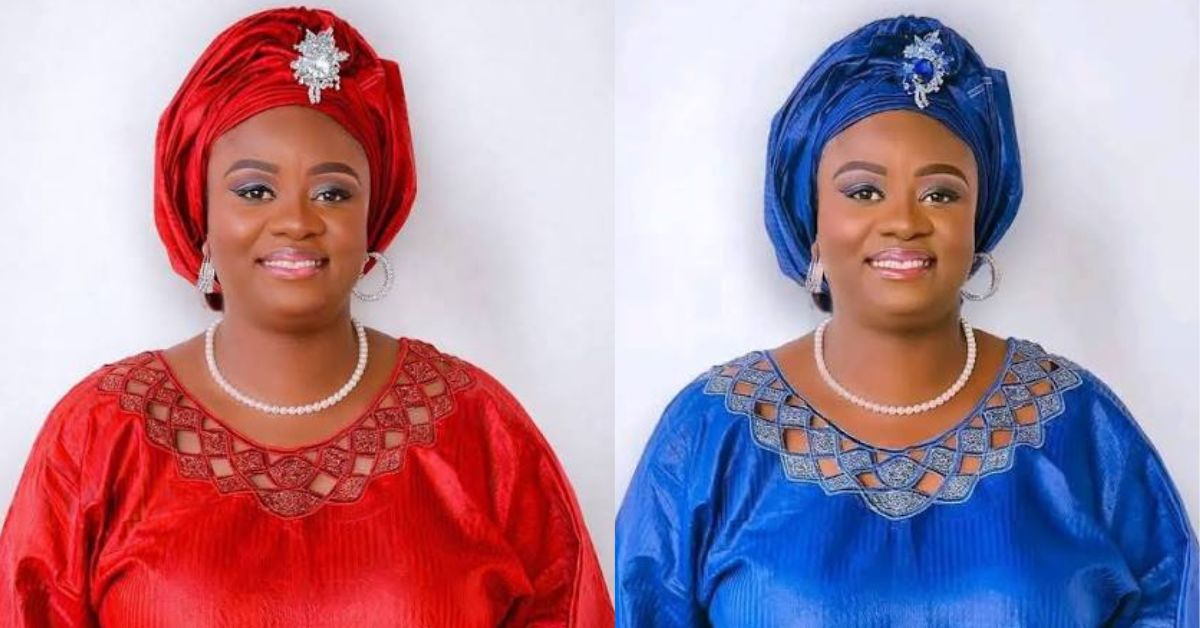
 Osman Tolo Sesay
 Dr Sylvia Olayinka Blyden has challenged prevailing interpretations of Sierra Leone’s constitutional two-thirds requirement, arguing that the debate overlooks key constitutional developments between 1961 and 1978.
In a statement dated October 6, 2026, Blyden identified what she described as two “blind spots” in the ongoing debate over the meaning of “two-thirds of the Members of Parliament” under Section 108(2)(b) of the 1991 Constitution.
Blyden, a former government official and constitutional commentator, said the first gap is historical. She argued that discussions linking the 1961 Constitution to the 1978 One-Party Constitution often overlook developments in 1966 and 1971.

She pointed specifically to the One Party Republican Constitution Bill introduced under the government of former Prime Minister Sir Albert Margai in 1966. According to Blyden, the proposed constitutional changes passed first reading but did not proceed to a second reading before the 1967 elections brought the SLPP government out of office.
She also highlighted the Constitution of Sierra Leone Act 1971 (Act No. 6 of 1971), which established Sierra Leone as a republic under a multiparty constitutional framework during President Siaka Stevens’ administration.
Blyden argued that these developments should be considered when examining how constitutional safeguards evolved between the independence-era constitutional framework and the 1978 One-Party Constitution.
Her second criticism concerns Section 30(6) of the 1991 Constitution, which she said Dr Emmanuel Saffa Abdulai has relied upon in arguing how “all Members of Parliament” should be understood when determining the required majority.
Blyden said Section 30 is expressly headed “Interpretation of Chapter III” and applies to provisions concerning fundamental rights and freedoms. She noted that Section 108 is located in Chapter VI, which deals with the exercise of legislative power.
She therefore argued that Section 30(6) should not be applied to Section 108 because the interpretive provision is expressly limited to Chapter III.
On the central question, Blyden maintained that the constitutional requirement of two-thirds should be calculated from the full constitutionally established membership of Parliament rather than only MPs who are present and voting.
She illustrated her position by saying that if Parliament constitutionally comprises 149 MPs and 30 seats become vacant because of deaths, the two-thirds threshold should still be calculated from 149 rather than the remaining 119 MPs.
Blyden also criticized what she described as an application of Section 91 to the constitutional amendment process, arguing that relying on the provision’s “present and voting” formula could produce a situation in which only 19 MPs could potentially approve a constitutional amendment in a Parliament of 149 elected members.
She referred to a ruling by Speaker Segepoh Thomas on Aug. 10, 2026, and recalled an earlier parliamentary decision in which ordinary parliamentary business proceeded because there was a quorum while constitutional-amendment business did not proceed because the required two-thirds threshold was not present.
Blyden further cited Parliament’s Standing Orders, particularly Standing Order 44, as support for her interpretation.
She noted that Standing Order 44(1) provides that ordinary questions are decided by a majority of Members “present and voting,” while Standing Order 44(3), which specifically addresses constitutional amendments under Section 108(2)(b), requires “not less than two-thirds of ALL the Members of the House.”
Blyden argued that the distinction in the Standing Orders reinforces her position that the constitutional amendment threshold differs from the ordinary “present and voting” standard.
She also referred to Standing Order 44(4), which separately addresses the two-thirds requirement in relation to a state of public emergency, arguing that its wording provides a specific link to Section 30(6).
The constitutional dispute is expected to be considered by Sierra Leone’s Supreme Court, which will ultimately determine the meaning and application of the relevant constitutional provisions.
Blyden concluded that the constitutional debate should account for the full historical sequence she identified as “1961-1966-1971-1978- 1991,” alongside a careful examination of the boundaries of Section 30(6).