

Sierra Leone Remains on Tier 2 in 2026 U.S. Trafficking Report
 Aminata Koroma
 Sierra Leone has remained on Tier 2 in the United States Department of State’s 2026 Trafficking in Persons (TIP) Report, despite increased efforts by the government to combat human trafficking.
According to the report, the Government of Sierra Leone does not fully meet the minimum standards for eliminating trafficking but is making significant efforts to do so. The assessment noted improvements in investigations and prosecutions, victim identification and the provision of assistance compared with the previous reporting period.
However, the report highlighted persistent challenges, including limited victim services, inadequate government funding for anti-trafficking efforts and a decline in the number of convictions.

The government reportedly investigated 39 trafficking cases, prosecuted 39 suspects and convicted two traffickers during the reporting period. This compares with 13 cases investigated, 20 suspects prosecuted and four traffickers convicted in the previous reporting period. The government did not provide sentencing information for those convicted.


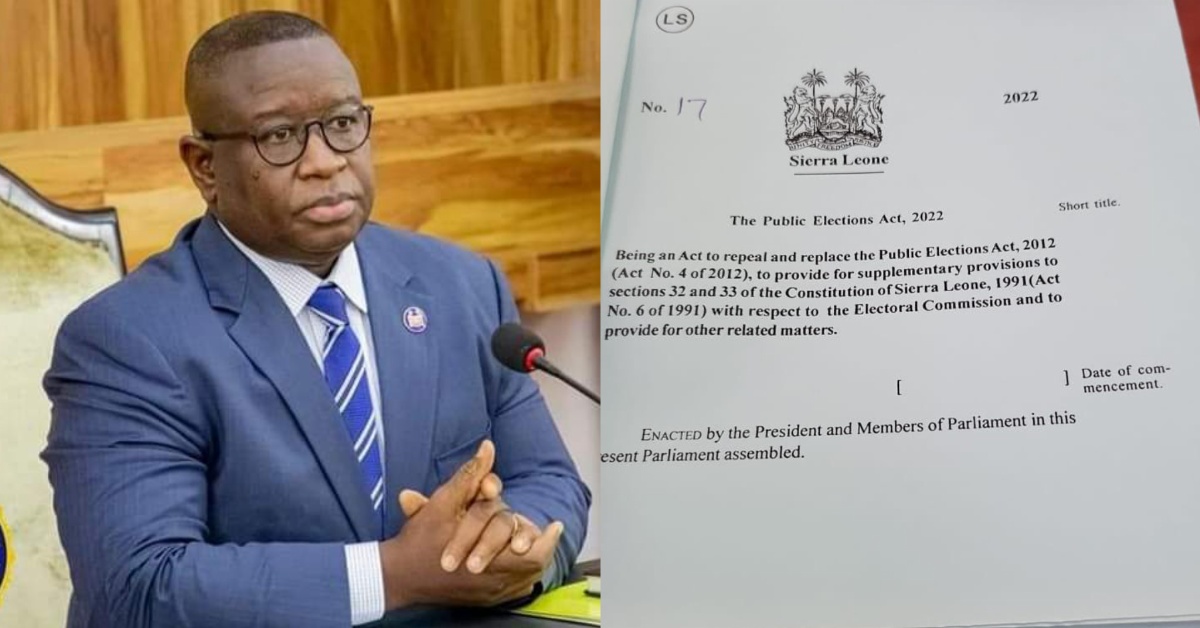
The Anti-Human Trafficking and Migrant Smuggling Act of 2022 criminalises both sex trafficking and labour trafficking, prescribing minimum penalties of 25 years’ imprisonment. The report noted that the penalties are sufficiently stringent and, for sex trafficking, comparable to those for other serious crimes, including rape.
Despite the increase in law enforcement activity, corruption and alleged official complicity in trafficking crimes remained significant concerns. The government did not report any investigations, prosecutions or convictions involving government employees allegedly implicated in trafficking.
The Transnational Organised Crime Unit of the Sierra Leone Police leads trafficking investigations, while the Family Support Unit supports cases involving child trafficking victims. State counsels in the Law Officers’ Department prosecute trafficking cases.
However, the report noted that specially trained police officers and judges were not available in every district. Inadequate resources, limited knowledge of the anti-trafficking law and weaknesses in investigative techniques continued to hinder enforcement. Police sometimes investigated trafficking cases as other offences, while some prosecutors charged suspects under alternative provisions carrying lesser penalties, including labour violations and fraud.
Victim protection improves, but services remain limited
The report also recorded a slight improvement in victim protection, with the government identifying and referring 72 trafficking victims to care during the reporting period, compared with 57 in the previous period.
Of the 72 victims identified, 37 were women, four were men, 18 were boys and 13 were girls. The government reported assisting all 72 victims, compared with no victims reportedly assisted during the previous reporting period.
The Anti-Trafficking in Persons Agency (ATIP) revised the National Referral Mechanism to address emerging trafficking trends and drafted standard operating procedures for trafficking shelters to establish care standards across the country.
The government also maintained procedures for identifying victims and referring them to services, while providing training to frontline officials on implementing the relevant guidelines.
Nevertheless, the report said Sierra Leone lacked adequate shelters to accommodate trafficking victims and relied heavily on non-governmental organisations to provide shelter, healthcare, counselling, legal services and repatriation assistance.
Two NGOs provided shelter services for female and child trafficking victims, while services, particularly shelter, remained limited for male victims.
The government, in partnership with the Economic Community of West African States (ECOWAS), reportedly provided in-kind assistance worth NLe 829,500, equivalent to approximately US$35,000, to the two NGOs supporting victims.
The government also maintained policies allowing foreign trafficking victims to remain in the country legally when returning to their home countries could expose them to retaliation or hardship. Victim-witness assistance was provided to support their participation in criminal justice proceedings.
However, the report noted that the government did not award restitution to victims as part of criminal sentences.
Prevention efforts continue amid funding decline
In its assessment of prevention, the report said the government maintained an interagency task force and continued implementing its 2024-2028 National Action Plan to combat trafficking in persons.
The government also established a trafficking survivor network to incorporate survivors’ perspectives into anti-trafficking activities.
However, funding for prevention declined significantly. The government allocated NLe 90,000, approximately US$3,797, for prevention activities, compared with NLe 245,700, or about US$10,876, during the previous reporting period.
Public awareness campaigns were conducted in partnership with an international organisation, while ATIP collaborated with the Sierra Leone Football Association to launch an awareness campaign targeting populations vulnerable to trafficking.
The government also resumed operations of its toll-free anti-trafficking hotline to assist potential victims and partnered with two telecommunications companies to distribute SIM cards to members of the public for reporting suspected trafficking crimes.
The report further noted that the government took steps to reduce demand for commercial sex acts.
Measures introduced to regulate overseas recruitment
The report highlighted measures taken by the government to regulate labour recruiters and hold them civilly and criminally liable for fraudulent recruitment practices.
Recruitment agencies are required to obtain overseas recruitment licences, while prospective migrant workers must secure exit permits and travel clearance before travelling abroad for employment.
The government prohibits recruitment fees charged to workers and began enforcing an ethical recruitment policy brief intended to ensure that migrant workers do not pay such fees.
Recruitment agencies are also subject to enhanced vetting before licensing, including reviews of employment contracts and declared fee structures to ensure compliance with the prohibition.
Authorities conduct pre-departure screening and verify migrant workers’ documentation, including employment terms and conditions, before issuing exit permits and travel clearances.
Monitoring and compliance checks of licensed recruitment agencies are coordinated among relevant institutions, including the Ministry of Labour and Social Security and the Immigration Department.
Despite these measures, the report said the government developed briefing kits for diplomatic personnel but did not report providing them with anti-trafficking training. It did, however, provide such training to troops before their deployment as peacekeepers.
The government also failed to take measures to prevent forced labour and child labour in supply chains, contrary to international standards.
Trafficking risks persist in Sierra Leone and abroad
The report identified several forms of human trafficking affecting Sierra Leoneans, both within the country and overseas.
Traffickers exploit domestic and foreign victims in Sierra Leone, while Sierra Leonean victims are also exploited abroad. Recruitment and transportation frequently occur from rural provinces to urban areas and mining centres, where victims face sex trafficking and forced labour in agriculture, artisanal diamond and granite mining, begging, ceramics production, domestic servitude, fishing, petty trading, portering, quarrying and rock breaking.
Children in child welfare systems, homeless children and female migrants remain particularly vulnerable to sex trafficking. Children involved in begging, migrant workers and people living in low-income areas face heightened risks of forced labour.
The report also noted that traffickers exploit victims through customary practices, including forced marriages. Victims of natural disasters are sometimes targeted with false promises of employment abroad, while social media continues to be used to recruit people through fraudulent job offers.
Sierra Leonean migrants travel to other West African countries, including Guinea and Mauritania, as well as to the Middle East and Europe, where some are exploited in forced labour and sex trafficking.
Sierra Leonean women are reportedly subjected to domestic servitude in Middle Eastern countries, including Iraq, Kuwait, Lebanon and Oman.
The report also cited media and NGO accounts of the alleged fraudulent recruitment of women aged 18 to 22 from Africa, including Sierra Leone, as well as South Asia and South America, by unscrupulous actors, including Russian officials and illicit recruiters.
According to these accounts, the women were recruited under the guise of vocational training programmes before being placed in military drone production facilities.
Media reports indicated that workers at these sites faced hazardous conditions, surveillance, violations of working hours and wages, contract switching and recruitment fees charged to workers. The report identified these conditions as indicators of human trafficking.
It further noted that Sierra Leoneans had been trafficked into online scam operations abroad.
The 2026 report’s findings highlight progress in Sierra Leone’s investigations, victim identification and prevention initiatives, while pointing to continuing gaps in convictions, funding, victim services and measures to address trafficking risks both within the country and internationally.