

Former President Koroma Urges Political Leaders to Put National Unity Above Party Loyalty
 Tolulope Aina
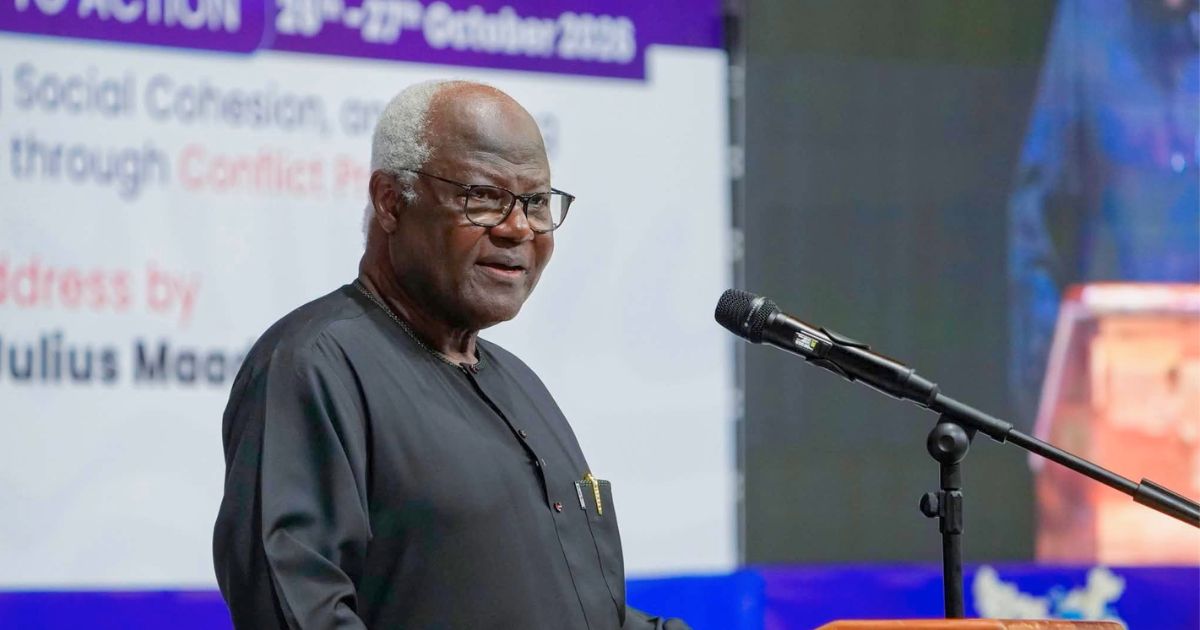
Former President Ernest Bai Koroma has urged political leaders to put national interests above party loyalty, warning that Sierra Leone cannot afford another decade of discussions without concrete action to strengthen peace and national unity.
Speaking at the opening of the 2026 National Unity and Social Cohesion Conference in Freetown on Monday, October 26, Koroma said the country had made progress since the end of the civil war but continued to face challenges that threatened lasting peace.
The conference, organised by the Independent Commission for Peace and National Cohesion (ICPNC) under the theme “From Agreement to Action,” brought together national and international stakeholders to discuss conflict prevention and the consolidation of peace.

Koroma said the country needed to move beyond repeated conversations about peace and confront its divisions openly, urging political leaders and citizens to work together to address the issues affecting national cohesion.


“This is our country. Nobody has a bigger claim to it than any other citizen,” he said, stressing that political differences should not prevent Sierra Leoneans from working together for the country’s development.
Reflecting on the country’s political transitions, Koroma recalled the events following the 2007 elections, when he said he took steps to ensure the security of outgoing Vice President Solomon Berewa and encouraged outgoing ministers to continue their duties until their replacements were announced.
He said the experience demonstrated the importance of responsible leadership, respect for public institutions and continuity in government during political transitions.
The former president said leaders had a responsibility to bring the country together, regardless of whether they were in government or opposition. He added that civil society organisations, journalists and other stakeholders also had a role to play in holding leaders accountable and promoting national cohesion.
Koroma called for open dialogue, urging Sierra Leoneans to acknowledge past mistakes, confront difficult issues and find solutions rather than allow divisions to deepen.
He also called on the government to govern with humility, respect the law and accommodate the opposition, while encouraging citizens to feel free to support their preferred political parties without fear or intimidation.
Addressing President Julius Maada Bio, Koroma offered his support for efforts to unite the country, saying he remained available to contribute to the peace process.
The former president warned against allowing the country to spend another decade discussing peace without meaningful progress, urging stakeholders to use the conference as an opportunity to rebuild trust, heal divisions and strengthen national institutions.
He said Sierra Leone had made progress in consolidating peace but needed to sustain those gains by addressing the challenges that remained.
Koroma also acknowledged the role of the international community in supporting Sierra Leone’s peace efforts but stressed that the responsibility for resolving the country’s problems rested primarily with Sierra Leoneans themselves.
He urged political leaders and other stakeholders to seize the opportunity to work towards a country where citizens could participate freely in political life and pursue their potential without hindrance.
The conference also featured contributions from other national and international stakeholders, including the Deputy British High Commissioner to Sierra Leone, Mehdi Hussain, and First Lady Fatima Bio, who emphasised the importance of protecting peace and promoting unity as the country prepares for the 2028 general elections.
The opening ceremony also featured the presentation of National Peace Awards to individuals and institutions in recognition of their contributions to peace and national cohesion in Sierra Leone.