

When Distinction Meets Failure: Who Holds WAEC Accountable?
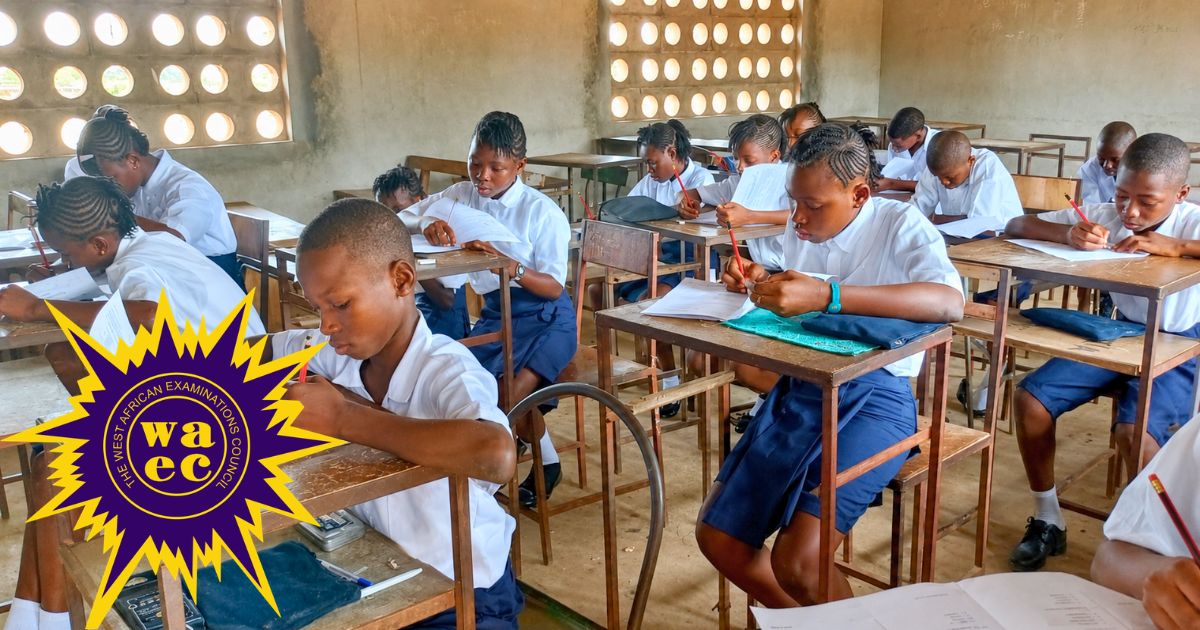
A candidate earns distinctions in Physics, Chemistry, Biology and Mathematics, yet receives F9 in English Language. Another excels in History, Government or Literature in English but cannot secure the English credit needed for university admission. These outcomes are not, by themselves, proof of an examination error. They nevertheless pose an uncomfortable question: when achievement in subjects taught and examined in English coexists with failure in English Language, how confidently can we explain the difference?
The question has acquired national urgency amid the controversy surrounding the 2026 West African Senior School Certificate Examination (WASSCE). Publicly reported figures suggest that only a small minority of candidates obtained credit in English Language, while 47,454 results were withheld over suspected irregularities. The precise figures and their classifications require confirmation from the responsible authorities. Even so, the issues they raise cannot be answered by dismissing concerned parents or invoking the unquestionable authority of an examination body.
THE PARADOX THAT DESERVES EXAMINATION

A student who solves complex scientific problems must interpret instructions, follow arguments and communicate ideas. A student who writes compelling historical analysis must organise evidence and express judgments. Success in Literature in English, particularly, suggests considerable engagement with language. It is therefore reasonable to ask why some such candidates perform so poorly in the compulsory English paper.



But the comparison has limits. Scientific examinations primarily measure disciplinary knowledge; English Language may separately assess composition, grammar, comprehension, summary and oral competencies. A gifted mathematician can write weak prose. An accomplished literature student can struggle with particular language tasks. A discrepancy is a signal for inquiry, not a verdict of misconduct.
What matters is whether WAEC can demonstrate that the examination was appropriately designed, reliably marked and fairly graded. Were questions aligned with the curriculum and taught competencies? Were marking schemes applied consistently? Were scripts moderated and unusual grade patterns reviewed? What mechanisms exist for an independent recheck where a candidate’s performance appears markedly inconsistent? These are technical questions, not attacks on standards.
THE EXAMINER MUST ALSO ACCEPT SCRUTINY
WAEC has a legitimate duty to protect examination integrity. Cheating damages honest candidates, distorts admissions and erodes public trust. Yet the power to investigate must be matched by an obligation to explain decisions and observe procedural fairness. Withholding a result is not equivalent to proving wrongdoing.
Affected candidates and schools deserve timely notice of the allegation, an intelligible procedure for submitting representations and a clear decision timetable. Where evidence implicates particular candidates or officials, responsibility should be established individually wherever possible. Systemic collusion may justify wider inquiry, but collective suspicion should never substitute for documented findings.
There is also an institutional question. If irregularities occur on a large scale, what failed in supervision, centre management, security or enforcement? Examination integrity cannot be the exclusive responsibility of pupils while invigilators, administrators and regulators escape equivalent scrutiny. Accountability must run through the entire chain of custody, from question-paper security to marking and publication.
PRIVATE-CANDIDATE EXAMINATIONS AND THE QUESTION OF INCENTIVES
WAEC’s private-candidate examinations provide an important second opportunity for those who need to improve their qualifications. Such examinations are not inherently a scam, nor does a fee-paying resit establish fraud. To suggest otherwise without evidence would weaken a serious argument.
Nevertheless, a system in which large numbers of young people repeatedly pay to pursue a compulsory English credit invites legitimate questions about institutional incentives. How are private-candidate fees determined? What proportion of examination income comes from repeat candidates? Are accounts independently audited and publicly explained? What safeguards separate revenue considerations from assessment and grading decisions?
These questions do not presume deliberate failure or financial exploitation. They seek the transparency necessary to dispel precisely those suspicions. Public confidence is best restored through verifiable information, not categorical reassurance.
THE FAILURE IS BIGGER THAN ONE INSTITUTION
It would be equally mistaken to attribute weak English outcomes solely to WAEC. Sierra Leone must confront uneven teaching quality, limited reading resources, insufficient writing practice and gaps between curriculum expectations and classroom realities. Schools, teacher-training institutions and the Ministry of Basic and Senior Secondary Education all have responsibilities. An examination can reveal weaknesses it did not create.
That is why an independent review should examine both learning and assessment: representative anonymised scripts, question difficulty, marking consistency, subject-level grade distributions, classroom preparation and the accessibility of appeals. It should distinguish genuine literacy deficits from possible measurement or administrative problems. The objective is not to manufacture passes; it is to ensure that every grade is educationally meaningful and defensible.
A PRACTICAL PATH TO RESTORING TRUST
WAEC and the Ministry should publish a transparent schedule for resolving withheld results, release cleared cases promptly and communicate the grounds for adverse decisions within applicable rules. A properly constituted independent technical panel should review the English Language outcomes and publish its methodology and conclusions. Parliament should examine governance, fee structures, audit arrangements and complaints procedures without intruding into legitimate professional marking judgments.
Where unresolved cases threaten to cost innocent candidates an academic year, the authorities should consult universities and other institutions on provisional admissions or other lawful accommodations. An exceptional supervised resit may be considered if regulations, security and logistics permit; it must not become a substitute for investigating mistakes or a route around established sanctions.
At stake is more than a pass rate. Examinations allocate opportunity, shape public confidence and signal what a country values in learning. WAEC must remain independent enough to enforce standards, but no public-interest institution should be so insulated that its judgments cannot be questioned. Sierra Leone’s children must earn their grades; the institution awarding them must earn the public’s trust.
The most urgent question, therefore, is not whether standards should be lowered. It is whether the standards by which young people are judged can themselves withstand rigorous, transparent examination.