

LLDP Reviews Project Progress, Sets Sights on 2027 Work Plan and Budget
 Daniel Amara
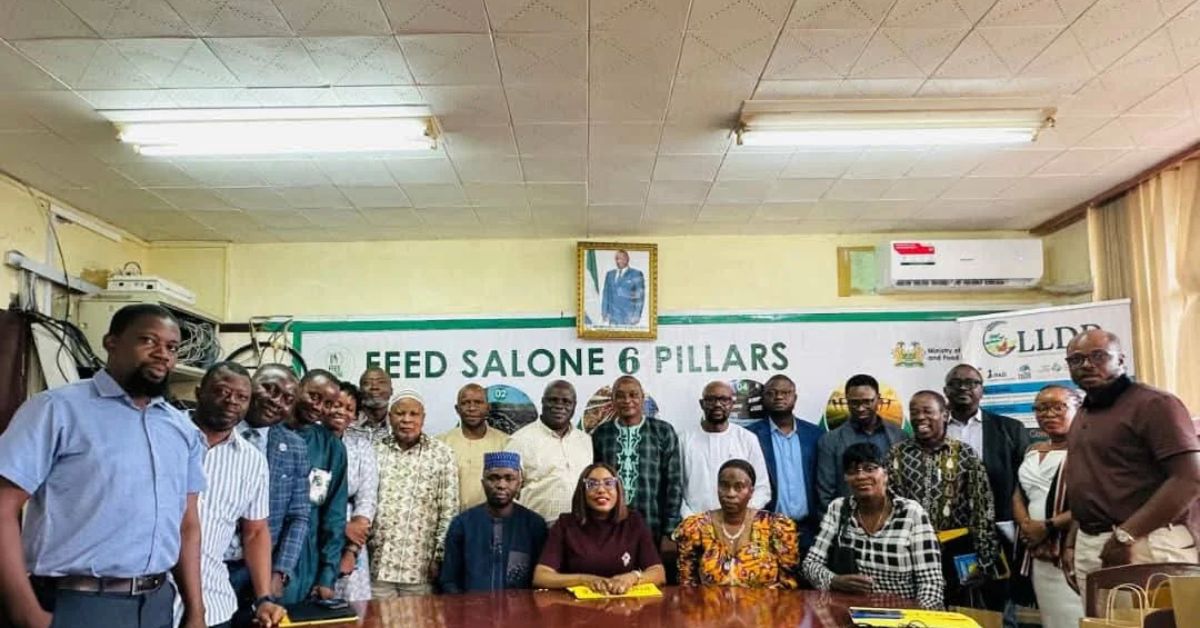
The National Steering Committee of the Livestock and Livelihoods Development Project (LLDP) has reviewed the project’s implementation progress and considered its proposed 2027 work plan and budget during a meeting held in Freetown on Wednesday, November 25, 2026.
The meeting, held at the Ministry of Agriculture and Food Security conference hall, brought together representatives from the Ministries of Finance and Youth Affairs, SLeCAD, NaFFSL, the National Poultry Association and the Sierra Leone Agricultural Research Institute (SLARI).
Speaking at the opening of the session, Deputy Minister I of Agriculture and Food Security, Dr. Isata Kamanda, expressed appreciation to committee members for their continued support towards the project’s implementation.

She described livestock development as a key driver of agricultural productivity, improved household incomes and better nutrition, particularly among rural communities.


Dr Kamanda also highlighted the project’s alignment with the government’s Feed Salone initiative, noting that a strengthened livestock sector would boost local production, reduce dependence on imported livestock products, create employment opportunities for young people and improve farmers’ livelihoods.
She urged committee members to actively contribute to discussions on the proposed 2027 work plan to ensure that the project delivers meaningful and measurable results.
Providing an update on implementation, LLDP Project Coordinator, Mr Tejan Koroma, said the US$107.3 million project is designed to strengthen food security, improve nutrition and expand livelihood opportunities for rural communities.
He disclosed that the project targets 62,250 households across the Eastern and Southern regions of Sierra Leone, with specific provisions for women, young people and persons with disabilities.
According to him, 159 Farmer Field Schools have been established, supported by 159 facilitators and 22 master trainers who have undergone training, while infrastructure development remains ongoing.
He further revealed that more than 4,000 people are already connected to the Farmer Field Schools, while 48 clusters have been confirmed across 11 districts. The project is also working towards securing 8,000 birds and small ruminants for beneficiaries.
On animal health services, Koroma disclosed that 22 out of 36 animal health scouts and paravets have completed the first phase of training, while 16 candidates have been submitted to Njala University for screening.
Beyond livestock production, the Project Coordinator said LLDP is also prioritising nutrition, gender inclusion and youth employment as part of its broader development objectives.
He noted that key policy documents, including the Nutrition Strategy and the Gender and Youth Inclusion Strategy, have been approved to guide the project’s interventions.
He added that approximately 350 community champions have been selected, with 82 already trained to support community-level activities.
On environmental and social safeguards, Koroma said six safeguard instruments have been reviewed, while 82 facilitators have received training on environmental and climate-related issues. He also confirmed that grievance committees are now operational in first-phase project communities.
The National Steering Committee’s review is expected to provide further direction for the project’s implementation, particularly as members consider priorities and resource allocations for the 2027 work plan and budget.