

Engage Salone Unveils Findings on Decentralisation and Local Governance in Sierra Leone
 Aaron Parker
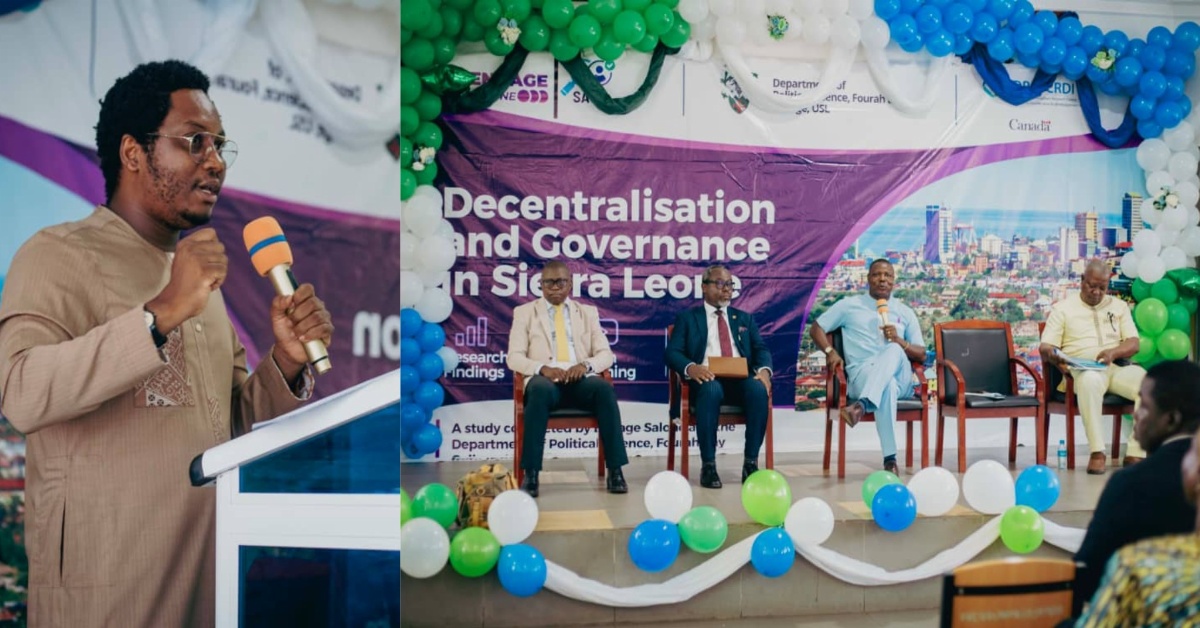
Engage Salone has unveiled findings from a research report examining the state of decentralisation and local governance in Sierra Leone, highlighting persistent challenges in local council performance, community participation and the transfer of decision-making powers from central government to local authorities.
The report, based on a survey of 1,489 respondents across six council areas, found that more than two decades after the reintroduction of elected local councils in 2004, decentralisation remains incomplete, with inadequate funding, weak institutional capacity and limited public participation continuing to affect its implementation.
According to the findings, local councils scored an average of 29.8 out of 100 in performance, despite citizens expressing moderate satisfaction with basic public services.

The study further revealed that 60 per cent of respondents said their local councils never consult communities, while only 17 per cent had attended a council meeting. These findings point to gaps in citizen participation and engagement in local decision-making.
Sierra Leonean Journalists Visit Fujian Province in China, Witnessing Chinese Success in Uplifting Boat Dwellers from Poverty

Anti-Corruption Commission and Transparency International Commemorate African Anti-Corruption Day

Internal Minister Lengor Engages Stakeholders to Combat Lawlessness and Indiscipline in Sierra Leone
Inadequate funding, weak coordination between central and local government, limited institutional capacity and political interference were also identified as major barriers to effective decentralisation. The report additionally raised concerns about the involvement of women in community governance and the responsiveness of local councils during emergencies, including flooding.
Despite the challenges identified, 55 per cent of respondents supported giving local councils more powers and increased funding, reflecting public support for strengthening local governance.
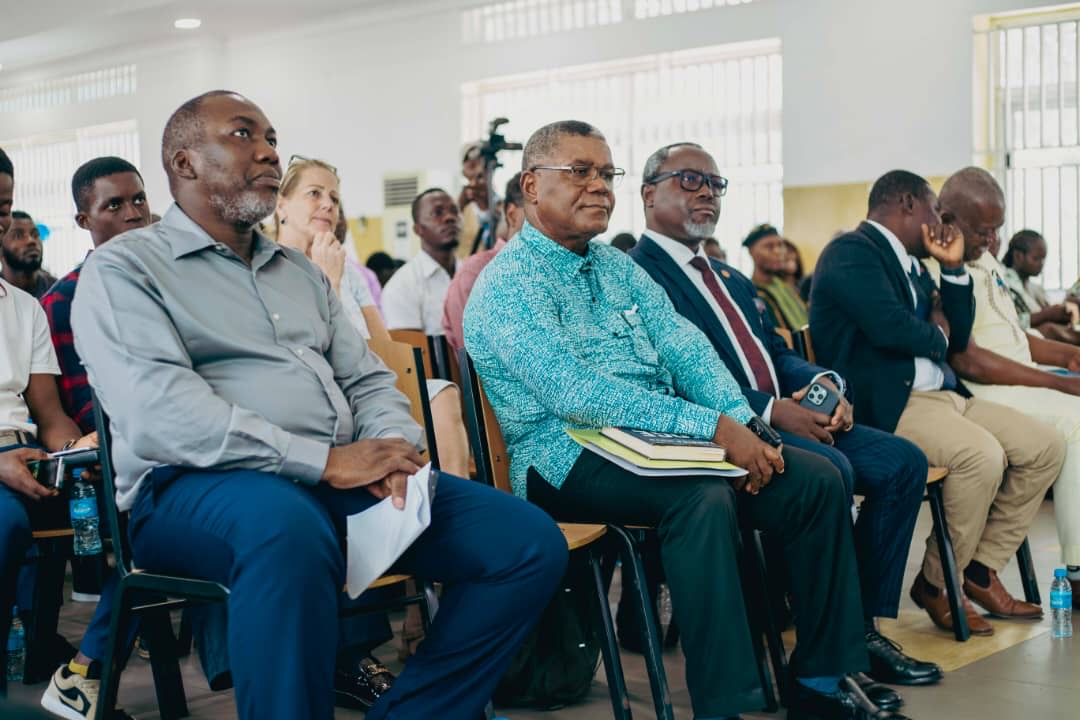
Speaking at the launch, Presidential Advisor Dr Emmanuel Ngaima delivered a presentation titled “Decentralisation and Governance: Reflections from a Pioneering Voice on Post-Conflict Decentralisation in Sierra Leone,” in which he traced the country’s decentralisation journey from 1972 to the present.
He highlighted the 2004 reforms, which reintroduced elected local councils and transferred key responsibilities in health, agriculture and education from central government to local authorities.
Dr Ngaima explained that the reforms were intended to address historical marginalisation, promote community participation, improve public service delivery and ensure more inclusive development.
While acknowledging progress in health, education, agriculture and accountability, he noted that inadequate funding, poor coordination between central and local government, limited institutional capacity and insufficient community involvement remain major challenges.
He called for stronger local government institutions, improved revenue mobilisation, effective resource allocation, policy reviews and greater collaboration among stakeholders. He emphasised that decentralisation requires adequate resources, stronger accountability and meaningful community participation to achieve its intended objectives.
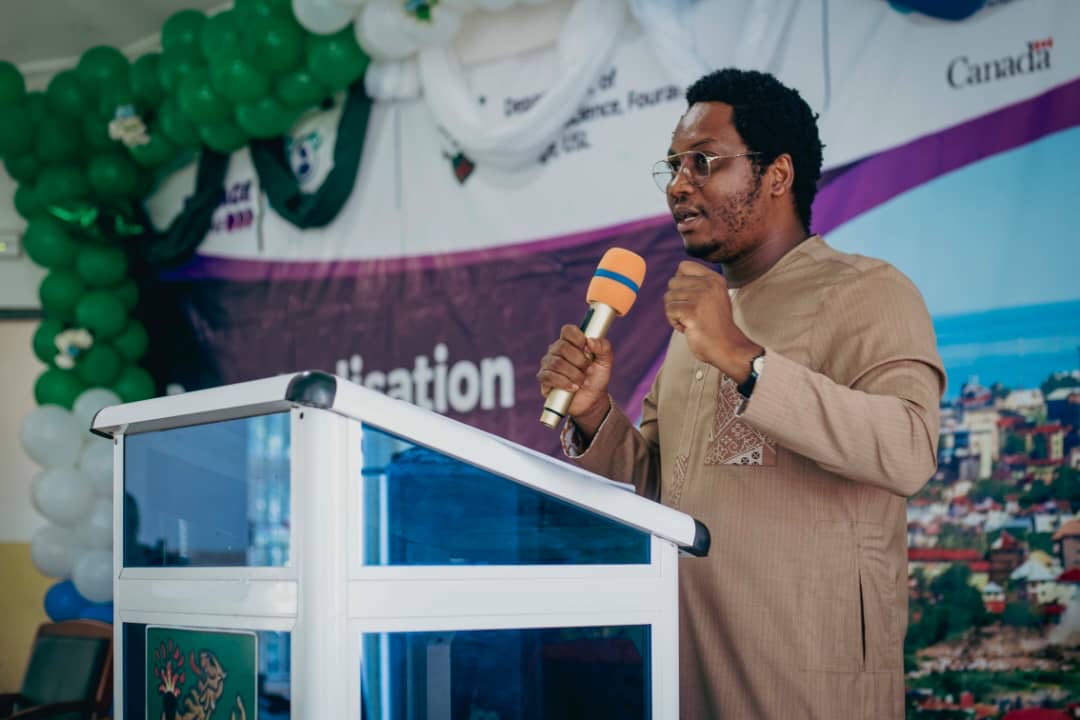
Meanwhile, Engage Salone Executive Secretary, Edward Kargbo, called for a stronger role for the media in national development, urging media organisations to move beyond traditional reporting and become active partners in research, accountability and policy reform.
Kargbo said the media should contribute to generating evidence, translating research findings into accessible information and connecting communities with policymakers.
He outlined Engage Salone’s proposed approach of combining research, public-interest journalism, multimedia storytelling and community engagement to ensure that development decisions reflect credible data and the experiences of ordinary citizens.
He also emphasised the importance of collaboration among media organisations, universities, civil society groups and government institutions, noting that research should translate into informed policies, public accountability and practical improvements in communities.
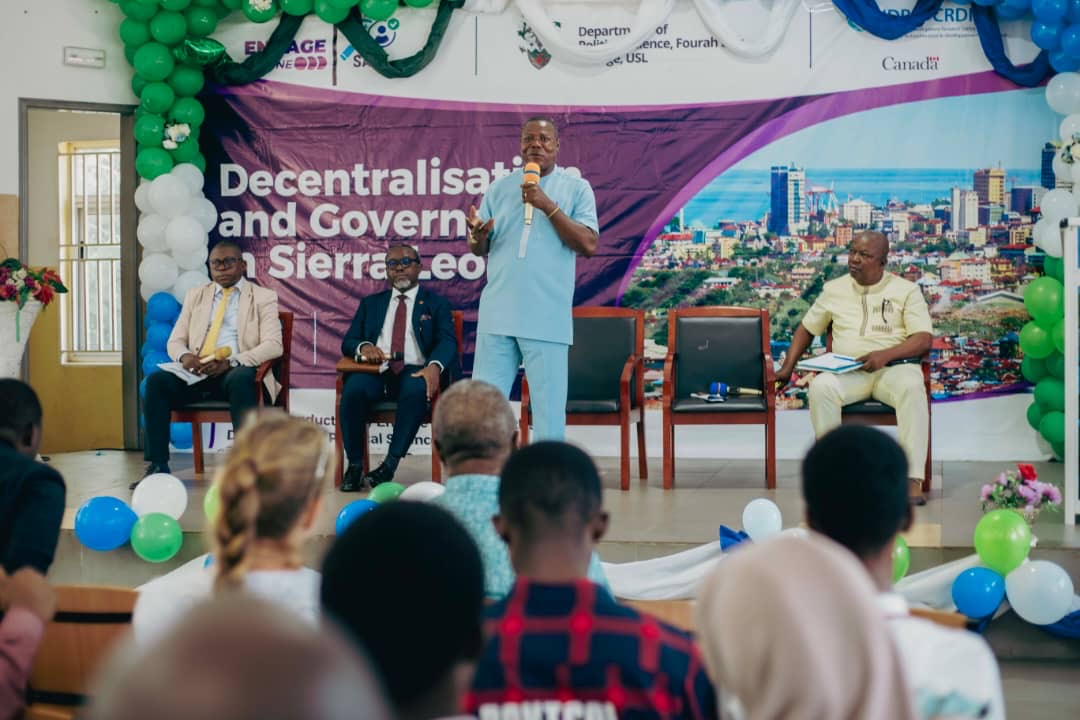
The Deputy Registrar of Fourah Bay College also highlighted the importance of strengthening partnerships between universities and civil society organisations to advance decentralised governance, community development and evidence-based policymaking.
He reaffirmed the college’s commitment to connecting academic research with practical community challenges, noting that partnerships with organisations such as NHCLEON could create opportunities for joint research, student internships, fieldwork and policy engagement.
He further called for greater collaboration among academic institutions, civil society, government and citizens to promote inclusive governance, public accountability, local economic development and community resilience.
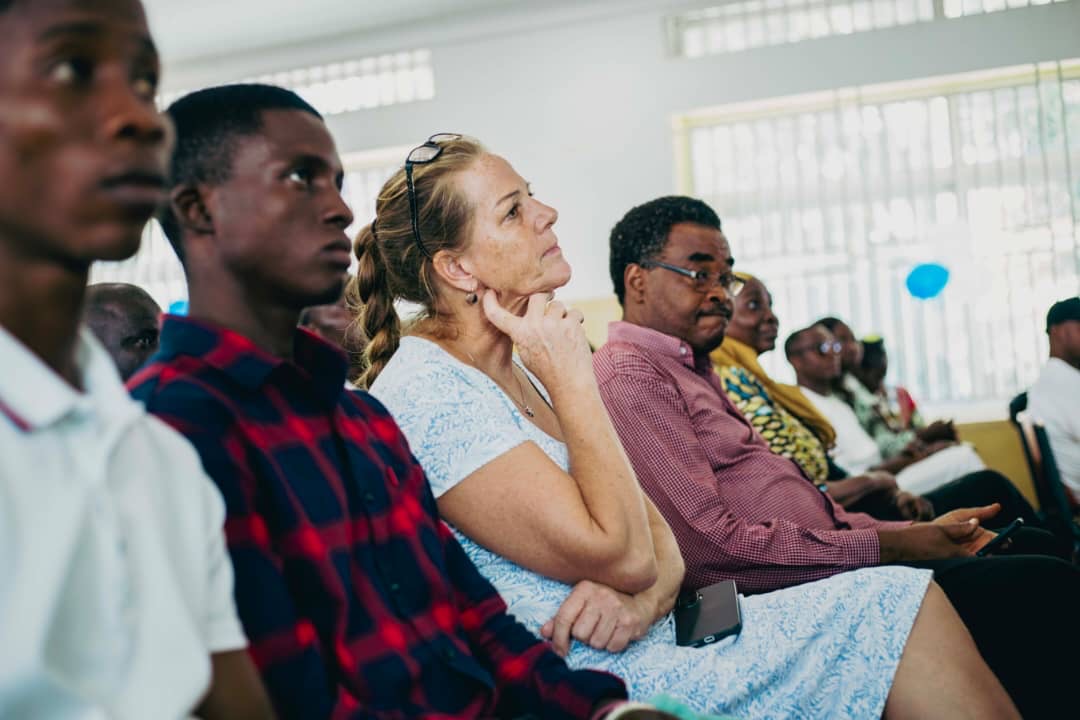
Adding to the discussions, Dr Mahmoud Tarawally, who spoke on university partnerships and the role of academic research, called for stronger academic collaboration and mentorship to improve research output and address challenges facing university researchers.
He identified limited access to data, inadequate resources and gaps in academic publishing skills as some of the difficulties affecting research development.
Dr Tarawally highlighted the Department of Political Science’s work in electoral management, decentralisation and governance, noting that partnerships have enabled students to participate in political and electoral research.
He disclosed that 20 PhD candidates were admitted last year and revealed plans to transform existing research reports into peer-reviewed journal articles within the next six months.
He reaffirmed the department’s commitment to academic excellence, practical research and community development, while encouraging more institutions and partners to support collaborative research initiatives.
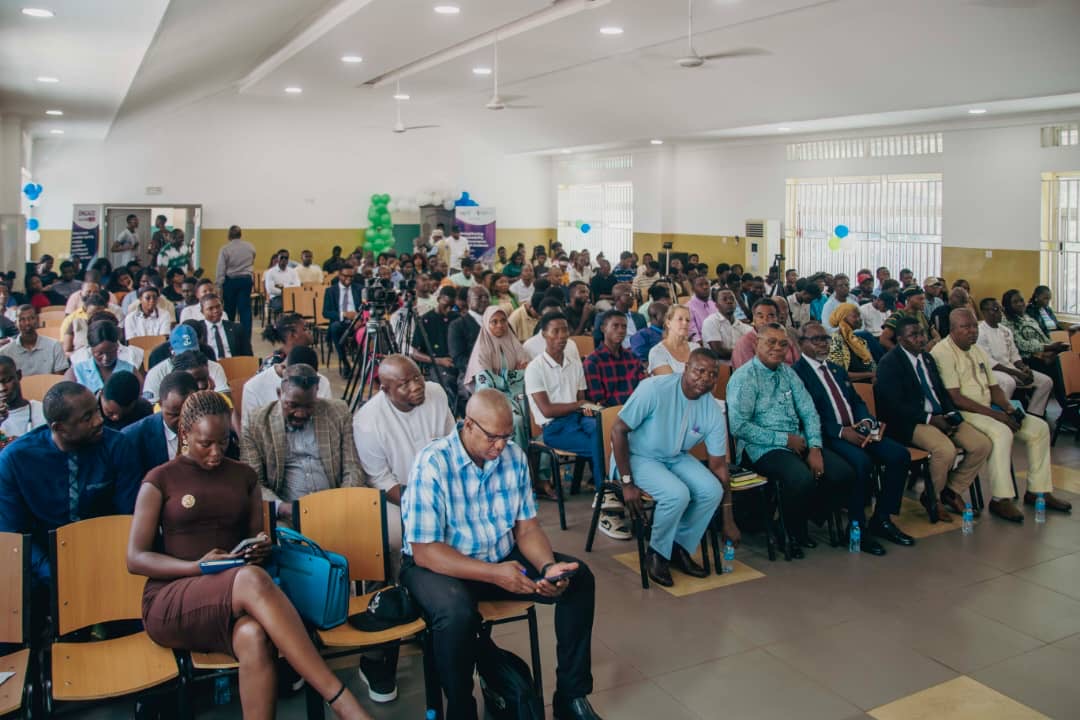
The report’s findings and discussions at the launch highlighted the need for renewed commitment to decentralisation, improved institutional capacity, stronger local government financing and greater citizen participation.
They also underscored the importance of connecting academic research, media engagement and public policy to ensure that evidence generated through research contributes to improved governance and development outcomes across Sierra Leone.