
Who Examines the Examiners? South Korea’s Lesson in Public Accountability and Sierra Leone’s WASSCE Crisis
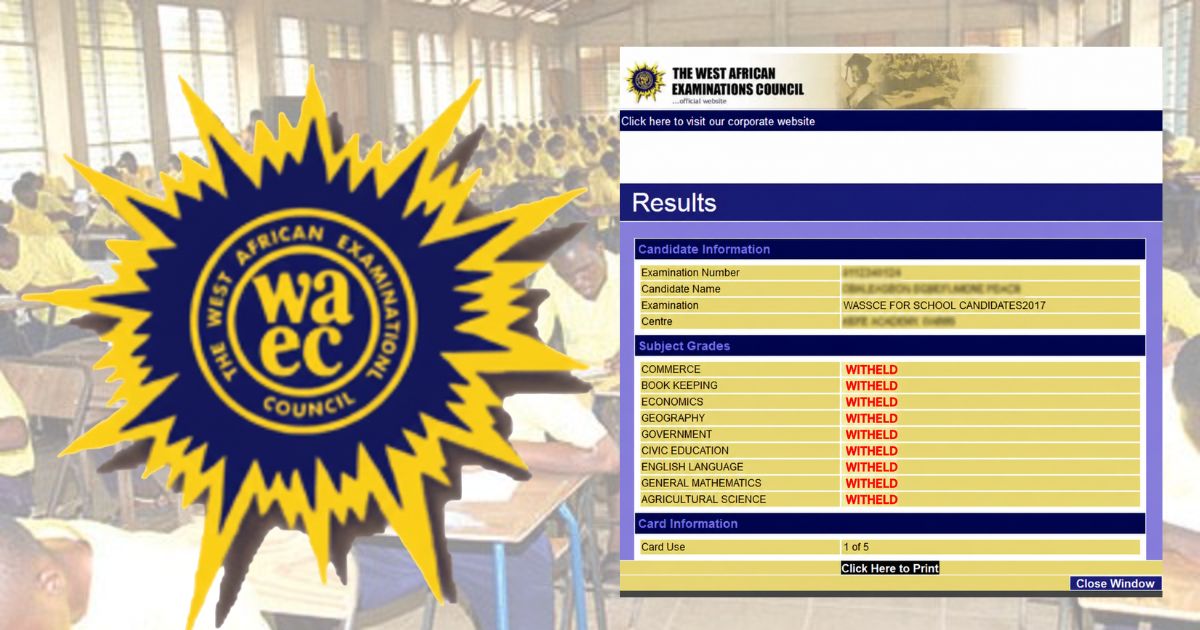
Imagine spending three years in senior secondary school, studying hard and looking forward to university, only to discover that your examination results have been withheld. You do not know whether you have passed or failed. You may not even know what you are accused of doing. Meanwhile, admission deadlines are approaching, your classmates are moving on and your parents are wondering what comes next.
For thousands of young Sierra Leoneans, this is not an imaginary situation. It is the uncertainty they have faced since the announcement of the 2026 West African Senior School Certificate Examination (WASSCE) results. A recent report from South Korea offers an opportunity to reflect on how public institutions should respond when examinations go wrong.
According to reports dated 22 and 23 November, South Korea’s education minister, Choi Kyo-jin, resigned following controversy over the country’s university entrance examination, known as Suneung. Around half a million students sat the examination, and 111 suspected violations involving electronic devices were reported. Last-minute measures intended to prevent cheating, including concerns about artificial intelligence, had caused confusion. The minister reportedly accepted responsibility for shortcomings in the preparations, although he was not personally accused of cheating.

The distinction is important. Taking responsibility for the performance of an institution does not mean accepting personal guilt for every offence committed within it. It means recognising that leadership carries obligations beyond issuing instructions and celebrating successes.
In Sierra Leone, the Sierra Leone News Agency reported on 27 October that the results of 47,454 WASSCE candidates had initially been withheld over suspected malpractice. The previous year’s reported figure was 13,237. With more than 201,000 candidates registered in 2026, the initial number affected was nearly one in four. The figures from the two countries measure different kinds of suspected irregularities, so they cannot be used to compare actual cheating rates. They do, however, raise a common question: how should education authorities respond when the examination system encounters serious problems?
Sierra Leone’s education authorities have suggested that improved monitoring may partly explain the increase. That is a reasonable possibility. Finding more cases does not necessarily mean that more students are cheating. Yet detecting malpractice is only part of the job. Preventing it, investigating allegations fairly and protecting innocent students are equally important.
Nobody should defend examination cheating. It is unfair to students who work hard, and it damages confidence in the qualifications our schools award. A certificate must mean something, whether its holder is applying for university, seeking employment or pursuing professional training. WAEC has every reason to investigate suspected wrongdoing and impose appropriate penalties when the evidence supports them.
But a withheld result is not proof of guilt. A student may have been caught cheating, or may simply have sat in a centre where irregularities were reported. Investigations must establish what happened and who was responsible. Otherwise, an honest student could suffer the same consequences as someone who deliberately broke the rules.
For a family struggling to pay school fees, buy books and provide transport, the consequences of delay can be particularly painful. Another year of waiting may mean another year of expenses. Some young people may have to postpone their studies or abandon plans for further education altogether. Even those eventually cleared cannot recover a missed admission deadline simply by receiving an apology.
This brings us to a question that deserves more attention. Who was responsible for organising and supervising the examinations? Students do not appoint invigilators, choose examination centres or design security procedures. Those duties belong to the examining body and the officials entrusted with administering the examinations. Where suspected malpractice occurs on a large scale, investigators need to examine the conduct of those officials as well as that of candidates. This does not mean assuming that every supervisor was negligent. It means applying the same demand for evidence and accountability to everyone involved.
There has been a response from Parliament. On 5 November, the Minister of Basic and Senior Secondary Education, Conrad Sackey, appeared before lawmakers to address the crisis. According to Sierra Leone Monitor, Parliament called for the prompt release of results where clear evidence of malpractice was lacking. It also sought a timetable for investigations and a review of WAEC’s capacity to manage examinations. These steps deserve recognition. For affected families, however, their value will depend on what happens next.
A practical first step would be for WAEC and the Ministry to publish regular updates showing how many cases have been resolved, how many results have been released and how many remain under investigation. There is no need to disclose students’ names or confidential evidence. What parents and candidates need is reliable information and a clear idea of when decisions will be made. At the time of writing, the number of the original 47,454 cases still outstanding has not been established in the information available for this article.
Students whose results are cancelled should also be told why and informed of any available appeal procedure. Where an entire examination centre is under investigation, the evidence should be carefully reviewed to determine the responsibility of individual candidates. The size of the task is no reason to abandon fairness.
In the meantime, universities and other tertiary institutions could work with the education ministries to consider extended application deadlines or conditional admission, where their rules allow. A supplementary examination might also be an option where a valid result cannot be recovered. But students cleared of wrongdoing should not be required to repeat examinations unnecessarily or pay for failures they did not cause.
Looking beyond this year, an independent review of examination administration could help identify weaknesses in supervision, staff training and security. With new technology making cheating easier to conceal, rules need to be communicated well before examinations begin. Invigilators need the training and resources to enforce them consistently. The findings of such a review could guide preparations for the next WASSCE and help prevent a similar crisis.
Does the South Korean experience mean that every minister must resign whenever something goes wrong? Not necessarily. Resignation may be one way of accepting responsibility, but it does not automatically solve a problem. Public explanations, independent investigations, corrective action and appropriate sanctions also matter. The important question is whether officials are held to clear standards and whether the institutions they lead learn from their mistakes.
Sierra Leone has invested considerably in expanding access to education. The promise of that investment extends beyond getting children into classrooms. It includes giving them a fair chance to complete their studies, earn credible qualifications and build a future. Protecting the integrity of examinations and protecting honest students are not opposing goals.
Every year, we ask our young people to prepare for examinations, follow the rules and accept the consequences of their actions. These are valuable lessons in citizenship. But they become far more meaningful when the adults responsible for administering those examinations demonstrate the same principles. If students must answer for their conduct in the examination hall, who examines the examiners?