

Native Consortium Releases Scathing Post-Mortem Report on US$7.5M Bus Procurement, Demands Full Accountability
 Aaron Parker
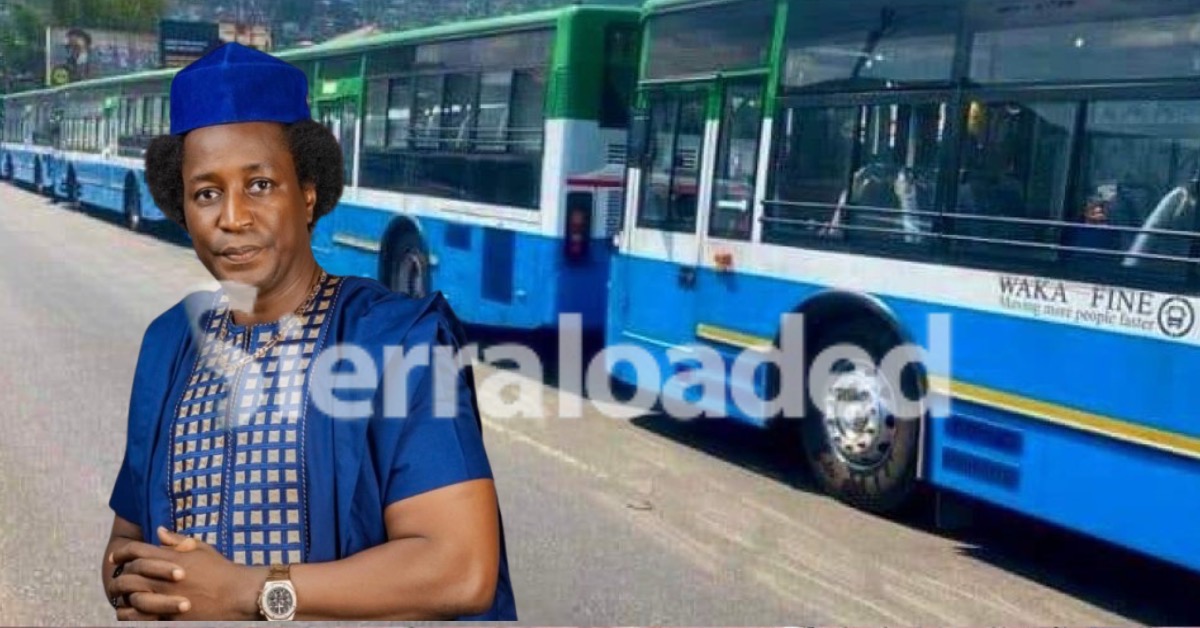
The Native Consortium and Research Centre has released a post-mortem report scrutinising the procurement, financial management and operational performance of Sierra Leone’s 50 Waka Fine buses, while demanding accountability over the Le150 million generated in revenue over 31 months from the US$7.5 million investment.
The report, which examines the buses’ procurement and 31 months of operations, raises concerns about the condition of the fleet at the time of purchase, the management of revenue generated and the failure to replace grounded buses.
According to the Consortium, there is substantial evidence suggesting that the buses supplied by Ashok Leyland were neither brand new nor customised, contrary to claims previously made by the Ministry of Transport and other agencies involved in the procurement.

It questioned whether the Ministry actually procured the buses as new vehicles, citing alleged defects, high mileage and other indicators that, it said, cast doubt on their condition at the time of delivery.


The report also demands an account of approximately Le150.1 million (US$6.39 million) generated by the transport operation between February 2024 and September 2026.
Of that amount, Le79.9 million reportedly went to Metro Transport Company (MTC) operations, while Le30 million was allocated to the Fleet Renewal Fund, representing 20 per cent of the reported revenue. Ticket providers received Le23.7 million, while the Sierra Leone Public Transport Authority (SLPTA) received Le16.5 million.
However, the Consortium questioned why no replacement buses had been procured despite the revenue generated and the allocation to the Fleet Renewal Fund. It further raised concerns that the service had not been expanded to underserved areas along the East Corridor, including Waterloo, and the West Corridor, particularly No. 2 and Borbor.
The report also disclosed that 11 buses are currently grounded after being cannibalised for spare parts, raising questions about the maintenance and long-term sustainability of the fleet.
It called on the Ministry of Transport, SLPTA and the World Bank, through the International Development Association (IDA), to ensure that Ashok Leyland is held accountable for the alleged defects, including invoking relevant contractual provisions and the one-year warranty where applicable.
The Consortium further criticised the reported monthly fuel subsidy requirement of Le825,000, arguing that continued government support without proper financial and operational accountability would place an additional burden on public finances.
It warned that any further subsidy payments to MTC, SLPTA, the Ministry of Transport and ticket providers without a satisfactory account of their operations could raise serious concerns about the management of public resources.
The report draws comparisons with the 2015 Shinka Logus 100-bus initiative, warning against what it describes as the repeated procurement of older vehicles presented to the public as new.
As part of its recommendations, the Consortium is calling for an immediate suspension of operational subsidies to the transport agencies and other beneficiaries until they provide a comprehensive account of the revenue generated, expenditure incurred and the current condition of the fleet.
It also wants the relevant authorities to explain how the Fleet Renewal Fund has been managed and why no replacement buses have been introduced despite the funds reportedly collected for that purpose.
The Consortium said the public-interest reform report has been submitted to the Transparency Committee and made available to the public for consideration and a hearing.
It further indicated that it is prepared to escalate the matter to the World Bank headquarters in Washington, DC, if the relevant committee fails to ensure accountability and protect the public interest.