

APC Drags Speaker, Others to Supreme Court Over Passing of Constitutional Amendment Bill
 Tolulope Aina
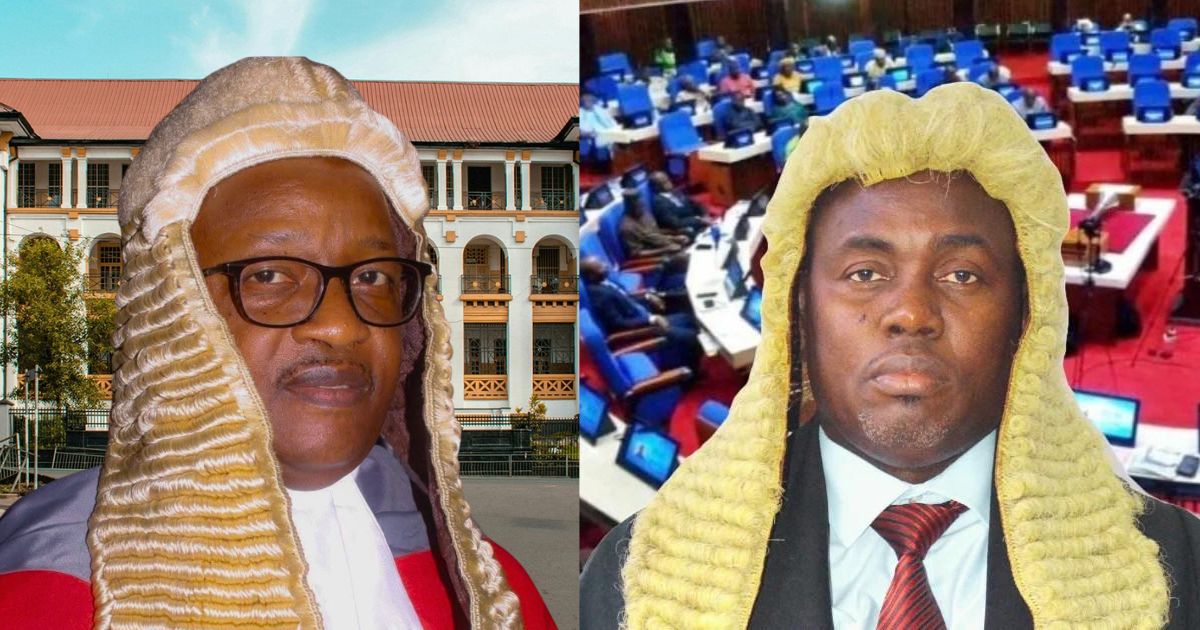
 Sierra Leone’s main opposition All People’s Congress (APC) has filed a case at the Supreme Court challenging the Speaker of Parliament’s ruling that allowed the passage of the Constitution of Sierra Leone (Amendment) Bill, 2025.
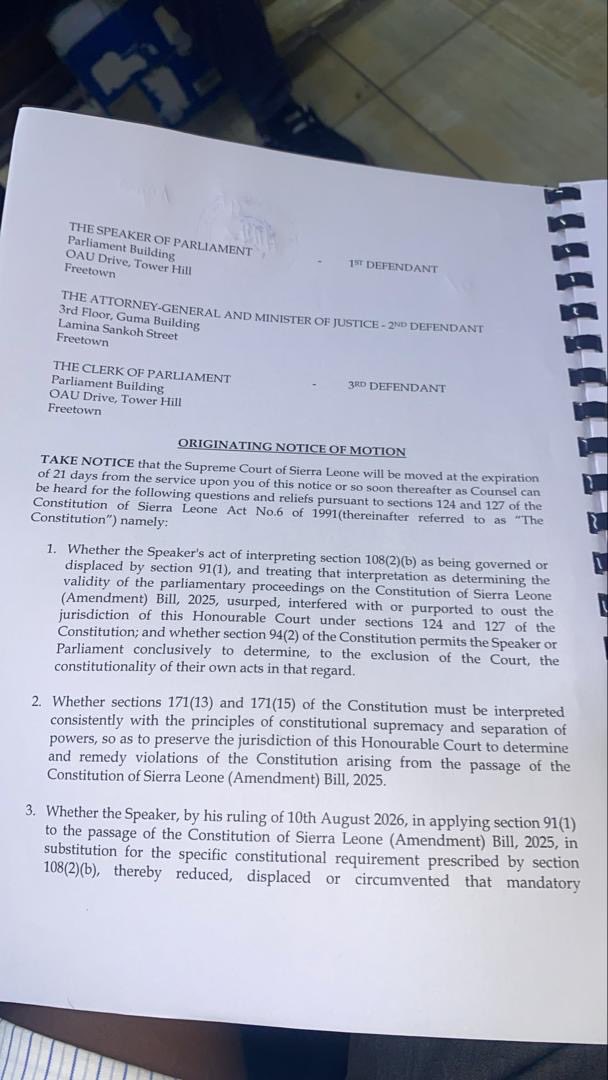
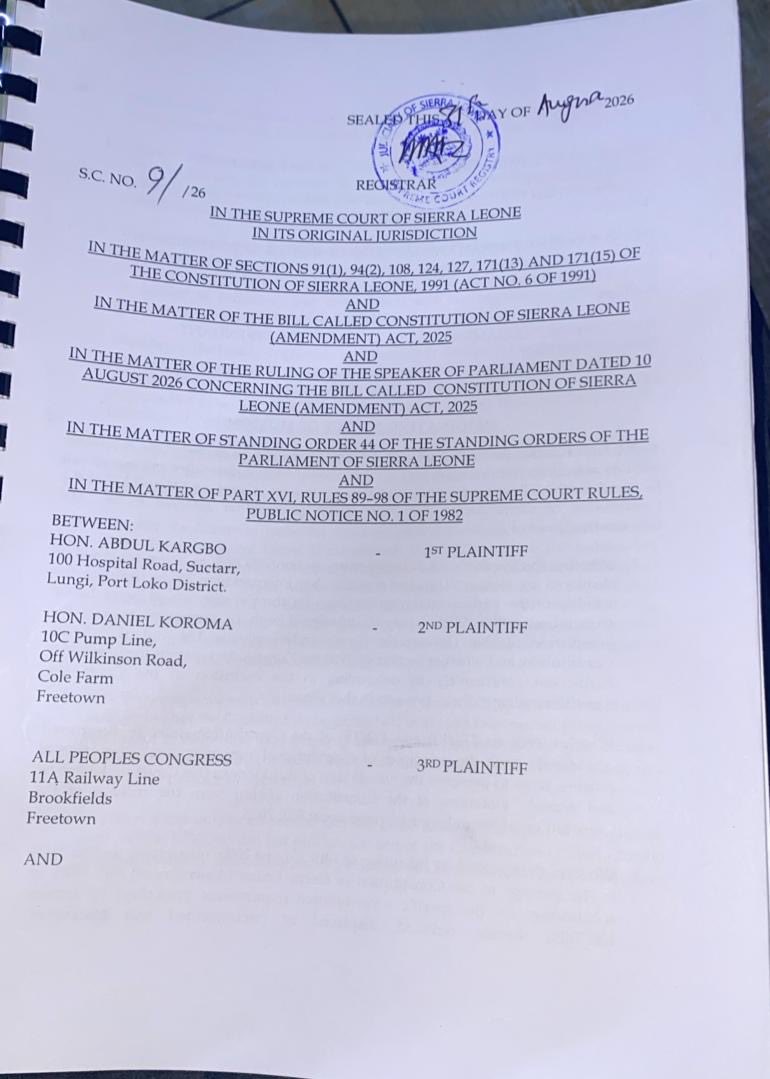
The originating notice of motion, filed on behalf of Hon. Abdul Kargbo MP, Hon. Daniel Koroma MP, and the APC, names the Speaker of Parliament, the Attorney-General, and the Clerk of Parliament as defendants.
The case stems from parliamentary proceedings on 10 August 2026, when Speaker Segepoh Solomon Thomas ruled that individual provisions of the constitutional amendment Bill could be passed by a simple majority of members present, rather than the two-thirds threshold required for constitutional amendments .

At the centre of the dispute is the interpretation of Section 108(2)(b) of the 1991 Constitution, which requires that a Bill seeking to alter the Constitution be supported on second and third readings by “the votes of not less than two-thirds of the Members of Parliament” .



Following the Speaker’s ruling, APC lawmakers walked out of Parliament, arguing that the two-thirds requirement applies to all substantive decisions affecting the constitutional text. Only two opposition MPs remained in the chamber.
With 149 Members of Parliament, two-thirds amounts to 100 votes. The APC contends that the Bill was purportedly passed by only 96 members, falling short of the constitutional requirement.
The Supreme Court has been asked to determine several key questions :
1. Whether the Speaker’s interpretation of Section 108(2)(b), treating it as displaced by Section 91(1) (which deals with ordinary parliamentary voting), usurped the jurisdiction of the Supreme Court under Sections 124 and 127 of the Constitution
2. Whether Sections 171(13) and 171(15) must be interpreted consistently with constitutional supremacy and separation of powers
3. Whether the Speaker, by applying Section 91(1) to the passage of the Amendment Bill in substitution for Section 108(2)(b), circumvented the mandatory constitutional requirement
Legal commentators have argued that Section 91(1), which provides for decisions by a majority of members present and voting, begins with the words “Except as otherwise provided in this Constitution” — meaning it must yield to specific provisions like Section 108(2)(b).
The APC has maintained that the Speaker’s ruling conflicts with both Section 108(2)(b) and Standing Order 44(3), which similarly requires a two-thirds majority.
The Constitution of Sierra Leone (Amendment) Bill, 2025 proposes major reforms, including reducing the presidential election victory threshold from 55 percent to 50 percent plus one vote, with a geographic spread requirement; making proportional representation the permanent electoral system for ordinary Members of Parliament; introducing a constitutional minimum 30 percent quota for women in political nominations; and expanding eligibility for dual citizens to contest parliamentary seats and hold public office.
The matter is before the Supreme Court, which is expected to provide clarity on the constitutionality of the parliamentary process and the amendment itself. The Speaker has indicated that aspects of the procedural disagreement would be referred to the judiciary for interpretation.
Speaking on behalf of the party, lawyer Joseph Fitzgerald Kamara said the case raises fundamental questions about adherence to the 1991 Constitution: “This is not about politics. It is about principle. Parliament, the government, and everyone else must stay within the Constitution. No one is above it — not the President, not the Speaker, not the Attorney-General, and not Parliament itself”.