NIB, Chinese Businesses Discuss Investment Challenges and Reforms in Sierra Leone

 Jayah Koker
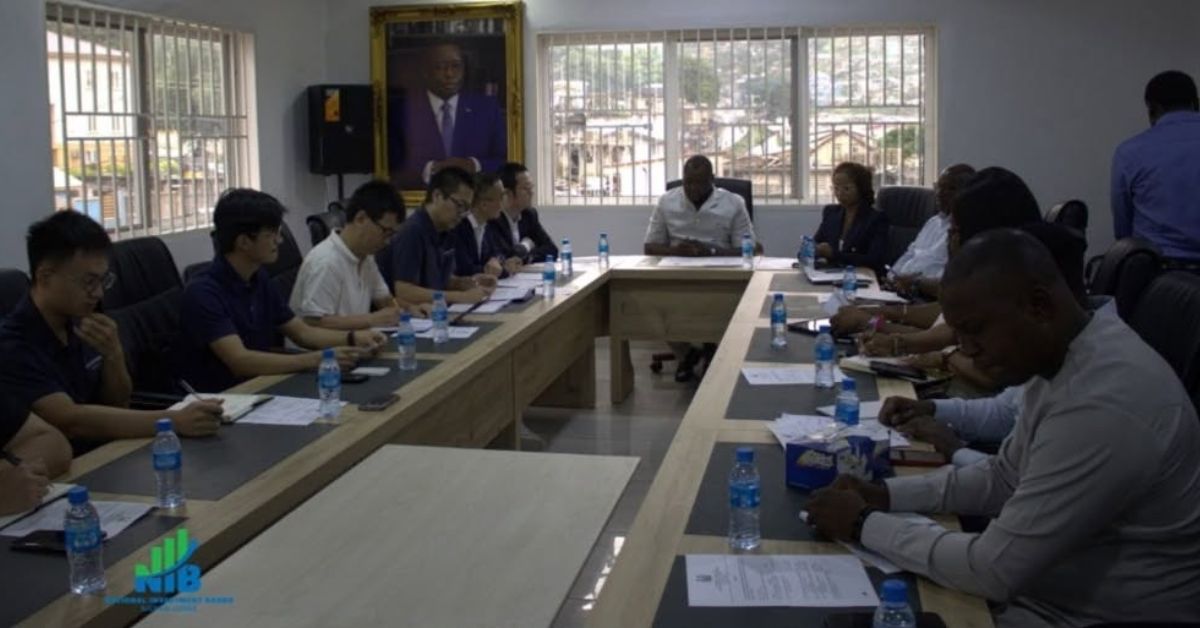
 The National Investment Board (NIB) and the Embassy of the People’s Republic of China in Sierra Leone have convened a roundtable discussion to address operational and policy challenges affecting Chinese businesses operating in the country.
The engagement brought together representatives of the Chinese Chamber of Commerce in Sierra Leone, government officials, and other stakeholders to identify barriers facing investors and explore measures to improve the investment environment.
During the discussion, Chinese business representatives highlighted several challenges affecting their operations, including limited consultation before the introduction of new policies, inconsistent implementation of regulations across government institutions, delays in payments to contractors, and lengthy procedures for obtaining work and residence permits.

The Chamber also called for stronger protection of legitimate investment rights, clearer policy direction, and increased incentives for businesses investing in strategic sectors of the economy.


Responding to the concerns, NIB Executive Director Dr. Edward Hinga Sandy reaffirmed the government’s commitment to creating a transparent and investor-friendly environment. He outlined plans to establish an integrated One Stop Investment Centre and develop an online platform to simplify business registration, licensing, and permit processes.
According to NIB officials, the reforms are part of broader efforts to reduce bureaucratic challenges, improve investor support services, and strengthen confidence among both domestic and foreign investors.
Government representatives also reminded Chinese companies of their responsibilities under Sierra Leonean law, including compliance with labour regulations, submission of annual returns, and adherence to local content requirements.
Embassy Secretary Liv Siyo encouraged Chinese businesses to continue respecting national laws while urging authorities to protect the legitimate interests and rights of investors.
The Chinese Chamber of Commerce acknowledged the significant contributions of Chinese businesses to Sierra Leone’s economy through investment, job creation, and support for national development. However, it warned that unresolved administrative and policy challenges could affect future foreign direct investment inflows.
Both parties agreed that the roundtable should serve as the beginning of continued engagement, with NIB committing to coordinate follow-up discussions with relevant Ministries, Departments and Agencies (MDAs) to address key issues raised.
The Chamber also pledged to encourage its members to comply with national regulations and maintain constructive dialogue with government institutions.
The meeting highlighted a shared commitment to improving Sierra Leone’s investment climate, with stakeholders emphasizing that measurable progress in reducing delays, ensuring policy consistency, and strengthening investor protections will be critical to attracting more investment into the country.