
CSOs, Women Leaders Urge Greater Inclusion of Women in Sierra Leone’s Constitutional Reform
 Osman Tolo Sesay
 Civil society organisations and women leaders from across Sierra Leone have called for stronger inclusion of women in the country’s ongoing constitutional reform process, with a focus on broader consultation, civic education and meaningful participation in decision-making.
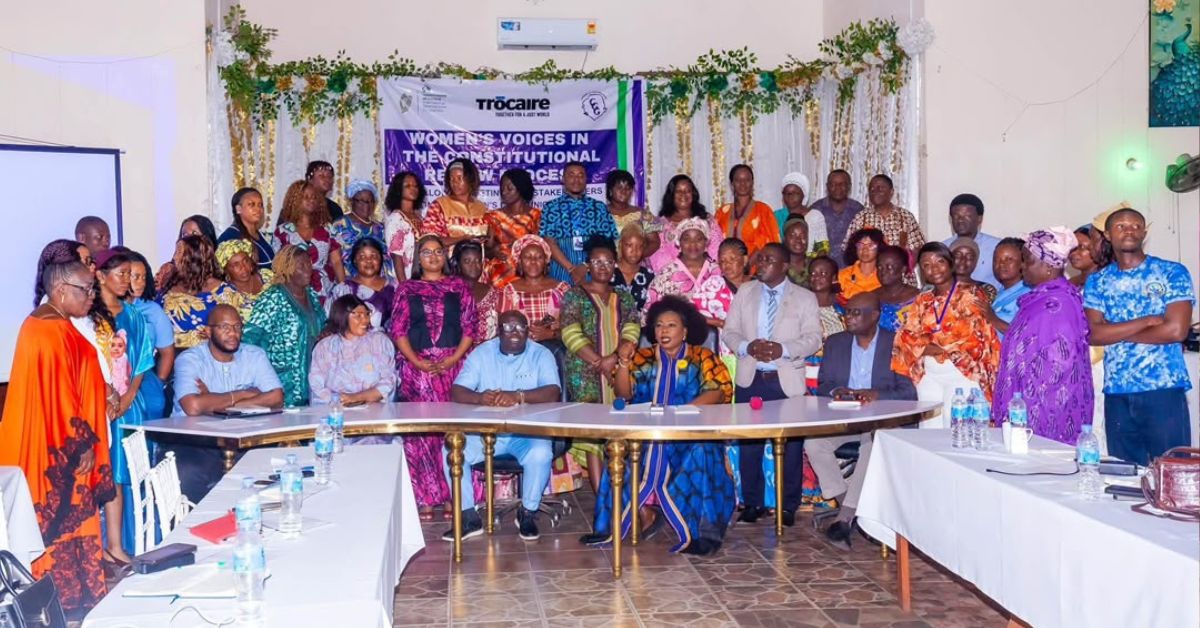
The call was made at a National Women’s Conference organised by the Campaign for Good Governance (CGG), in collaboration with partners through its National Advocacy for Women’s Empowerment (NAWE), with support from Trócaire/Irish Aid. The conference was held on September 11, 2026, at the Vanilla Complex in Aberdeen, Freetown, and brought together women leaders and stakeholders from all 16 districts.
Discussions focused on women’s political representation, equality, participation in governance and whether women’s priorities are adequately reflected in proposed constitutional reforms. Participants also examined the proposed 30 percent quota for women in political nominations and questioned whether nomination requirements would translate into actual representation in Parliament and other decision-making institutions.

CGG Executive Director Mrs Marcella Samba Sesay stressed the need for women to participate meaningfully in national decision-making. She also highlighted the need for increased civic education after only seven of about 80 participants indicated that they were familiar with the contents of the Constitutional Amendment Bill 2025.

Governance expert Ibrahim Bangura Esq. provided an overview of the proposed constitutional amendments and previous reform initiatives, including the Tucker Report, Cowan review, government White Papers, the 2023 Agreement for National Unity and the 2024 Tripartite Report. His presentation examined electoral arrangements including proportional representation, first-past-the-post elections, presidential elections, independent candidacy and the composition of electoral institutions.
Representatives of political parties, Parliament, women’s organisations, disability groups and other civil society organisations also raised concerns about the participation of women, including women with disabilities, in governance and political leadership.
Representatives of the All-Political Parties’ Women’s Associations urged political parties to create more opportunities for women under both proportional representation and first-past-the-post systems, while other participants called for stronger protection of women’s rights, economic empowerment and measures to address violence against women.
The conference also called for greater public understanding of the constitutional reform process. Ministry of Gender and Children’s Affairs Chief Director Charles Vandi encouraged stakeholders to use social media and other communication platforms to expand civic education and public awareness.
At the conclusion of the conference, participants called for the government to release the final reviewed Constitution and maintain engagement with political parties, civil society organisations, women’s groups and other stakeholders.
They further urged sustained advocacy, greater inclusion of women with disabilities and other marginalised groups, stronger economic empowerment and continued monitoring and follow-up throughout the constitutional reform process.