Freetown Declaration: West African Experts Set 3-Year Plan to Tackle Unemployment

 Sahid Bangura
West African governments, regional institutions and private-sector stakeholders have adopted the Freetown Declaration, establishing a three-year roadmap to tackle youth unemployment, strengthen skills development and expand economic opportunities across the subregion.
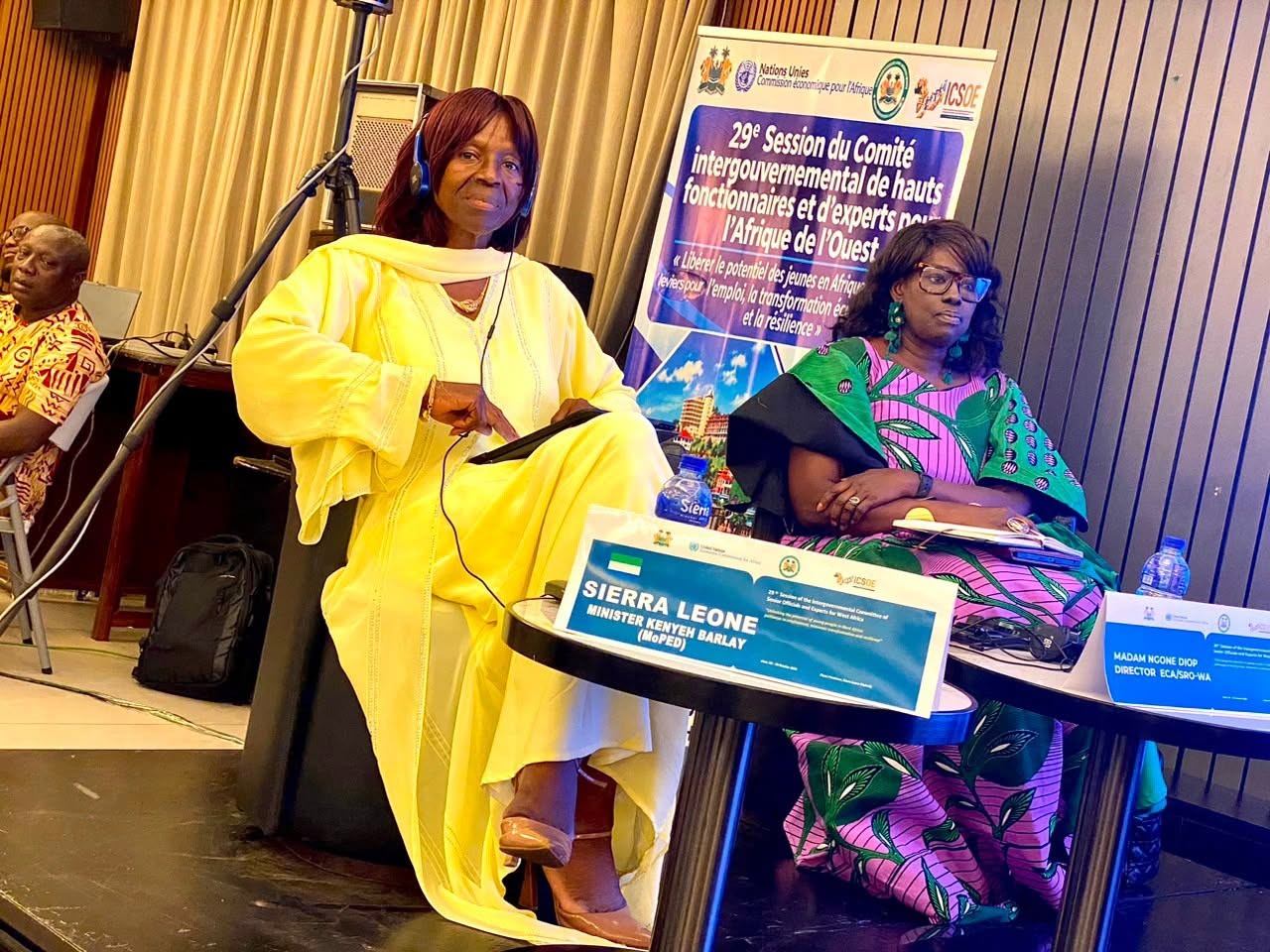
The declaration was adopted at the 29th Session of the Intergovernmental Committee of Senior Officials and Experts for West Africa, held in Freetown from 28 to 30 October 2026. The meeting was co-hosted by the Government of Sierra Leone and the United Nations Economic Commission for Africa (ECA), under the high patronage of President Julius Maada Bio.
Under the declaration, member States are expected to implement a series of short-, medium- and long-term measures, with specific timelines ranging from six months to 36 months. The recommendations prioritise investment in youth-focused programmes, improved education and vocational training, digital and entrepreneurial skills, and employment opportunities in agriculture, mining, manufacturing and other productive sectors.




Within the next six months, governments are expected to strengthen institutions responsible for youth development, align education and technical training with labour-market demands, and increase funding for programmes capable of creating jobs. They are also required to improve labour-market statistics and establish national records of public and private investments in young people.
The medium-term recommendations, covering the next 18 months, call for increased investment in sports infrastructure, technical and vocational education, youth-led businesses and agricultural enterprises. Governments are also urged to improve young people’s access to land and finance, decentralise training and business support to rural communities, strengthen regional trade and expand measures to address drug abuse among young people.
Over the next 36 months, member States are expected to harmonise educational curricula to ensure that skills and qualifications are recognised across West Africa, strengthen regional labour mobility and address literacy and numeracy gaps. The declaration also calls for sustained political commitment and stronger institutional coordination to ensure that youth development remains a priority in national policies and budgets.

The declaration further assigns responsibilities to the ECA, regional and international organisations, and the private sector. The ECA is expected to strengthen regional cooperation, improve monitoring systems and support governments in tracking public expenditure on young people, while private-sector organisations are encouraged to establish apprenticeship programmes, invest in job-creating industries and expand access to markets, finance and mentorship for young entrepreneurs.
To ensure accountability, the Bureau of the Committee, with support from the ECA, has been tasked with developing a monitoring scorecard to track implementation of the recommendations and report progress at the 30th session.
The Freetown Declaration reinforces West Africa’s commitment to transforming its youthful population into a driver of economic growth, regional integration and sustainable development. However, its success will depend on governments and other stakeholders translating the agreed commitments into adequately funded programmes and measurable employment opportunities for young people.