
Chief Justice Kamanda Pushes Stronger Judicial Protection for Women and Girls
 Sia Lucy Kannah
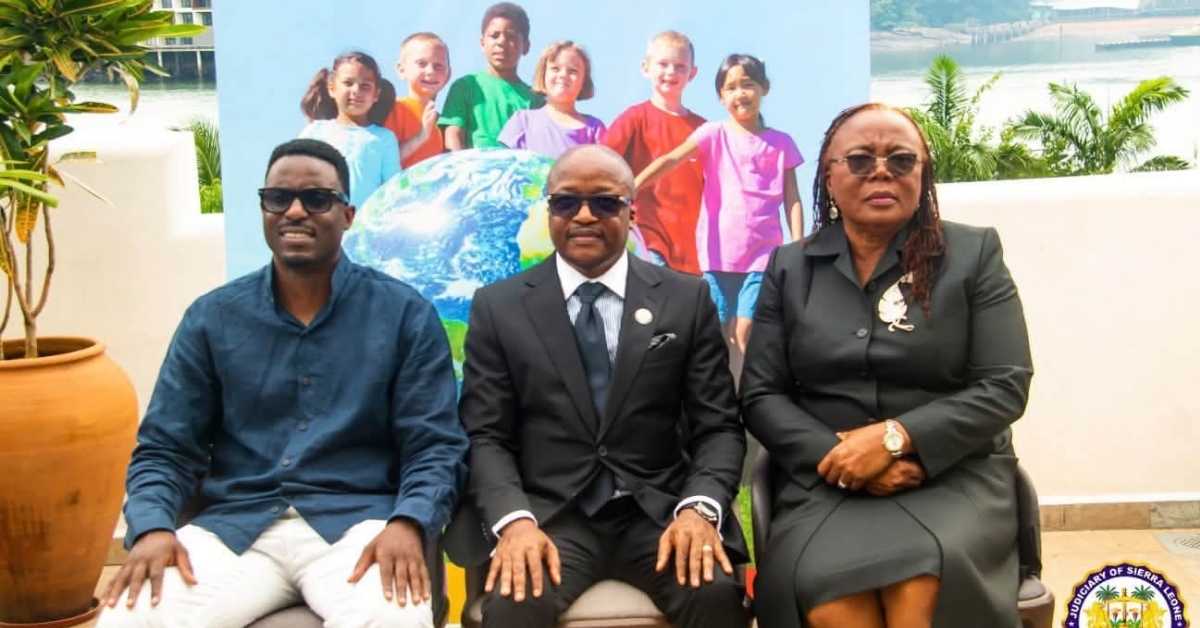
 The Chief Justice of Sierra Leone, Justice Komba Kamanda, has called on African judiciaries to strengthen the judicial interpretation and enforcement of women’s health and reproductive rights through gender-sensitive adjudication and effective access to justice.
Chief Justice Kamanda made the call while delivering the keynote address at a Regional Judicial Colloquium organised by the Africa Judges and Jurists Forum (AJJF) and the Centre for Human Rights of the University of Pretoria, South Africa.
The colloquium focused on the judicial enforcement of Article 14 of the Protocol to the African Charter on Human and Peoples’ Rights on the Rights of Women in Africa, commonly known as the Maputo Protocol. The provision contains protections relating to women’s sexual and reproductive health and rights.

In his keynote address, Chief Justice Kamanda urged African courts to ensure that rights guaranteed under regional and international human rights instruments are translated into practical realities for women and girls rather than remaining merely “aspirational promises”.


He emphasised the importance of interpreting Article 14 of the Maputo Protocol alongside Article 16 of the African Charter on Human and Peoples’ Rights, which guarantees every individual the right to enjoy the best attainable state of physical and mental health.
The Chief Justice further urged judges to consider the practical impact of laws, policies and judicial decisions on women and girls, particularly those facing unequal bargaining power, economic dependence, gender-based violence, stigma, or limited access to healthcare and legal assistance.
He cautioned judges against allowing stereotypes relating to motherhood, sexuality, marriage, family responsibilities and gender roles to influence judicial reasoning, the assessment of evidence or the determination of credibility.
“True impartiality requires the court to approach each case without stereotypes or preconceived assumptions,” Chief Justice Kamanda stated.
Chief Justice Kamanda also highlighted the progress Sierra Leone has made in strengthening legal and institutional protections for women and girls. He nevertheless underscored the important role of the judiciary in ensuring that legislative and policy commitments are translated into effective protection and meaningful access to justice.
He encouraged participants to use the colloquium to examine emerging challenges, strengthen judicial jurisprudence and identify practical approaches to enhance the enforcement of women’s health and reproductive rights across African jurisdictions.
The President of Legal Access through Women Yearning for Equality, Rights and Social Justice (LAWYERS), Menisa Sesay, expressed appreciation to the Africa Judges and Jurists Forum and the Centre for Human Rights of the University of Pretoria for convening the colloquium.
She described women’s health and reproductive rights as fundamental human rights and emphasised the importance of continued engagement among judicial institutions, legal practitioners and civil-society organisations in advancing their effective protection.