

President Maada Bio Tours Torma Bum Rice Project to Boost Feed Salone Agenda
 Kanja Sesay
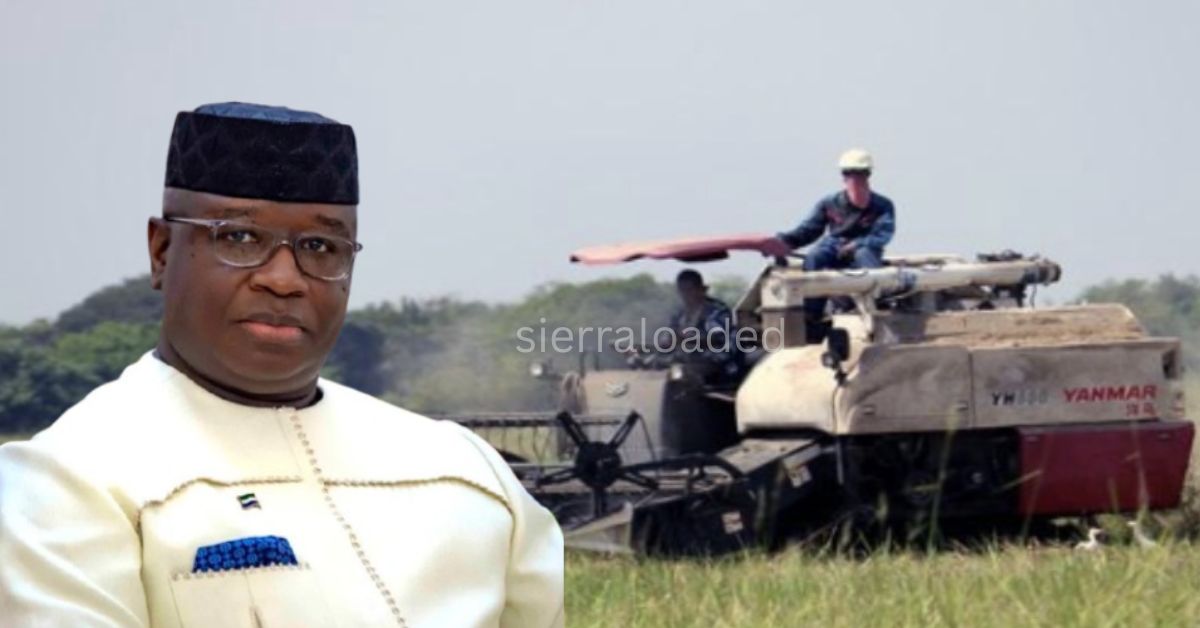
 President Julius Maada Bio has visited Torma Bum in Bonthe District to inspect progress on the Torma Bum Rice Project, a key pillar of the government’s flagship Feed Salone Agenda aimed at transforming Sierra Leone’s agricultural sector and achieving food self-sufficiency.
The inspection, conducted on July 31, 2026, focused on ongoing efforts to expand irrigation systems, increase rice production, and strengthen national food security. The project forms part of a broader government strategy to shift the country from reliance on imported food to sustainable domestic production.
The Torma Bum Rice Project stands as one of the most ambitious agricultural investments in Sierra Leone. According to Minister of Agriculture and Food Security, Dr Henry Musa Kpaka, the full development of the Torma Bum Rice Industrial Complex requires an estimated $800 million, of which $480 million has already been secured. Once completed, the initiative is expected to reduce the country’s dependence on imported rice by up to 75 per cent.

The project includes large-scale acquisition of farm machinery, development of irrigation infrastructure, and expansion of rice processing facilities to support both production and value addition. The African Development Bank has committed $100 million to support implementation, further strengthening the project’s financial base.
Torma Bum’s agricultural potential is underpinned by its highly fertile soils, classified as Umbric Fluvisol, which are rich in organic carbon and supported by an extensive network of rivers, lakes, and water systems. These natural advantages position the area as a strategic hub for large-scale rice cultivation.
Ongoing irrigation works remain central to the project’s success, with visible progress on canal construction, water control systems, and land preparation. Government officials have emphasised that the irrigation scheme is critical to enabling year-round farming and maximising output in the region.
During the visit, President Bio also inspected the near-completed Tormabum Rice Hub, an integrated facility designed to handle milling, storage, and aggregation. The hub is expected to reduce post-harvest losses, improve product quality, and enhance market access for farmers once it becomes fully operational.
The visit builds on earlier infrastructure investments under the Feed Salone Agenda, including the commissioning of the Mattru-Senehun Bridge in July 2025, which was aimed at improving connectivity between farming communities and markets. The government maintains that strengthening agricultural infrastructure is essential to unlocking productivity and ensuring long-term food security.