

PMB Chairman Bob-Katta Pushes for Natural Capital to Be Valued at London Coffee Summit
 Aaron Parker
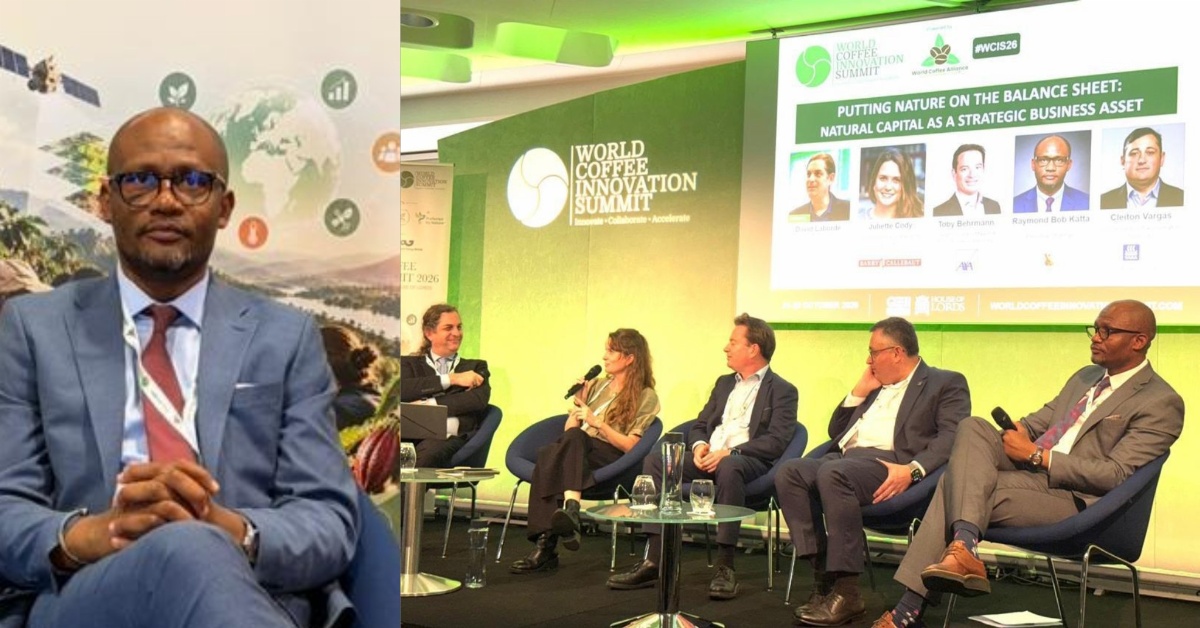
The Executive Chairman of Sierra Leone’s Produce Monitoring Board (PMB), Raymond Bob-Katta, has called for natural capital to be recognised and valued as a strategic business asset, arguing that the ecosystems supporting agricultural production should be factored into financial and commercial decisions.
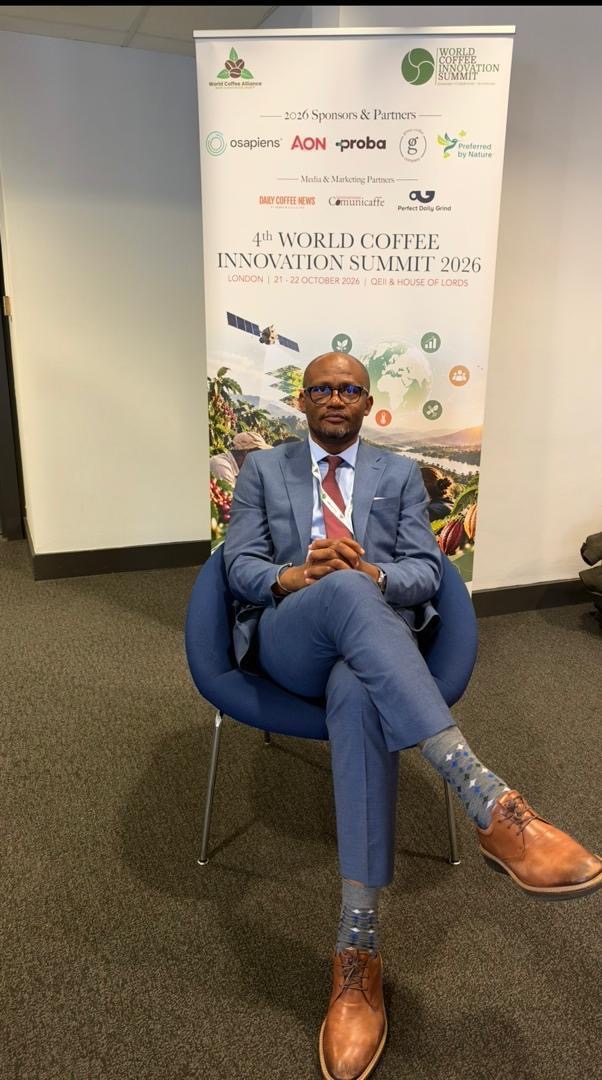
Bob-Katta made the call while speaking on a World Coffee Alliance panel titled “Putting Nature on the Balance Sheet: Natural Capital as a Strategic Business Asset” at the World Coffee Innovation Summit in London, held from 21 to 22 October 2026.
Addressing European commodity-finance leaders, global coffee roasters and development-finance institutions, the PMB chairman argued that the global commodities market continues to place significant value on factors such as weather, freight and market volatility while failing to adequately account for the natural resources that sustain agricultural production.

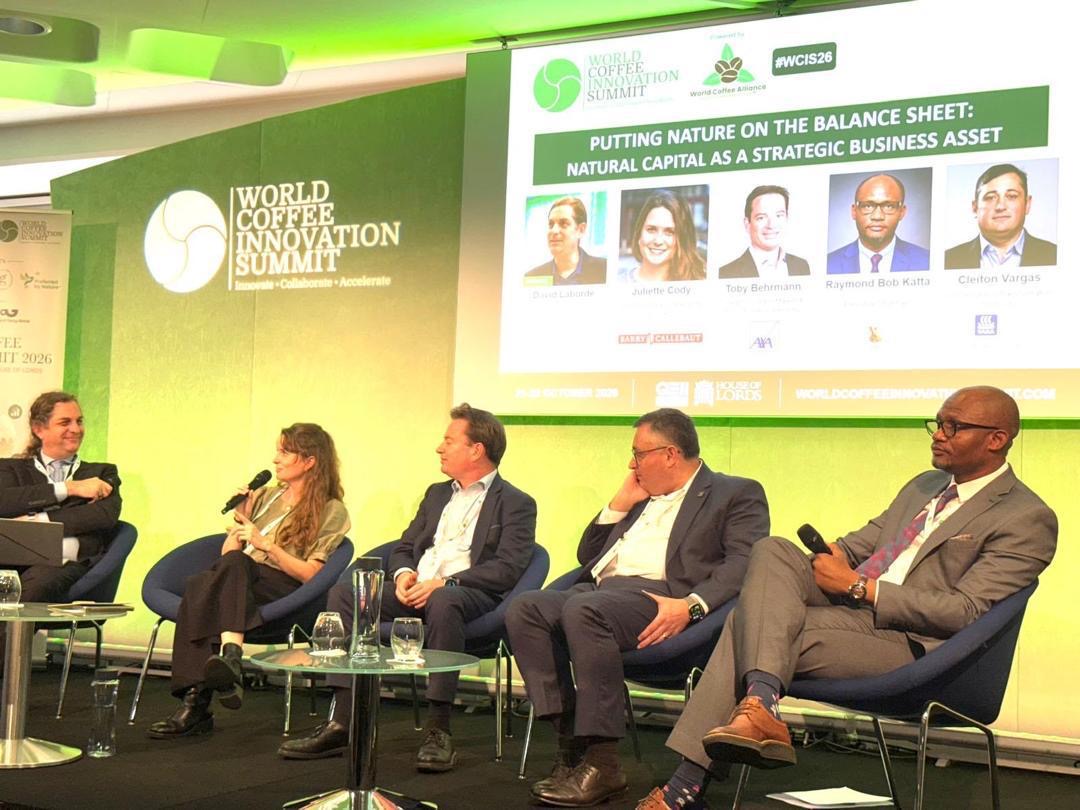


“We discuss a US$3–4 billion smallholder-finance gap within a US$19 trillion global commodity-derivatives market that prices weather, freight and volatility to the second decimal place yet prices nature at zero until it collapses. Putting nature on the balance sheet is not ESG. It is risk pricing,” Bob-Katta said.
He also introduced what he described as the “Bean-to-Biome Thesis”, advocating for an expansion of coffee traceability systems beyond the movement of beans through the supply chain to include the ecosystems that support their production.
According to him, forests, soil quality and biodiversity should be recognised as productive assets rather than treated solely as environmental or corporate social responsibility concerns.
“The industry perfected bean-to-cup traceability. The next frontier is bean-to-biome accountability,” he said, citing the Kasewe and Kambui Hills as examples of landscapes whose ecological value supports agricultural production.
Bob-Katta highlighted the importance of making smallholder farmers and their production systems more visible to financial institutions through reliable data, verifiable identities and internationally aligned quality standards.
He disclosed that the PMB has more than 12,000 registered smallholders whose production histories have been mapped, arguing that improved documentation and verification could help connect farmers to financing opportunities.
As the statutory regulator responsible for quality assurance, inspection and export compliance, he said the PMB was advancing systems designed to improve the credibility of agricultural production data and strengthen the foundation for financing.
The chairman also linked the board’s quality-assurance efforts to President Julius Maada Bio’s Big Five agenda and the Feed Salone initiative, stressing that quality standards could help Sierra Leone strengthen its competitiveness in international agricultural markets.
“Quality is not a hurdle imposed from outside. It is sovereignty exercised from within,” Bob-Katta said, adding that the country must be able to verify the quality and value of its produce to retain a greater share of the benefits generated through international trade.
The PMB chairman outlined three mechanisms he believes could help bridge the gap between agricultural producers and financial institutions: de-risked aggregation, digital collateral and resilience-priced offtake.
De-risked aggregation involves organising agricultural supplies in ways that improve reliability and reduce transaction risks for buyers and financiers.
Digital collateral, meanwhile, would rely on georeferenced farms and dependable production records to provide financial institutions with better information when assessing farmers and their financing needs.
Resilience-priced offtake would involve purchasing arrangements through which premiums could reward verified environmental and landscape-resilience benefits associated with agricultural production.
“Capital does not lack liquidity. It lacks capillaries,” he said, arguing that stronger connections between financing systems, producers and verified production data could improve access to capital.
Bob-Katta added that linking these mechanisms could enable smallholder farmers in Kenema and fund managers in London to make decisions based on shared information about production volumes, quality standards and risk.
In his concluding remarks, the PMB chairman urged producing countries to focus not only on securing a share of global agricultural value chains but also on ensuring that their contributions to those chains are properly recognised and valued.
“Do not ask how to include Africa in the value chain. Ask how to price Africa’s contribution to the survival of that chain. Sierra Leone is not here merely to ask for a share. We are here to build the infrastructure that allows Africa to price its contribution—and retain the value,” he said.
His intervention highlighted the potential role of regulatory systems, traceability, reliable production data and quality infrastructure in connecting the environmental contribution of agricultural landscapes to commercial decision-making.
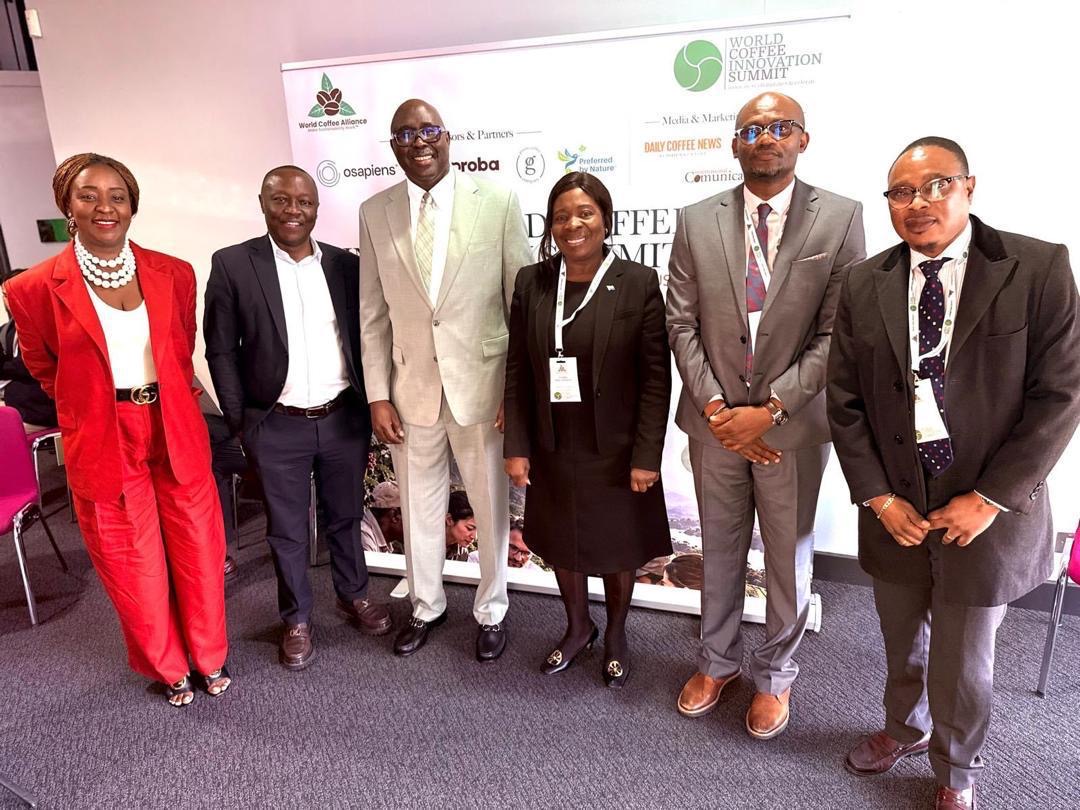
For Sierra Leone, the approach presents an argument for recognising the value of smallholder farmers and the natural resources that sustain production, while strengthening the country’s position in international commodity markets.
The World Coffee Innovation Summit brought together industry stakeholders to discuss developments and challenges shaping the global coffee sector, including innovation, finance and sustainability.