

Former President Koroma and Peace Commission Partner for National Cohesion
 Sia Lucy Kannah
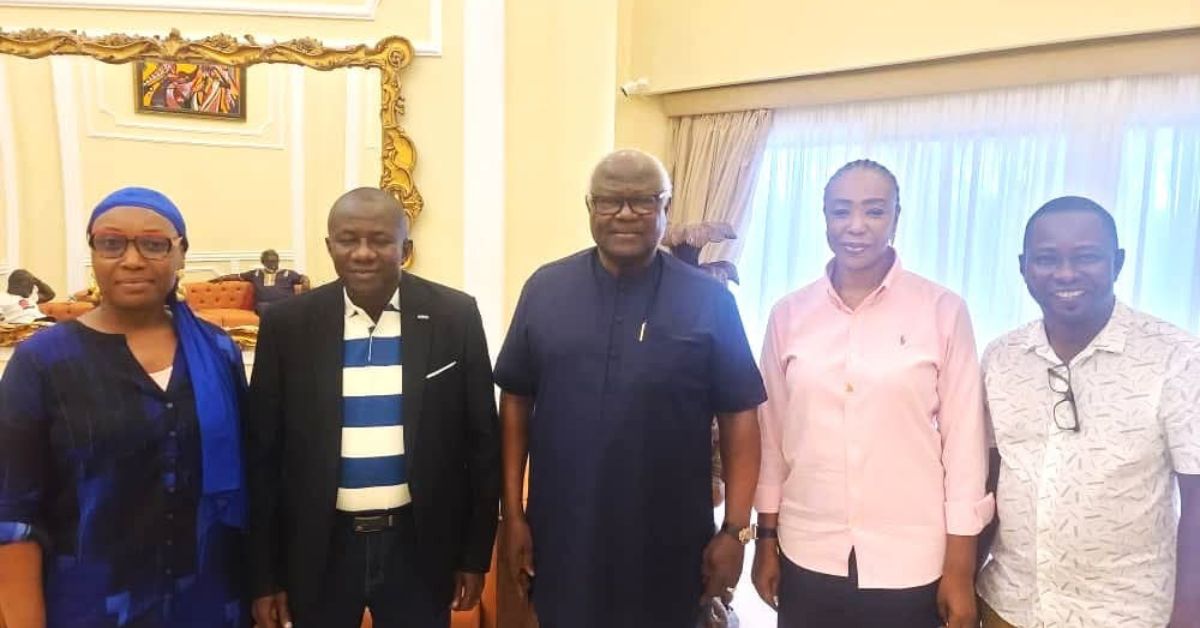
 Former President Ernest Bai Koroma met with a high-level delegation from the Independent Commission for Peace and National Cohesion (ICPNC) on Saturday, September 12, 2026, to discuss strategic collaborations aimed at preventing conflict and bolstering national unity across Sierra Leone.
The delegation, led by Peace Commission Board Chairman Rev. Shodankeh Johnson, visited the former President following his recent return to the country. The meeting was attended by key commission leaders, including Executive Secretary Hawa Sally Samai, Director of Conflict Prevention Adikalie Sheku Kamara, and Deputy Director of Communications and Outreach Hawa Barrie.
Rev. Shodankeh welcomed Former President Koroma back home, expressing gratitude for his ongoing commitment to Sierra Leone’s stability. Reflecting on the nation’s post-war trajectory, the Board Chairman reaffirmed the Commission’s dedication to engaging experienced national stakeholders whose influence can help consolidate peace and social cohesion.

Reciprocating the warm welcome, Koroma noted that he was pleased to meet the delegation in good health and emphasized that his return is in a non-official capacity. He stated that as a retired statesman, his primary focus will be on advancing peacebuilding, good governance, and national development.

A primary focus of the discussions was the imperative to move away from reactive crisis management toward proactive, preventive interventions.
Former President Koroma cautioned against relying on a “fire brigade” approach to conflict resolution, urging the Commission to capitalize on periods of relative stability to identify early warning signs and address underlying grievances.
“Peacebuilding should not receive attention only when tensions or crises emerge,” Koroma stated, urging the body to double down on early warning frameworks to address emerging risks before they escalate.
Drawing on regional experiences, Koroma highlighted the role retired Heads of State play across West Africa in supporting dialogue and mediation. Citing his work with the West African Elders Forum, he noted that Sierra Leone could similarly draw on the experience of its former leaders to complement statutory peace institutions.
He also shared plans to establish a foundation dedicated to peace, democratic governance, and development, an initiative he has already discussed with President Julius Maada Bio, which could serve as a direct partner to the Peace Commission.
The engagement concluded with both parties agreeing to establish formal avenues for collaboration centered on early warning, structured dialogue, and long-term national reconciliation.