

Pressure Mounts on President Bio to Reject Controversial Constitutional Amendment Bill
 Jayah Koker
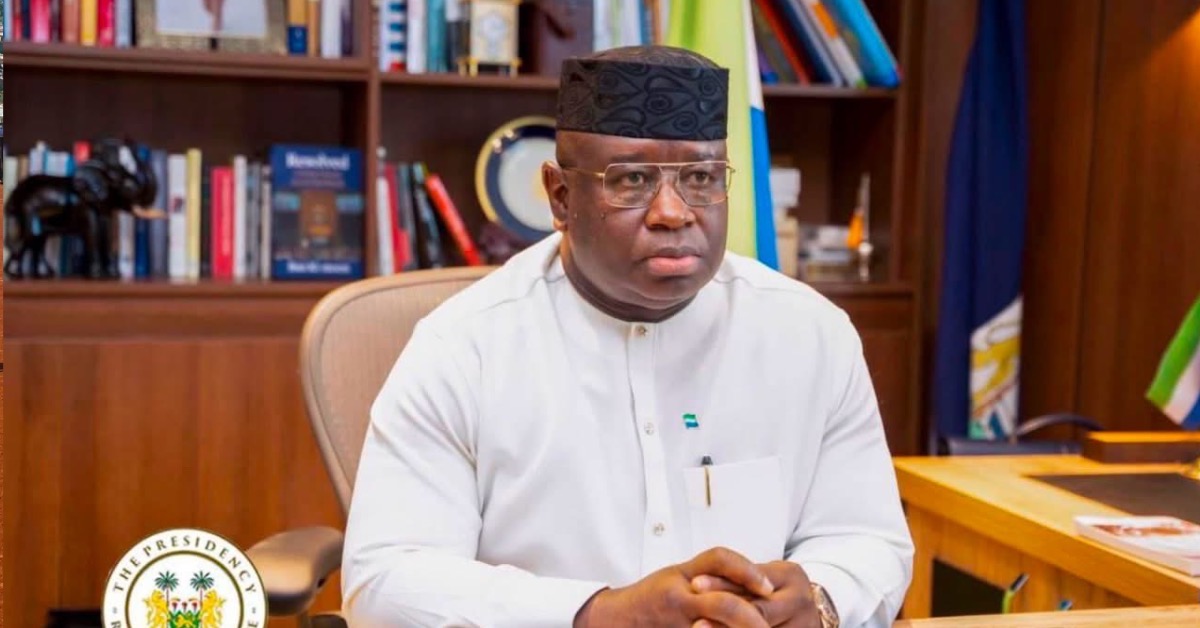
 Pressure is mounting on President Julius Maada Bio over the Constitutional Amendment Bill recently passed by Parliament, with voices from civil society, professional bodies, religious groups, lawyers and opposition circles raising concerns about the legislation and its potential implications for democratic governance.
The Inter-Religious Council, Labour Congress, Sierra Leone Association of Journalists (SLAJ), Christian Association of Sierra Leone (CAN), Campaign for Human Rights and Development International (CHRDI), legal practitioners, opposition figures and other concerned citizens have expressed reservations about aspects of the amendment process and urged the President to carefully consider the Bill before deciding whether to assent to it.
The debate has also prompted wider reflection on President Bio’s democratic legacy.

Poet and writer Oumar Farouk Sesay has argued that, three decades after Bio relinquished military power to an elected civilian government, the President now faces another defining test of his political legacy: whether executive power will remain subject to constitutional restraint.


Former Attorney General Sulaiman Banja Tejan-Sie has similarly appealed to President Bio to “hold the pen,” urging him to consider the broader democratic implications of assenting to the legislation.
President Bio’s administration has received recognition for several reforms, including the abolition of the death penalty and the repeal of criminal and seditious libel laws. However, critics have also raised concerns over other developments during his tenure, arguing that they have affected public confidence in the government’s commitment to democratic accountability.
Among the issues cited by critics are the suspension and subsequent removal of the Auditor-General, disagreements involving the National Election Watch (NEW), tensions surrounding professional and legal associations, and the government’s handling of activist Zainab Sheriff. Critics have also pointed to the country’s challenges with the kush drug crisis and its involvement in international investigations into transnational drug trafficking.
At the centre of the current constitutional debate is the scope of presidential authority.
The Supreme Court’s interpretation of the phrase “supreme executive authority” has previously attracted debate, with critics arguing that the provision gives the presidency considerable constitutional powers. The issue has also featured in political debates involving the Sierra Leone People’s Party (SLPP), including during periods when the party was in opposition.
Critics of the current amendment process argue that constitutional questions should not be reduced to partisan arguments over the conduct of previous administrations. Instead, they say, the focus should remain on the supremacy of the Constitution, institutional checks and balances, and the long-term interests of Sierra Leone’s democratic system.
For President Bio, the decision on whether to assent to the Bill could therefore carry implications beyond the immediate political debate.
Supporters and critics alike are likely to assess the decision against the broader record of his presidency and his stated commitment to democratic governance and institutional reform.
As the Bill awaits presidential action, attention is now focused on State House and the decision President Bio will ultimately make on the legislation.
That decision, political observers say, could become an important chapter in the historical assessment of his presidency and Sierra Leone’s continuing constitutional development.