

SLPP, APC and CSOs Debate Two-Thirds Threshold for Constitutional Amendments

 Kanja Sesay
 Representatives of Sierra Leone’s ruling Sierra Leone People’s Party (SLPP), opposition All People’s Congress (APC) and civil society organizations, have debated the constitutional threshold required for Parliament to amend the country’s Constitution, with competing interpretations emerging over Section 108(2)(b) of the 1991 Constitution.
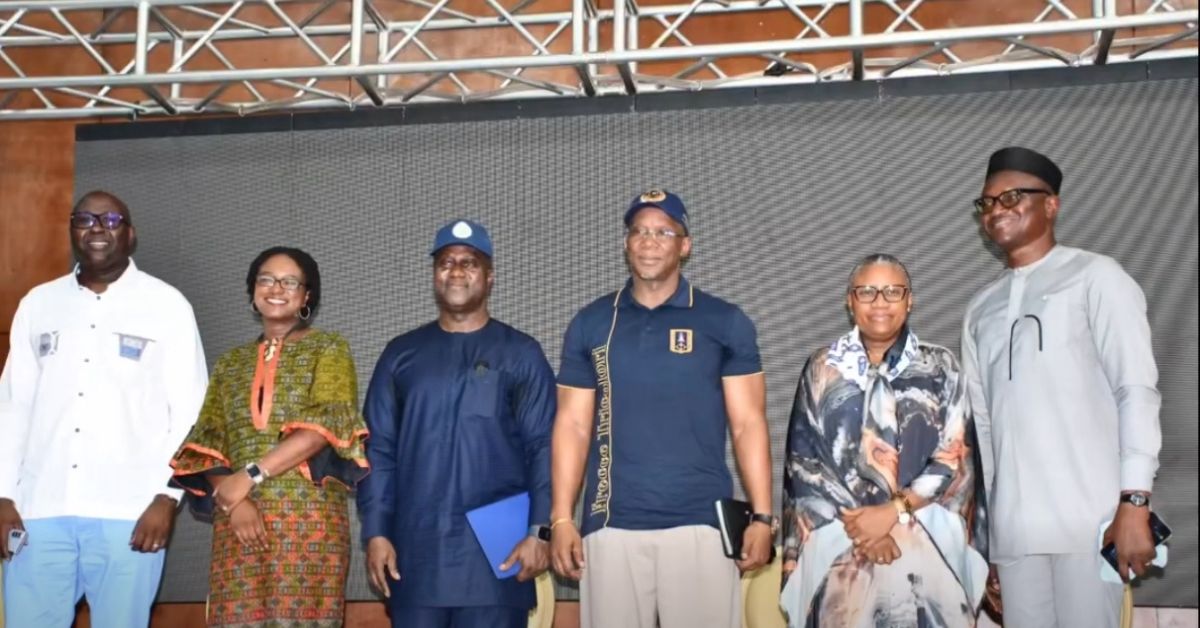
The debate was held on Friday, September 18, 2026, at the New Brookfields Hotel in Freetown. It was organized by a coalition comprising Liberty Online TV, Truth Media, Sierra Eye Magazine and Engage Salone, in collaboration with the Institute for Legal Research and Advocacy for Justice (ILRAJ).
The motion before the debate was: “This House believes that Section 108(2)(b) requires the support of two-thirds of the entire membership of Parliament and not two-thirds of the Members present and voting.”

The discussion featured SLPP representative Hon. Hindolo Moiwo Gevao, lawyer and APC representative Ady Macauley, and civil society advocate Marcella Samba Sesay. Liberty Online TV’s Kadijah Bangura and Truth Media’s Amadu Lamrana Bah moderated the discussion.


The disagreement centres on the interpretation of Section 108(2)(b), which sets out the parliamentary voting requirement for constitutional amendments.
The controversy intensified following Parliament’s passage of the Constitution (Amendment) Bill, 2025, on August 10, 2026.
The issue became particularly contentious after APC Members of Parliament walked out of the Chamber during the sitting. The opposition objected to the interpretation of the required voting threshold, while Parliament proceeded with consideration and passage of the Bill.
The central question is whether the constitutional requirement for support from “not less than two-thirds of the Members of Parliament” refers to two-thirds of the entire membership of the House or two-thirds of Members present and voting.
Representing the SLPP, Hon. Hindolo Moiwo Gevao defended the parliamentary process and argued that the two-thirds requirement referred to Members who were present and voting.
Gevao argued that the wording of the Constitution, together with Parliament’s Standing Order 46, supported the interpretation applied during the proceedings.
He also maintained that Parliament had the necessary quorum to continue its business after opposition MPs left the Chamber.
The SLPP representative further argued that the constitutional reform process had not emerged suddenly, pointing to earlier constitutional review exercises and the subsequent Tripartite process involving the country’s major political parties.
His position was that the parliamentary process leading to the passage of the Bill was constitutionally valid.
APC representative Ady Macauley, a lawyer, took the opposing position, arguing that Section 108(2)(b) requires the support of two-thirds of Parliament’s entire membership rather than two-thirds of Members present and voting.
Macauley questioned whether the August 10 proceedings demonstrated that the constitutionally required threshold had been met.
He also argued that the absence of a recorded numerical vote was significant, given the specific numerical requirement contained in the constitutional provision.
Referring to Parliament’s membership, Macauley stated that the House has 149 Members, including Paramount Chief Members of Parliament.
He therefore maintained that the constitutional amendment process must take the entire membership into account and affirmed the motion before the debate.
Civil society representative Marcella Samba Sesay approached the matter from a broader governance perspective, criticizing political actors for what she described as failures to uphold principles of good governance.
She argued that the dispute was not simply about the interpretation of Section 108 but reflected what she characterized as an elite political bargaining process that had broken down.
“This is an elite political settlement gone wrong,” Samba-Sesay said. “The Constitution is not for the court.”
She argued that the Constitution should protect citizens, provide clear guidance and uphold democratic principles and the rule of law.
Samba-Sesay also referred to recommendations contained in the Truth and Reconciliation Commission Report concerning a new constitution-building process.
The disagreement over Section 108(2)(b) has extended beyond Parliament, with the interpretation of the constitutional provision now subject to judicial consideration.
According to the information presented during the debate, President Julius Maada Bio referred constitutional questions concerning the amendment process to the Supreme Court on September 16, 2026, following a petition by the Institute for Governance Reform (IGR).
The petition seeks clarification on whether the phrase “two-thirds of the Members of Parliament” means two-thirds of all Members, including those absent from the sitting, or two-thirds of Members present when the vote was taken.
The Supreme Court has subsequently scheduled October 7, 2026, to hear matters relating to the constitutional amendment process.
The judicial proceedings mean that the competing interpretations discussed during the public debate remain unresolved.
Organizers said the event was intended to provide citizens with an opportunity to hear different perspectives on the constitutional controversy rather than influence the outcome of the court proceedings.
Amadu Lamrana Bah said the discussion was aimed at informing the public about the issues surrounding the amendment process and promoting respect for the rule of law.
The debate therefore provided a public platform for the ruling party, opposition and civil society to present their respective positions on the interpretation of Section 108(2)(b), as the matter moves into judicial consideration.
The Supreme Court’s determination is expected to provide further clarity on the constitutional voting threshold at the center of the dispute.