

U.S. Signals Trade and Investment Leverage as Sierra Leone Negotiates Critical Minerals Agreement
 Osman Tolo Sesay
 The United States is positioning trade, investment and development financing as key tools in its broader engagement with Sierra Leone as Freetown negotiates a potential Critical Minerals Agreement with Washington.
The position emerged during the confirmation hearing of Ambassador-designate Daniel Travis before the U.S. Senate Foreign Relations Committee, where he said he would use the range of U.S. government resources available to advance reforms and American commercial interests.
Travis said he would deploy “the full range of U.S. government tools available, including our MCC compact, DFC investments, and bilateral engagement, to advance reforms that benefit American businesses.”

His remarks place Sierra Leone’s $480 million Millennium Challenge Corporation compact and U.S. Development Finance Corporation investments among the instruments Washington could use to deepen economic engagement. The MCC compact includes reforms aimed at improving Sierra Leone’s electricity sector and is expected to support private-sector generation, including the DFC-financed Nant Energy project.


Travis also indicated that he would address governance concerns directly with Sierra Leonean officials where he believes U.S. interests are affected.
“Where governance falls short and American interests are affected, I will raise those concerns directly and privately with Sierra Leonean leadership. That is the basis of a productive relationship, and it is the approach I will bring to Freetown,” he said.
The comments come as Washington seeks to place greater emphasis on commercial partnerships and investment in its engagement with African countries.
“The United States is resetting its relationship with Africa. We are moving away from aid and dependency toward trade, investment, and mutual benefit. Sierra Leone is a place where that vision can deliver real results, and if confirmed, I intend to make it happen.”
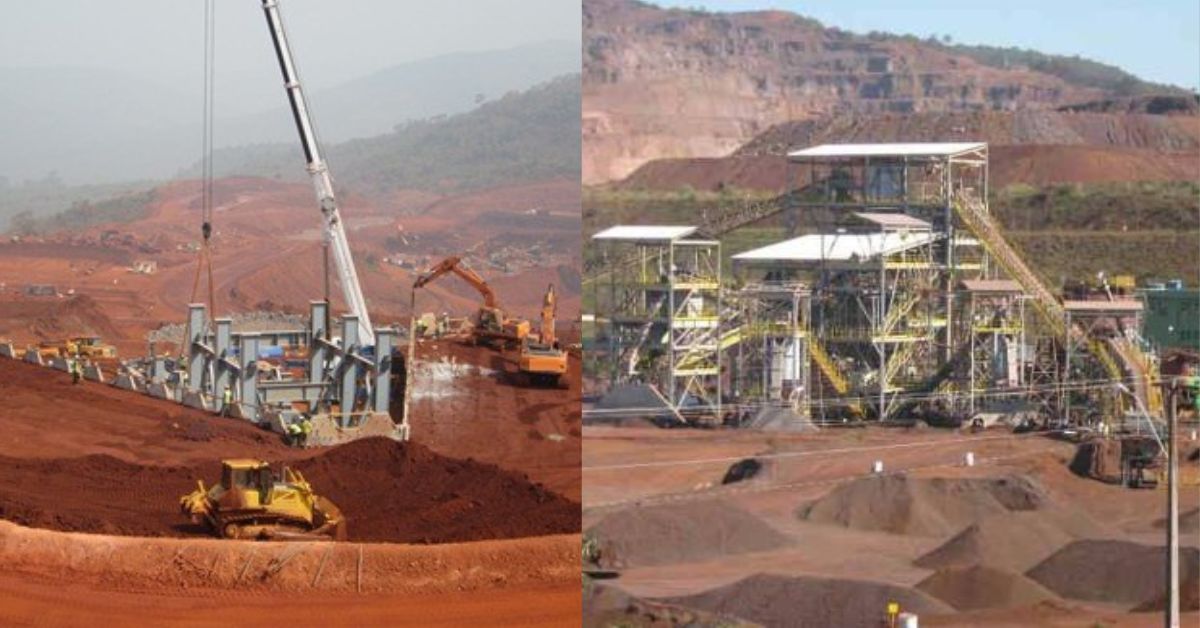
Travis pointed to Sierra Leone’s mineral resources, existing U.S. commercial interests and the country’s potential to attract additional American investment as areas of strategic importance.
He also referenced the Nant Energy project, which is backed by the DFC. The U.S. agency approved up to $412 million in financing and political-risk insurance for the power project, which is expected to significantly increase Sierra Leone’s electricity-generation capacity.
The MCC has also explicitly linked its Sierra Leone compact to broader private-sector investment, saying the program is expected to facilitate additional power generation, including Nant Energy.
Within Sierra Leone, Minister of Mines and Mineral Resources Daniel Mattai and other government officials met a couple of weeks ago along the Freetown Peninsular to discuss the CMA and develop a proposal to be presented to the U.S. government.
A reliable source within government also confirmed that a U.S. team visited Freetown between July 26–29 to discuss the CMA. However, the U.S. Embassy disputed that characterisation.
“A U.S. delegation travelled to Sierra Leone on June 26–29 to discuss commercial relations. The visit was unrelated to critical minerals,” the Embassy confirmed in response to inquiries made by Truth Media.
The Ministry of Information and Civic Education has confirmed that negotiations over the proposed agreement are ongoing but said no agreement has yet been approved.
“The agreement is being negotiated. We are at advanced stages. Nothing is approved yet, so it will be premature to share specific provisions. The relationship is that, if and when approved by all parties, it will form part of the broader USA investment in Sierra Leone and part of our broader mutually beneficial partnership,” Chernor Bah, Minister of Information and Civic Education.
Travis’ nomination is part of Washington’s broader effort to strengthen economic and strategic ties with Sierra Leone. The U.S. Senate lists him as President Donald Trump’s nominee to serve as ambassador to Sierra Leone.
The proposed CMA therefore places Freetown at the intersection of mineral resources, foreign investment and U.S. strategic interests. While negotiations continue, the Sierra Leonean government faces the task of balancing the potential benefits of expanded investment with national priorities and the protection of the country’s economic interests.
The West is always interested in exploitation of minerals in Africa. Sierra Leone is endowed with huge natural resources. Sierra Leone is still counted among the poorest of the poor in the world. An unfortunate scenario. The youths and even those citizens in higher national offices are fighting helter skelter to go and make homes abroad. Unfortunately, some youths die in the desert and the perilous journey across the Mediterranean sea. Those in higher offices will engage in all sorts of activities not compatible to their status just to make sure they amass enough cash to finance their way to the West. Don’t ask me for evidence oo. Just look around you to see abject poverty on the faces of people. STOP selling RAW materials and exporting jobs in the process. START building industries and ADD VALUE to the resources before exportation. My opinion.