

Op-Ed: The Chief Justice as Plaintiff, Prosecutor, and Judge: Who Protects the Constitution?
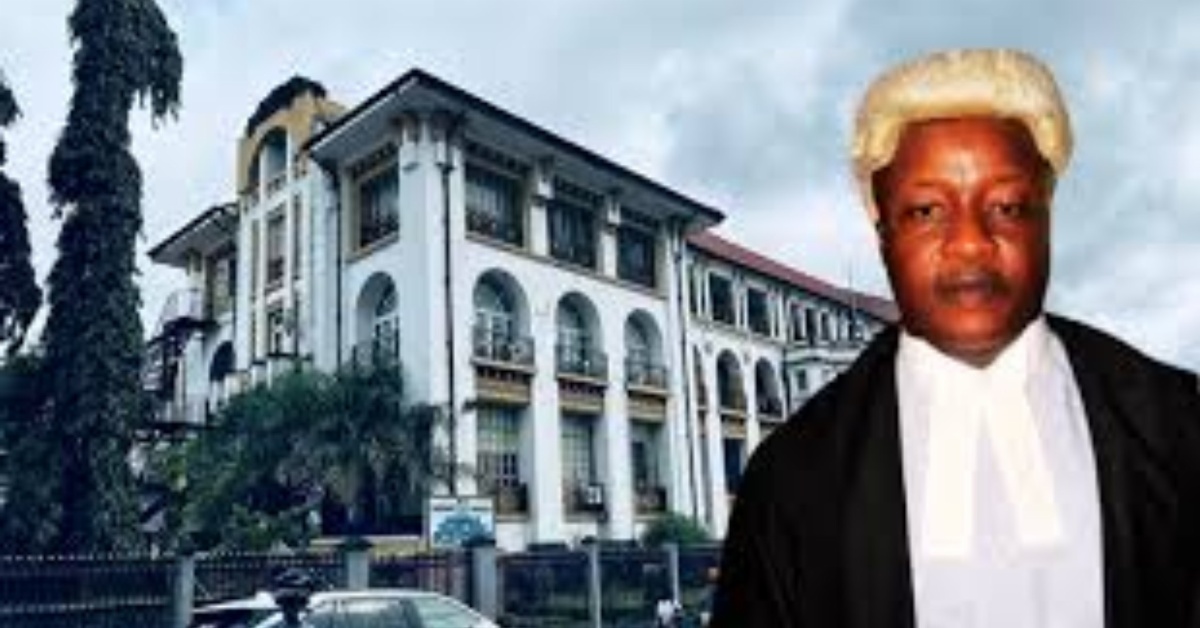
Chief Justice Komba Kamanda is right to remind lawyers that they are officers of the court and must respect judicial authority. But respect is not a one-way obligation. Judges must demonstrate the same discipline, fairness, and restraint they demand from lawyers.
Now that the contempt matter involving Joseph Fitzgerald Kamara (JFK) has been discharged following the acceptance of his apology, I believe we must look beyond the resolution and examine the troubling questions it leaves behind.
My central concern is simple: How did the Chief Justice appear to become the plaintiff, the prosecutor, and the judge in a matter arising from a confrontation in which he was personally involved?

THREE ROLES, ONE PERSON?
Consider what reportedly happened.
The Chief Justice took exception to JFK’s remarks. He demanded an apology and retraction, considered the apology inadequate, and subsequently ordered his detention.

In practical terms, the Chief Justice appeared to occupy three positions: the aggrieved party, the authority pursuing the contempt allegation, and the judge determining the consequences.
I recognize that these are not necessarily three separate legal roles in contempt proceedings. Courts possess the authority to address misconduct committed in their presence.
But the fact that an action may fall within judicial powers does not automatically settle whether its exercise was fair, impartial, or appropriate.
When the person who considers himself offended also determines the consequences, should we not question whether sufficient distance existed between personal grievance and judicial responsibility?
This is precisely why the principle that no one should be a judge in their own cause remains so important.
THE CONSTITUTION IS NOT SILENT
Section 23 of Sierra Leone’s 1991 Constitution protects the principle of a fair hearing before an independent and impartial court in the proceedings to which its guarantees apply.
Section 120(5) recognizes the judiciary’s authority to punish contempt.
These principles must coexist. The power to punish cannot be separated from the responsibility to administer justice fairly.
The question is not whether Chief Justice Kamanda possesses judicial authority. The question is whether his personal involvement created an appearance of bias in the exercise of that authority.
That question deserves examination regardless of one’s opinion of JFK.
THE CASE IS OVER, BUT THE QUESTIONS REMAIN
The Court has accepted JFK’s apology and discharged him. That is a welcome development.
But does the discharge answer why detention became necessary after earlier apologies?
Could the matter have been handled through a warning, a formal reprimand, or another lawful measure?
And would it have strengthened public confidence if the contempt allegation had been considered by judges who were not personally involved in the confrontation?
I am not suggesting that lawyers should disrespect the Bench. Nor am I arguing that judges must tolerate conduct that genuinely obstructs justice.
My concern is about the concentration of authority and the importance of visible impartiality.
RESPECT MUST GO BOTH WAYS
The Chief Justice has reminded lawyers to control their emotions. I agree.
But I would respectfully ask: Should those entrusted with the highest judicial authority not be expected to demonstrate even greater restraint?
The Supreme Court was assembled to consider serious constitutional questions affecting Sierra Leone’s future, including the proposed constitutional amendments and Section 108.
Yet a confrontation over courtroom conduct became a national controversy, drawing attention away from those important issues.
Our judiciary must be strong enough to command respect, but also restrained enough to distinguish personal offence from threats to the administration of justice.
MY POSITION
I am writing as a concerned citizen who believes that constitutional governance must be measured not only by the powers institutions possess, but by how responsibly those powers are exercised.
The discharge of JFK brings the immediate contempt matter to an end. It does not automatically determine whether the earlier detention was constitutionally justified.
My concern remains the same: When the Chief Justice appears to be the aggrieved party, the prosecutor, and the judge, the public is entitled to ask whether justice was sufficiently independent of personal involvement.
Judicial independence must never be confused with immunity from scrutiny.
Chief Justice Kamanda has reminded lawyers of their duty to the courts. I respectfully remind him that the judiciary’s highest obligation is to the Constitution and the people of Sierra Leone.
The dignity of the judiciary is not measured by its power to punish, but by the fairness and restraint with which that power is exercised.
NO ONE STANDS ABOVE THE CONSTITUTION — NOT EVEN THE CHIEF JUSTICE.
Haroun Zubairu