

The Agony of Aberdeen Creek: How Much Longer Will We Look Away?
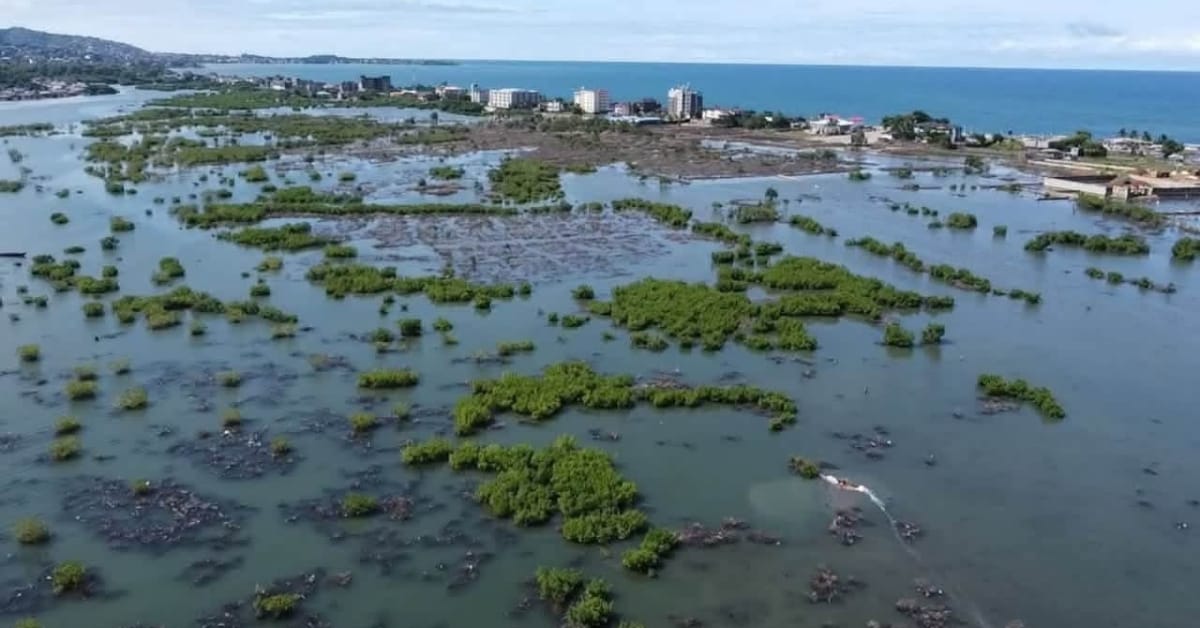
Anyone who visits Aberdeen Creek today is met with a painful reality. Mountains of plastic bottles, sachet water bags, food containers, worn-out clothes, and other forms of waste now blanket sections of the shoreline. What should be one of Freetown’s most valuable wetlands is slowly being transformed into a massive dumping ground.
The ocean is not creating this disaster; it is simply returning what we have carelessly thrown into it.
Across the city, rubbish is dumped into gutters, streams, and rivers every single day. When the rains arrive, the floodwaters carry this waste into the Atlantic Ocean. But the sea refuses to keep our garbage forever. The tides eventually wash it back onto our beaches and coastlines, leaving places like Aberdeen Creek to bear the ugly evidence of our neglect.
Yet plastic pollution is only one part of the crisis.

Many families living around the creek still lack access to safe and dignified sanitation facilities. With few alternatives, some residents resort to open defecation in the creek and surrounding mangrove areas. This contaminates the water, creates unbearable living conditions, and significantly increases the spread of waterborne diseases, particularly during the rainy season.

As if that were not enough, Aberdeen Creek is also losing one of its greatest natural defenses, its mangrove forests.
Large sections of these vital ecosystems are being cleared for illegal land reclamation and uncontrolled construction. Every mangrove tree destroyed weakens the creek’s natural ability to protect surrounding communities from flooding, coastal erosion, storm surges, and the growing impacts of climate change.
Mangroves are far more than trees growing in muddy water. They are nature’s frontline defenders.
They absorb the force of powerful waves, reduce flooding, improve water quality, capture enormous amounts of carbon, and provide breeding grounds for fish, crabs, oysters, and countless other marine species that sustain the livelihoods of thousands of Sierra Leoneans. Destroying them is not development; it is dismantling one of our most effective natural protection systems.
What is happening to Aberdeen Creek should alarm every Sierra Leonean.
This is no longer just an environmental issue. It is a public health crisis, an economic threat, a fisheries challenge, and a climate resilience emergency. The continued destruction of this ecosystem places entire communities at greater risk and compromises the future of generations yet to come.
The Coastline Resilience Network is calling for immediate and decisive action.
Government must strengthen waste management systems, expand access to proper sanitation in vulnerable communities, stop illegal land reclamation, and enforce the environmental laws that protect our wetlands and mangroves.
Communities must also play their part by ending the practice of dumping waste into drains, streams, and waterways. Businesses, developers, and institutions must operate responsibly, respecting both the law and the environment upon which our nation’s future depends.
Saving Aberdeen Creek is not the responsibility of government alone. It belongs to every citizen.
Every plastic bottle carelessly discarded into a gutter is likely to find its way back onto our shores. Every mangrove tree cut down leaves our coastline more vulnerable. Every act of neglect today becomes tomorrow’s disaster.
Aberdeen Creek cannot speak.
But through its polluted waters, disappearing mangroves, and growing piles of waste, it is crying out for help.
The encouraging news is that this story does not have to end in tragedy. With political will, responsible communities, stronger environmental enforcement, and collective action, Aberdeen Creek can be restored to the thriving ecosystem it was meant to be.
The future of Aberdeen Creek will not be determined by nature alone.