

Native Consortium Questions Basis For Fuel Price Increase, Demands Explanation From Government
 Aaron Parker
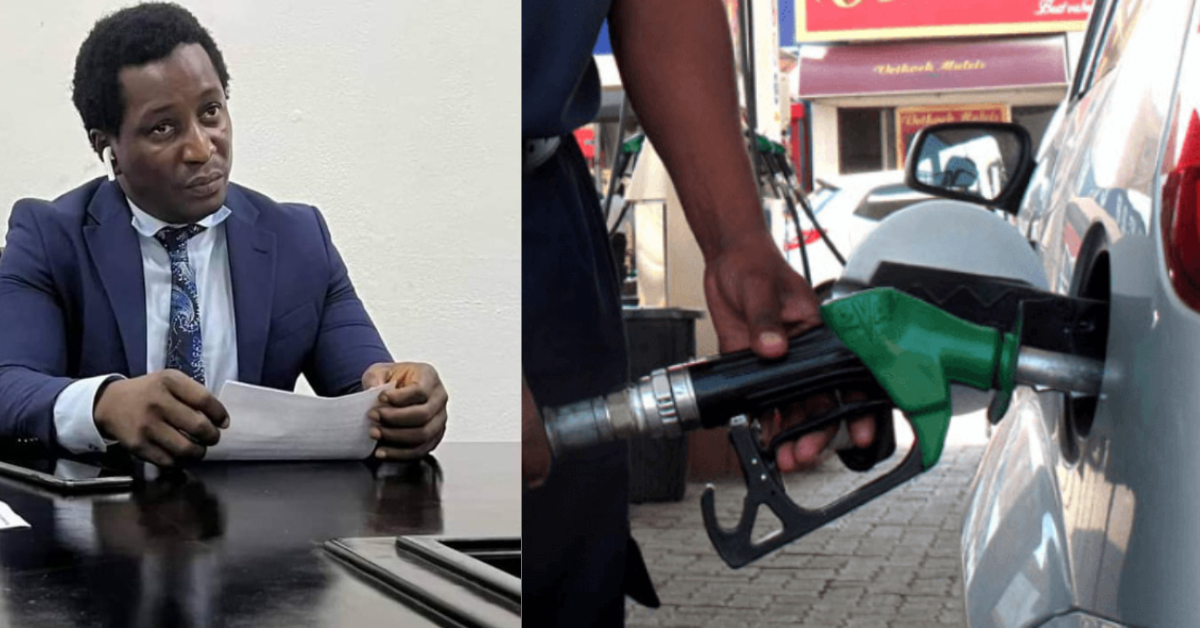
 The Native Consortium and Research Centre (NCRC) has reacted to the recent increase in fuel prices, questioning the justification behind the decision by the government and Petroleum Regulatory Agency (PRA) to adjust the pump price despite lower global crude oil prices compared to previous increases.
In a statement attributed to the organisation, NCRC referenced the previous fuel price increase to Le35 and Le40 per litre, noting that at the time, global crude oil prices were around $110 per barrel. The organisation questioned why a similar price adjustment has been introduced when international crude prices are currently between $79 and $83 per barrel.
The group compared recent global oil prices with local pump prices, stating that in May, when crude oil was reportedly at $110 per barrel, fuel prices were increased to Le35/Le40 per litre. It added that when crude prices dropped to about $72 per barrel in July, pump prices remained around Le33/Le35 per litre, but an increase was later announced when prices moved to about $82 per barrel.

“Why do you have to bow to the pressure of the OMCs to increase the price back to Le35/Le40 when the global price is between $79 and $83 per barrel? What is the basis?” the group questioned.

NCRC also criticised explanations from the PRA and Oil Marketing Companies (OMCs) that reductions in crude oil prices do not always translate directly into lower refined fuel prices, describing the argument as inconsistent.
The organisation argued that authorities appear to apply different standards depending on whether global oil prices are rising or falling, claiming that neighbouring countries have maintained more stable pump prices compared to Sierra Leone.
“Government uses one rule when global prices drop and another rule when prices increase,” the statement said, adding that fuel costs continue to place pressure on ordinary citizens.
The Native Consortium further raised concerns over government revenue generated from petroleum products, claiming that the sector remains one of the biggest sources of state revenue since 2016.
According to the group, the government earns no less than Le9 from every litre of petroleum product sold, while describing reported fuel subsidies of Le2.11 and Le3.04 as questionable.
The organisation urged greater transparency from authorities and called for public accountability on fuel pricing decisions, as citizens continue to face rising living costs.
NCRC also linked the fuel debate to broader economic challenges, arguing that livelihood concerns should receive equal attention alongside ongoing national political discussions, including debates around the electoral system.
The group’s comments come amid growing public concern over the impact of fuel price adjustments on transportation costs, businesses, and household expenses across Sierra Leone.
President Bio did not have any good plan for the country, just to enrich him self and his family
To me, Native Consortium has been satisfactorily been proactive in making sure that the Govt do justice to the people of this country.
Papa Govt, kindly do the needful to reduce pressure on us. Things aren’t easy these days, cost of living is on the increase due to the high cost of fuel ⛽.
Kudos to NC for their proactiveness and continue to put mama salone for, cos salone big pass wi all.
Absolutely. For newspaper editors, I’d make it tighter, more authoritative and publication-ready, with a strong headline/dek, fewer repeated points, carefully framed statistics, and a clear distinction between reported facts and opinion.
Hard to Find Work: Has Sierra Leone’s Gen Z Given Up?
As thousands of young Sierra Leoneans enter an economy struggling to create enough productive jobs, the promise that education leads to a better life is beginning to lose its credibility.
By [Author’s Name]
In Sierra Leone, a quiet crisis is unfolding.
For years, young people have been told that education is the surest route to a better life: go to school, obtain qualifications, find a profession and build a future.
But for a growing number of graduates, that promise is becoming harder to believe.
After years in classrooms and lecture halls, many young Sierra Leoneans enter a labour market where finding meaningful employment can be exceptionally difficult. Some possess degrees but lack the practical skills employers demand. Others have the skills but cannot find employers willing or able to give them an opportunity.
The result is frustration, dependence, underemployment and, increasingly, resignation.
For some members of Generation Z, unemployment has become so familiar that they are beginning to question whether the traditional path of education, employment and economic independence still works.
But who is to blame?
A Job Is Not Always a Livelihood
Sierra Leone’s employment statistics require careful interpretation.
The latest World Bank data put overall unemployment at about 3.1 percent in 2025, with youth unemployment among those aged 15–24 at approximately 3.7 percent. World Bank — Sierra Leone data
Those numbers might appear surprisingly low in a country where employment is a major concern among young people.
But unemployment is only part of the story.
A person can be counted as employed while working informally, earning very little, working below their skill level or doing too few hours to achieve economic independence.
The more revealing figure may be the gap between the number of jobs Sierra Leone creates and the number it needs.
The World Bank estimates that the country currently creates roughly 41,000 jobs a year, while it needs approximately 75,000 new jobs annually through 2050 to keep pace with the growing working-age population. World Bank — Sierra Leone job creation programme
That gap matters.
Behind every missing opportunity is a young person whose plans may be delayed: further education, marriage, housing, entrepreneurship and financial independence.
“You can go to school your whole life and can’t find a job at the end,” Max Boma said. “I think it’s a bad thing.”
That frustration should not automatically be interpreted as laziness.
It may be a rational response to an economy that is failing to convert education into opportunity.
When the Degree Loses Its Promise
For generations, Fourah Bay College and other institutions of higher learning represented more than places of study. They represented possibility.
A degree was supposed to be a bridge between poverty and professional life.
That bridge is now under pressure.
Many graduates spend months or years searching for work. Some eventually accept positions unrelated to their qualifications. Others enter informal employment, attempt to establish small businesses or consider leaving the country.
The problem is not necessarily that Sierra Leone has too many educated young people.
The problem may be that the economy has too few productive opportunities for them.
This creates an uncomfortable contradiction.
Employers complain about a shortage of appropriately skilled workers, while graduates complain that employers will not give them a chance.
Both can be true.
A World Bank analysis has identified skills shortages across areas including hospitality, carpentry, construction, agriculture, transportation and banking, while also highlighting the prevalence of low-productivity and self-employment. World Bank — Skills training and Sierra Leone’s human-capital challenge
The question Sierra Leone must confront is therefore straightforward:
Are we preparing young people for the economy we have—or simply producing more certificates?
The Examination Crisis Starts the Conversation Earlier
The employment problem cannot be separated from the quality of education itself.
In June 2026, President Julius Maada Bio strongly condemned examination malpractice and questioned the involvement of parents, teachers and the West African Examinations Council (WAEC).
Speaking at the opening of the National Teachers Council office, Bio said:
“WAEC is helping our children to cheat us.”
His remarks reflected a broader concern about the integrity of the education system and the consequences of students obtaining qualifications without necessarily acquiring the knowledge those qualifications are intended to represent.
The problem is bigger than examination results.
If qualifications do not accurately reflect skills, employers struggle to identify capable workers, while graduates discover that their certificates do not necessarily translate into employment.
Artificial intelligence adds a new dimension to that challenge, creating questions around plagiarism, assessment and academic integrity.
But technology is not the root of the problem.
The deeper issue is whether Sierra Leone’s education system is producing young people who can think, solve problems, communicate, create and work effectively.
Perhaps the question we should be asking is:
Are we preparing children to pass examinations—or preparing them to build lives?
The Government Job and the Politics of Survival
When private-sector opportunities are limited, government employment naturally becomes attractive.
For many young Sierra Leoneans, a government position represents stability, status and a predictable income.
But when political connections appear more valuable than qualifications, the consequences can be corrosive.
Some young people increasingly see politics not simply as public service but as a potential route to employment, influence and economic security.
This is what some critics describe as “casino politics”: political fortunes can produce sudden opportunities, but those fortunes can disappear just as quickly when power changes hands.
That is not an economic development strategy.
A country cannot build a productive workforce if young people believe that knowing the right person matters more than acquiring the right skills.
Entrepreneurship Is Not a Substitute for Jobs
There is an understandable push for young people to become entrepreneurs.
But entrepreneurship cannot become a euphemism for unemployment.
Telling a graduate to “start a business” is not enough if that graduate cannot access affordable finance, reliable electricity, internet connectivity, markets or appropriate business infrastructure.
Young people should certainly be encouraged to build businesses.
But government must also build the conditions under which those businesses can survive and grow.
That means affordable credit, reliable infrastructure, predictable regulation and access to markets.
Small businesses cannot be expected to carry the entire burden of youth employment without an enabling environment.
Technical Skills Must Be Valued
Sierra Leone does not need only lawyers, doctors, accountants, lecturers and civil servants.
It needs electricians, plumbers, mechanics, welders, construction workers, agricultural technicians, solar technicians, ICT specialists, machinists and hospitality professionals.
Yet technical and vocational education is still sometimes viewed as an alternative for students who have failed academically.
That attitude needs to change.
A skilled technician should be able to earn a respectable income and enjoy social status.
Technical and vocational education should not be the education of last resort.
It should be part of the country’s economic strategy.
There are already signs of investment in this area. In June 2026, the Government of Sierra Leone, China and UNDP began handing over 14,770 sets of classroom furniture to schools, TVET institutions and universities across 13 districts as part of a US$2 million education-support project. UNDP Sierra Leone — education support project
But infrastructure is only the beginning.
The real test is whether training produces skills that employers and businesses actually need.
Can Employment Provide a Dignified Life?
Even when young people find work, another problem remains: the cost of living.
A salary can look adequate on paper but disappear quickly under the pressure of transportation, food, rent, electricity, internet and family obligations.
The World Bank reported inflation at 8.1 percent in February 2026 and projected average inflation of around 10.4 percent for 2026. World Bank — Sierra Leone economic update
The question, therefore, is not simply:
Can a young person find a job?
It is:
Can that job provide a dignified life?
Employment without adequate purchasing power can leave young people financially trapped even when they are technically employed.
Employers Must Be Part of the Solution
Government and universities cannot solve this alone.
The private sector has responsibilities too.
Young graduates are frequently told they need experience before they can get a job.
But how does someone acquire five years of experience if nobody is willing to provide the first opportunity?
Companies can help through graduate trainee programmes, apprenticeships, internships and genuine entry-level positions.
Businesses should also work more closely with universities and technical institutions to identify the skills they actually need.
The private sector should not simply complain about the skills gap.
It should help close it.
And opportunities exist beyond traditional sectors.
The World Bank estimates that Sierra Leone’s creative industries contribute about 4.5 percent of GDP and 10 percent of formal employment, while fashion and textiles account for more than 11,000 formal jobs. World Bank — Sierra Leone creative industries
That points to a broader lesson: job creation does not have to come exclusively from government offices.
Agriculture, tourism, manufacturing, technology, renewable energy and the creative economy can all contribute.
When Leaving Becomes the Plan
There is another consequence of limited opportunity: migration.
When ambitious young people repeatedly fail to find meaningful employment at home, leaving the country can begin to look like the most rational option.
The World Bank records negative net migration for Sierra Leone, with an estimated 11,309 more people leaving than entering in 2025. That figure should not be interpreted as a measure of graduate migration specifically, but it illustrates the broader reality of outward migration. World Bank — Sierra Leone data
There is nothing inherently wrong with seeking opportunity abroad.
The concern is what happens when a young person begins to believe that leaving is the only realistic path to success.
A country invests in educating its people, but if opportunities are insufficient, some of the very people needed to build the economy will seek their futures elsewhere.
The question is not whether young Sierra Leoneans should be allowed to leave.
They should.
The question is:
Why should leaving become the only way many young people believe they can succeed?
What Can Sierra Leone Learn From Seychelles?
Sierra Leone should look beyond its borders for ideas that could strengthen its education system.
Seychelles is one country worth studying.
The United Nations identifies Seychelles as Africa’s highest-ranked country on the Human Development Index and the continent’s only high-income nation. United Nations in Seychelles — Human Development
That does not mean Sierra Leone should copy Seychelles.
The two countries are vastly different in population, geography, economic structure and resources.
Nor is there a single universally accepted ranking that proves Seychelles has Africa’s “best” education system.
The lesson is to study what has worked: sustained investment in human capital, education and social services, and then ask what elements can realistically be adapted to Sierra Leone.
Sierra Leone should learn from others without trying to become someone else.
Parents Must Also Rethink Success
The pressure on young people does not come only from government, universities and employers.
Parents understandably want their children to have better lives.
But that desire can sometimes produce an excessive focus on examination results and certificates.
A young person may be taught that academic success is the ultimate measure of achievement.
Yet the modern economy demands much more.
Education should develop the ability to think, solve problems, communicate, create and contribute.
A certificate should open a door. It should not be the destination.
What Government Should Do Now
If Sierra Leone wants to prevent an entire generation from losing faith in education and work, government must focus not only on producing graduates but on creating an economy capable of employing them.
The country’s development strategy has set an ambition of creating 500,000 jobs for young people by 2030, including 350,000 through the private sector. IMF — Sierra Leone development strategy reference
The challenge is turning that ambition into measurable, productive employment.
That requires:
Private investment.
Sierra Leone needs businesses capable of employing people at scale.
Infrastructure.
Reliable electricity, roads and internet connectivity are fundamental to economic activity.
Technical and vocational education.
Training must correspond to sectors with genuine employment potential.
Affordable finance.
Young entrepreneurs and small businesses need access to capital, not merely encouragement.
Education-industry partnerships.
Universities and employers should work together to close the skills gap.
Entry-level opportunities.
Apprenticeships, graduate programmes and internships can help young people obtain the experience employers demand.
And government should measure success not simply by how many students graduate.
It should ask:
Where do those graduates work?
What do they earn?
What businesses do they create?
What skills do they acquire?
Those are the outcomes that matter.
A Generation at Risk of Losing Hope
The emotional and social consequences of unemployment should not be underestimated.
For many young people, unemployment means more than the absence of a salary.
It can mean dependence on parents, delayed marriage, postponed plans, declining confidence and the feeling that life is passing them by.
Mary, a young Sierra Leonean, put it bluntly:
“If you live on autopilot, you’ll turn 30 sitting around in your parents’ home, unemployed, and glued to the status quo’s feed.”
Her words capture an uncomfortable reality.
Young people are being asked to remain ambitious in an environment where opportunities can appear scarce.
They are told to acquire qualifications, develop skills and work hard, yet many struggle to find an economy capable of absorbing them.
“There is so much uncertainty today that most graduating students no longer believe that work in a traditional sense translates to any reliable paycheck,” Mr C. Maju said. “It’s a painful and frustrating time for Gen Z when it comes to the job market.”
The Question Is Bigger Than Unemployment
Ultimately, the issue is not simply that Sierra Leone’s young people cannot find jobs.
The deeper problem is that the social contract between education and opportunity is beginning to weaken.
For decades, parents told their children:
Go to school, get an education and your life will improve.
But what happens when a young person does exactly that and still finds themselves unemployed at 25, 28 or 30?
What happens when a university graduate concludes that a political connection is more valuable than a degree?
What happens when young people stop believing that hard work will be rewarded?
Those are questions Sierra Leone cannot afford to ignore.
Gen Z is not necessarily lazy.
It is not necessarily lacking ambition.
In many cases, it is a generation responding to an economy that has given it too few reasons to be confident.
The answer is not to blame young people for losing hope.
Nor is it enough to tell them to work harder.
Government must create an environment in which hard work can produce something.
Universities must produce graduates equipped for the real economy.
Employers must create pathways for inexperienced young people to gain experience.
Parents must broaden the definition of success beyond examination results.
And society must begin valuing technical skills, entrepreneurship and productive work alongside traditional professional careers.
Sierra Leone’s young people do not need promises alone.
They need opportunities, skills, investment and an economy capable of turning ambition into livelihoods.
A Sierra Leone where a young graduate can find a first job without political connections.
Where a skilled technician can earn a respectable income.
Where a small business can obtain affordable financing.
Where universities teach skills employers actually need.
Where young people can build successful lives without feeling that they must leave the country to find opportunity.
Because the goal should not simply be to tell young people to remain hopeful.
It is to build a country where hope has an economic foundation.
And ultimately:
It is to build a country where hard work has somewhere to go.
Editor’s note: I would submit this as an opinion/analysis piece rather than straight news. The strongest editorial feature is the tension between the relatively low measured unemployment rate and the World Bank’s much larger job-creation gap. That gives the piece a more sophisticated argument than simply saying “Sierra Leone has high unemployment