

APC MP Ibrahim Barrie Defends Walkout, Raises Constitutional Concerns Over Amendment Bill
 Aaron Parker
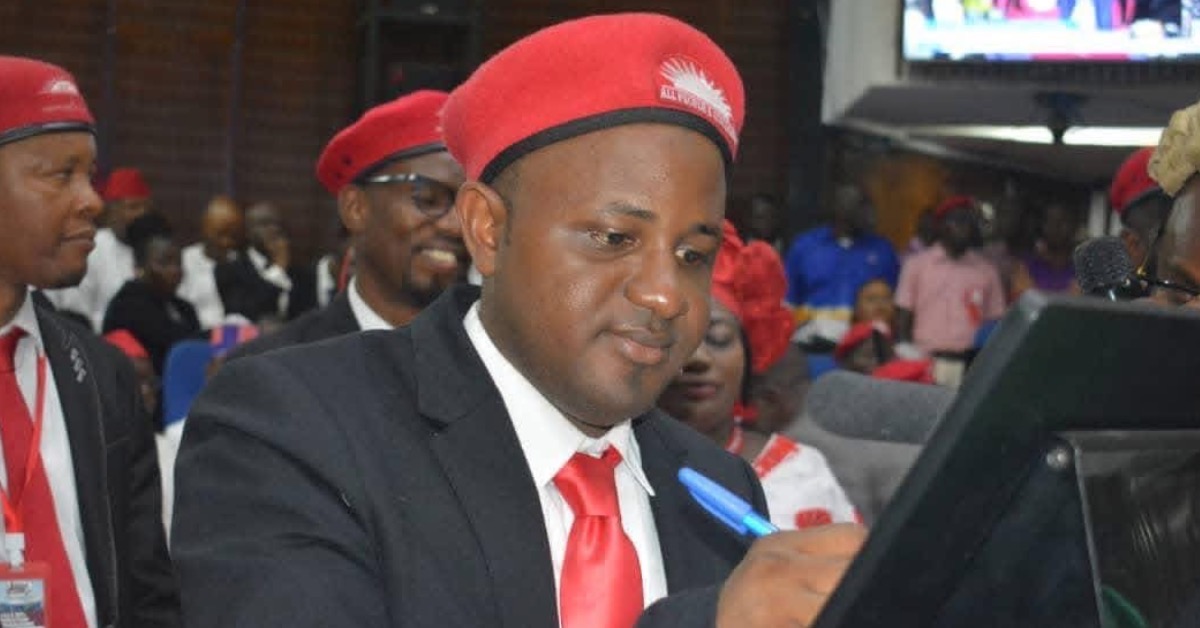
 All People’s Congress (APC) Member of Parliament Hon. Ibrahim Barrie has defended the APC Parliamentary Group’s decision to walk out of Parliament during the debate on the Constitution of Sierra Leone (Amendment) Bill, 2025, arguing that the move was intended to protect the integrity of the country’s Constitution.
Barrie said the walkout was a “principled stand” against what the APC considers constitutional and procedural concerns surrounding the passage of the proposed amendments.
According to him, Section 108 of the 1991 Constitution requires a two-thirds majority of all Members of Parliament for constitutional amendments, a safeguard he said was designed to prevent the country’s supreme law from being altered through temporary majorities or procedural manipulation.

“We could not participate in a process whose constitutional validity is now the subject of serious legal and public dispute,” Barrie stated.



He also questioned the Speaker of Parliament’s handling of the constitutional threshold issue, pointing to what he described as a contradiction between the Speaker’s ruling on the required majority and the subsequent referral of the same matter to the Supreme Court.
Barrie argued that if the issue required interpretation by the Supreme Court, questions could be raised about the basis for making a definitive parliamentary ruling on the matter before judicial clarification.
To reinforce the APC’s position, Barrie cited a constitutional dispute in Nigeria involving former Plateau State Governor Joshua Dariye. He said the Nigerian Supreme Court rejected an attempt to calculate a constitutional threshold based on a reduced number of legislators, stressing that such thresholds should be determined from the full membership of the legislature.
Barrie said the Nigerian case demonstrates that constitutional thresholds should serve as fixed safeguards rather than flexible political tools.
“The principle is clear: Constitutional thresholds are fixed safeguards, not flexible political tools. Two-thirds means two-thirds of the full membership of Parliament, not a convenient subset,” he said.
He further raised concerns about the legal requirements for a constitutional amendment to become law, citing Sections 73(1), 106(1), 106(2), 106(4), and 106(6) of the Constitution.
Barrie maintained that given the ongoing dispute, all relevant authorities should await clarification from the Supreme Court before treating the amendment Bill as valid law.
The APC Parliamentary Group, he said, remains opposed to the proposed Proportional Representation (PR) electoral system, the proposed 50% plus one presidential threshold, and other electoral changes which the party believes could weaken accountability or distort fair political competition.
However, Barrie stressed that the APC is not opposed to constitutional reform in principle.
He said the party supports reforms that strengthen democracy and accountability, protect constitutional order, empower citizens, promote national unity, and reinforce institutional independence.
He reaffirmed the APC’s commitment to a democratic process based on constitutional compliance, transparency and broad national consensus.