
SLTU President Calls for Tenfold Increase in School Subsidy
 Kanja Sesay
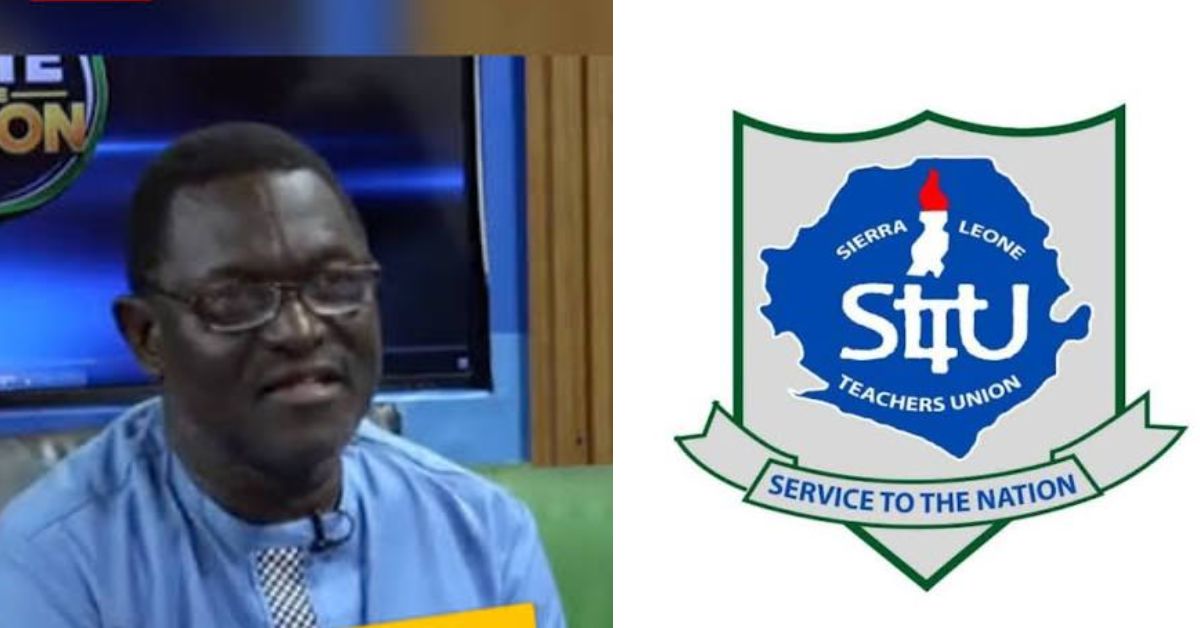
 The President of the Sierra Leone Teachers Union (SLTU), Ibrahim Bankapoma Kargbo, has called on the government to increase the school subsidy from the current NLe10 per child per term to NLe100, arguing that the existing amount is insufficient to provide meaningful financial support to schools.
Kargbo made the call during an appearance on AYV’s State of the Nation programme, where he discussed the financial challenges facing schools, delays in subsidy payments and wider concerns affecting teachers across Sierra Leone.
He said the current subsidy is too small to meet the needs of schools and proposed that the increased amount should apply to both primary and secondary schools.

“The government pays NLe10 per child per term, which you cannot even give to your child as lunch,” Kargbo said.

According to Kargbo, increasing the subsidy to NLe100 per child per term would provide schools with greater support in meeting some of their operational needs.
The SLTU President argued that the existing allocation does not adequately reflect the financial pressures faced by schools and their administrators.
He said the proposed increase should cover pupils across both primary and secondary education, allowing schools to receive more resources to support their day-to-day operations.
The call comes as schools continue to depend on government support alongside other sources of funding to meet operational and educational needs.
Beyond the amount of the subsidy, Kargbo also raised concerns about delays in disbursement.
He said principals frequently face pressure from community teachers and other subsidiary staff when government subsidies are not paid on time.
“Principals are always under pressure from community teachers and subsidiary staff when the government fails to pay subsidies on time,” he explained.
The SLTU President’s comments highlight the wider impact that delays in government payments can have on school administrators, particularly where schools depend on subsidy funds to support their operations and meet obligations to staff.
The issue of delayed school subsidies has previously been raised by the teachers’ union.
In May 2026, the SLTU wrote to Vice President Dr. Mohamed Juldeh Jalloh seeking his intervention over unpaid subsidies for the second and third terms of the 2025/2026 academic year for primary and junior secondary schools.
The union has also previously taken industrial action over concerns surrounding subsidies and other issues affecting teachers.
In September 2025, the SLTU suspended a nationwide strike after the government made commitments to address subsidy payments and other grievances raised by the union.
The latest call for increased funding therefore comes against a background of continuing discussions between teachers and government over the financing of basic education.
Kargbo’s comments on school subsidies are part of a broader set of concerns raised by the SLTU over teachers’ welfare and conditions of service.
Earlier in 2026, he appeared before the Parliamentary Oversight Committee on Basic and Senior Secondary Education, where he discussed challenges affecting teachers across the country.
Among the issues raised were delayed promotions, concerns over salary scales for teachers with Master’s degrees, the absence of remote-area allowances, overcrowded classrooms and inadequate teaching and learning materials.
He disclosed that despite having more than three decades of teaching experience and advanced academic qualifications, his monthly salary was Le2,500, while some qualified teachers earn as little as Le1,500.
He described the level of teachers’ pay as a potential “recipe for corruption”, linking poor remuneration to wider concerns about integrity and accountability within the education system.
Despite his criticism of subsidy payments and teacher welfare, Kargbo gave a generally positive assessment of the government’s performance.
He rated President Julius Maada Bio’s administration at 75 percent, while stressing that the subsidy issue represents only one aspect of the country’s education sector.
His assessment suggests that while the SLTU continues to push for improvements in specific areas, the union also recognises what Kargbo described as significant achievements by the government.
The comments come as the education sector continues to face pressure to improve both the quality of education and the conditions under which teachers work.
Kargbo’s remarks on teachers’ salaries also come amid government efforts to address payroll irregularities within the education sector.
Earlier in 2026, the government dismissed a teacher in Kenema who was accused of receiving a government salary under false pretences after allegedly abandoning his teaching post.
The case formed part of wider efforts to address payroll fraud and ensure that public funds are paid to workers who are actively performing their assigned duties.
For the SLTU, however, improving accountability must also be accompanied by better conditions for teachers and more predictable financial support for schools.
The SLTU’s latest position places both the size and timing of school subsidies at the centre of its concerns.
Kargbo’s proposed increase from NLe10 to NLe100 would represent a tenfold rise in the government contribution per child per term. He argues that such an increase would provide schools with more meaningful financial support.
At the same time, he wants the government to ensure that approved subsidies are paid on time, reducing the pressure placed on principals when schools are unable to meet their financial obligations.
The debate over school subsidies comes as Sierra Leone continues to invest in education under the government’s Free Quality School Education programme.
For teachers and school administrators, however, the challenge remains ensuring that funding commitments translate into timely and adequate resources at school level.
Kargbo’s call ultimately reflects the SLTU’s broader demand for stronger financial support for schools, improved teacher welfare and more effective implementation of government commitments across the education sector.