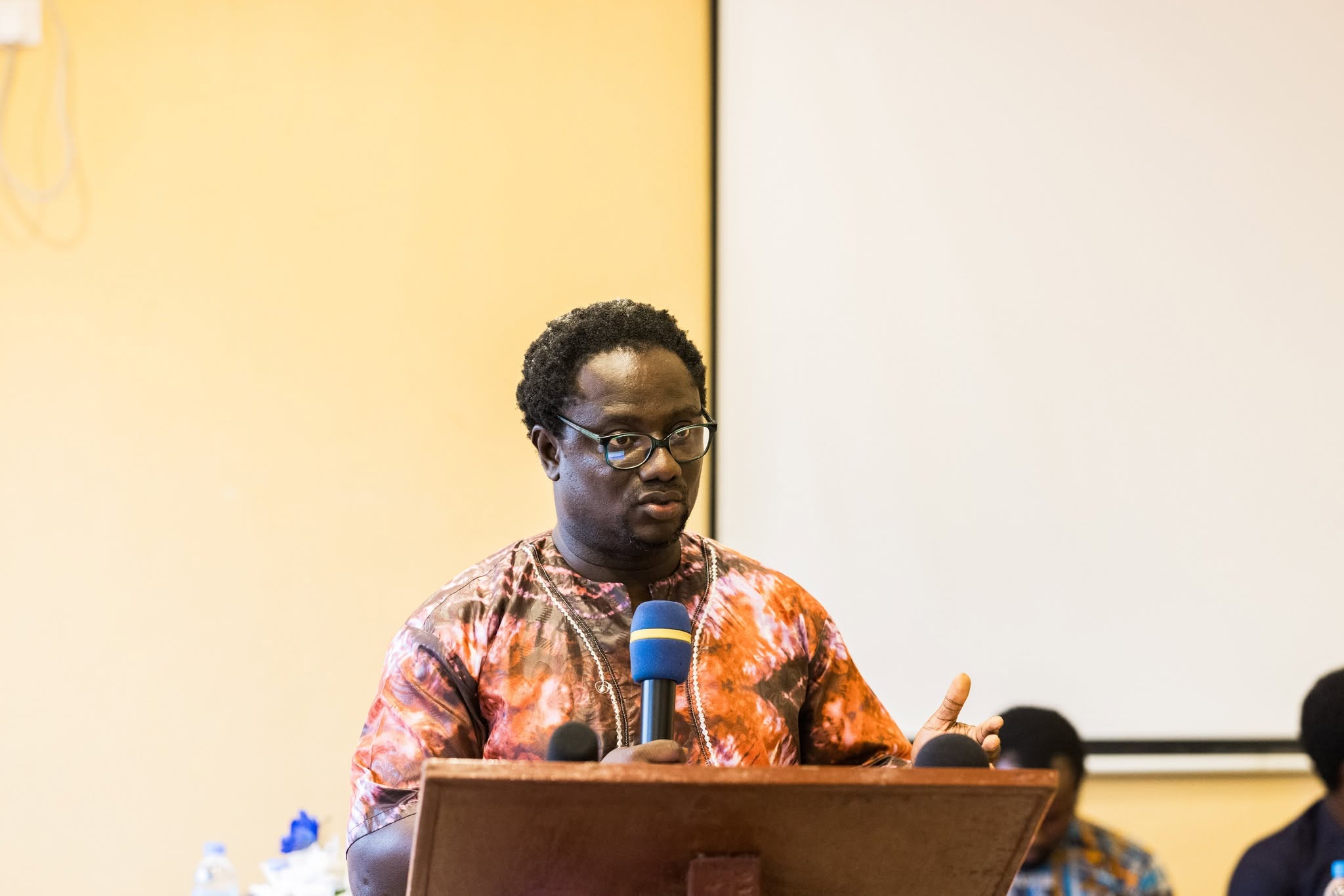
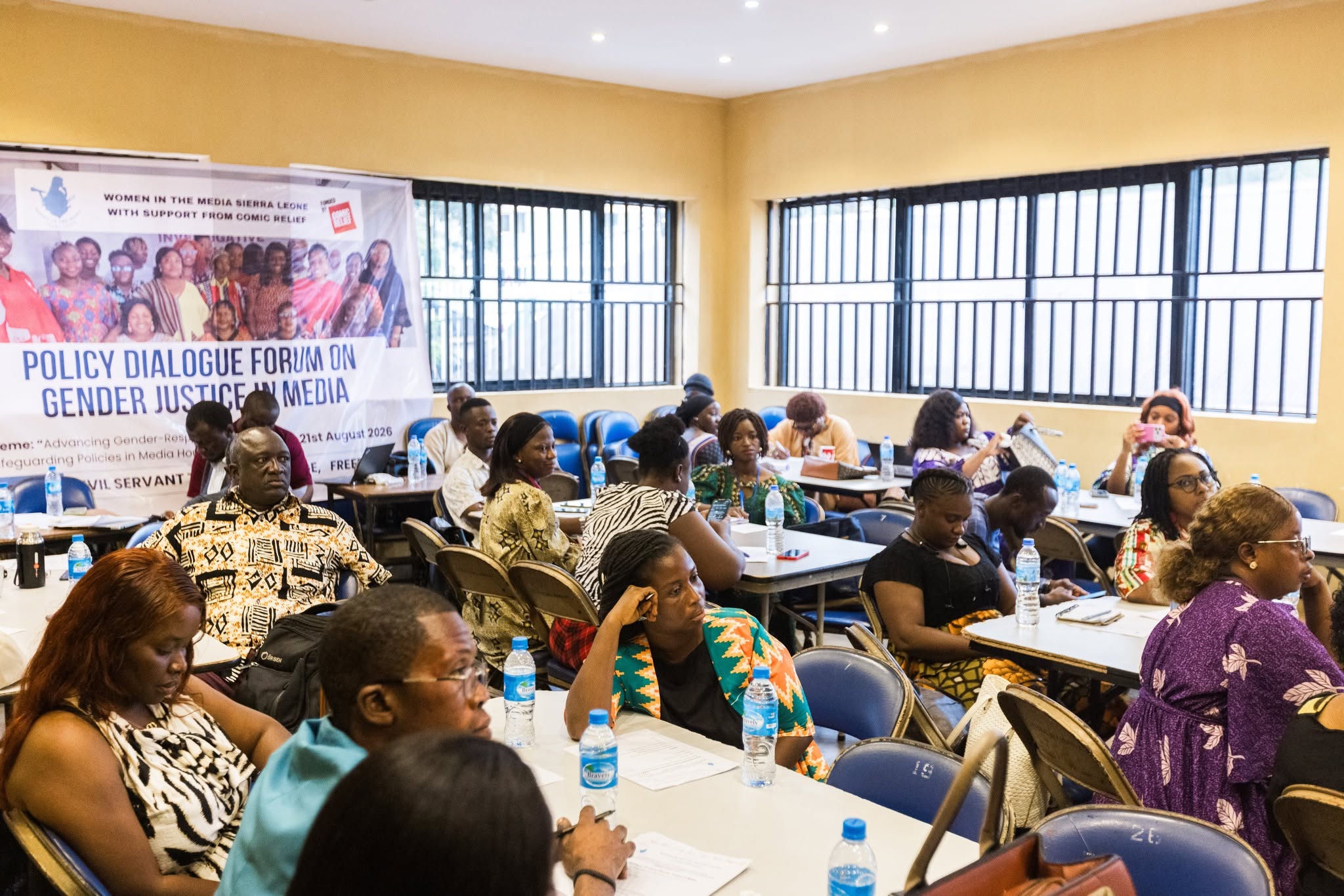
Women In The Media Sierra Leone (WIMSAL) has called for stronger safeguarding measures and greater accountability to address gender-based challenges facing journalists and media professionals in Sierra Leone.
The call was made during a Policy Dialogue Forum on Gender Justice in the Media held in Freetown on August 21, 2026. The forum brought together media leaders, journalists and other stakeholders to discuss sexual harassment, safeguarding gaps, women’s representation and other barriers affecting participation in the country’s media sector.
The dialogue was organised by WIMSAL and Comic Relief as part of efforts to promote safer and more inclusive working environments for media professionals.
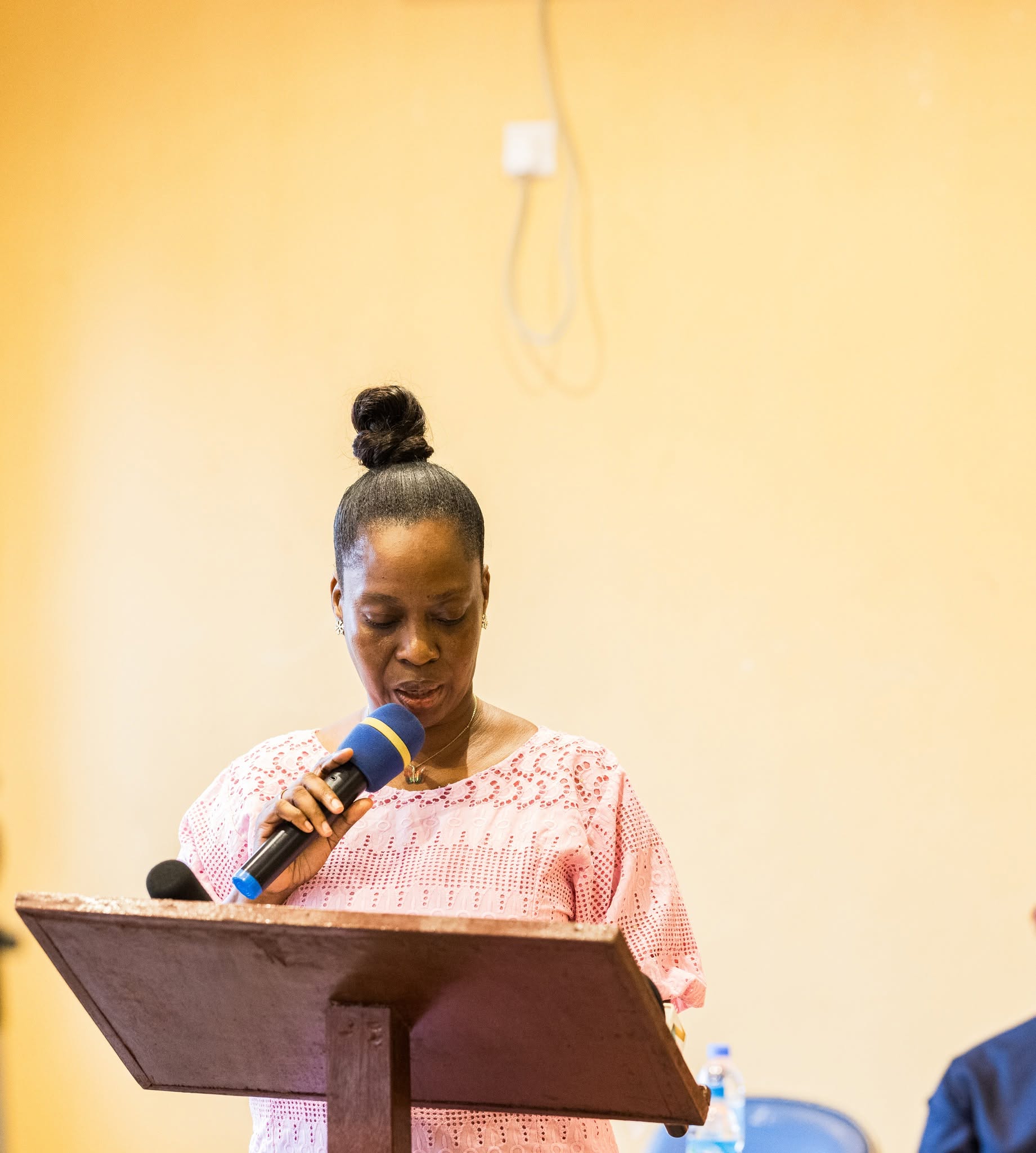
Addressing participants, WIMSAL President Eastina Taylor-Tucker stressed that journalists should not have to compromise their dignity or personal safety to work in the media industry.
“No woman or man should have to surrender their dignity, safety or body to work in Sierra Leone’s media sector.”
Her remarks highlighted the need for media organisations to take safeguarding seriously and ensure that journalists have mechanisms through which they can report harassment, exploitation and abuse without fear.
BBC Media Action Country Director Musa Sangarie also emphasised the connection between gender equality and press freedom.
“There can be no truly free media if women are not free to participate in it fully, safely and equally.”
His comments reinforced the argument that creating a strong and independent media environment also requires addressing the conditions under which journalists work.
The forum comes amid growing international attention to sexual harassment and abuse within the media industry.
According to a global study released in 2025 and referenced at the dialogue, 29 per cent of media professionals across 21 countries reported experiencing some form of sexual harassment at work.
The study also found that women were 2.4 times more likely than men to experience verbal harassment and twice as likely to experience online harassment.
A further concern was the low level of reporting. The study found that 69 per cent of survivors did not report their experiences, with fear of retaliation, potential damage to their careers and concerns that complaints would not be taken seriously identified among the factors discouraging reporting.
These findings underline the importance of establishing trusted reporting mechanisms and ensuring that complaints are handled appropriately.
The policy dialogue builds on ongoing collaboration between WIMSAL and BBC Media Action to address gender-related challenges within Sierra Leone’s media sector.
Their partnership has included support for the establishment of a secretariat through which cases involving sexual exploitation, harassment and abuse can be reported.
The partnership has also contributed to research examining the experiences and representation of women in the media.
A 2025 BBC Media Action report examined sexual harassment in the media, while a 2026 gender study focused on women’s representation and leadership within the sector.
The findings and discussions from these initiatives have helped bring greater attention to the barriers women can face in media workplaces.
The discussion around safety and safeguarding also comes as stakeholders continue to push for greater representation of women within Sierra Leone’s media industry.
In February 2025, SLAJ President Ahmed Nasralla said female membership in the Sierra Leone Association of Journalists had increased from approximately 10–15 percent to 30–35 percent.
During the same period, SLAJ launched a Gender Equality Policy for the Media, with support from the European Union.
The policy seeks to promote fair representation of women at different levels within media organisations and strengthen gender equality across the sector.
While increased participation is an important step, the discussions at the WIMSAL forum emphasised that representation alone is not enough. Women also need safe working environments and meaningful opportunities to participate in decision-making and leadership.
The forum ultimately focused on moving beyond discussions about gender equality towards practical measures that can improve conditions for media professionals.
Participants were encouraged to consider how media organisations can strengthen safeguarding policies, improve reporting mechanisms and ensure that complaints involving harassment and abuse are treated seriously.
The broader objective is to create newsrooms where journalists can perform their duties without fear of discrimination, exploitation or harassment.
The dialogue also highlighted the importance of accountability. Having policies in place is only one part of addressing gender-based challenges; those policies must be properly implemented and supported by effective mechanisms for reporting and responding to misconduct.
The discussions in Freetown reflect a wider effort to make Sierra Leone’s media sector more inclusive and equitable.
For WIMSAL and its partners, achieving gender justice requires more than increasing the number of women working in journalism. It also means ensuring that women can participate safely, advance professionally and exercise influence within media organisations.
The message from the forum was therefore clear: the future of Sierra Leone’s media sector must be built around safety, dignity, equality and accountability.
As stakeholders continue working to strengthen gender policies and safeguarding systems, the challenge will be turning these commitments into everyday practices that protect media workers and create workplaces where both women and men can contribute freely and professionally.


 Kanja Sesay