

Correctional Service Proposes University Education for Persons in Custody
 Salamatu Y. Kamara
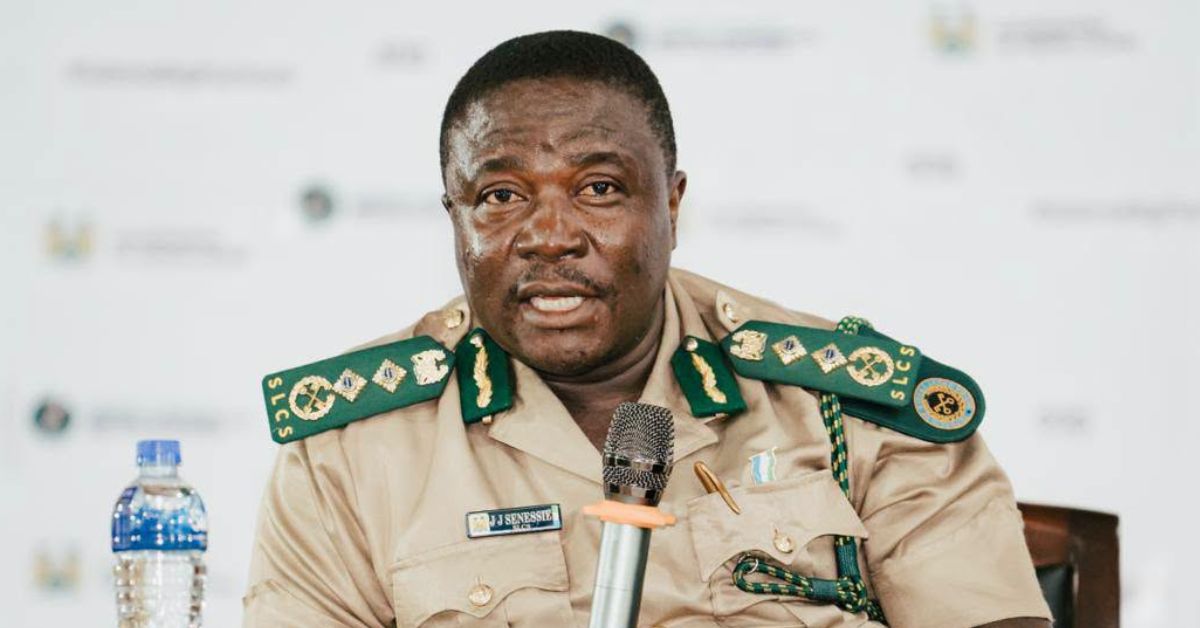
 The Director General of the Sierra Leone Correctional Service, Joseph J. Senessie, during the government’s weekly press conference, proposed University education for persons in custody.
Senessie highlighted the growing importance of education within correctional facilities, noting that the Service is interested in strengthening collaboration with universities and other educational institutions to create meaningful learning opportunities for persons in custody.
He specifically mentioned the University of Sierra Leone and the University of Makeni, with discussions focusing on how partnerships with these institutions could provide opportunities for eligible persons in custody to pursue formal education and obtain recognised academic qualifications while serving their sentences.

He emphasised that individuals who spend many years in custody should not be deprived of opportunities to learn, develop their abilities and acquire qualifications that could improve their prospects after release. The Service is therefore exploring ways to make education a more structured and meaningful component of rehabilitation, including programmes that could lead to recognised certificates.


According to him, the Service wants persons in custody to leave correctional facilities with practical skills that can help them establish livelihoods and become self-reliant. He noted that vocational training can equip individuals to earn an income, support their families and contribute positively to their communities.
Senessie reaffirmed the Correctional Service’s commitment to the welfare, human rights and humane treatment of persons in custody.
He said the Service remains committed to respecting the fundamental rights of persons in custody while maintaining safe and secure conditions for both inmates and correctional officers. He also highlighted engagement with human rights organisations, prison monitoring groups and advocates as part of efforts to strengthen transparency, accountability and oversight within correctional facilities.
He identified improved access to justice and addressing overcrowding as other important areas of reform. He highlighted the importance of electronic information management and the potential application of artificial intelligence and other digital tools to improve the management and accessibility of correctional records. He disclosed that the Service is working towards modern systems that will make important information more accessible and organised, with a consultant expected to be engaged to support the development and improvement of these systems.
Very good idea sir. I hope government will look into it. God bless Sierra Leone.