


 Post a comment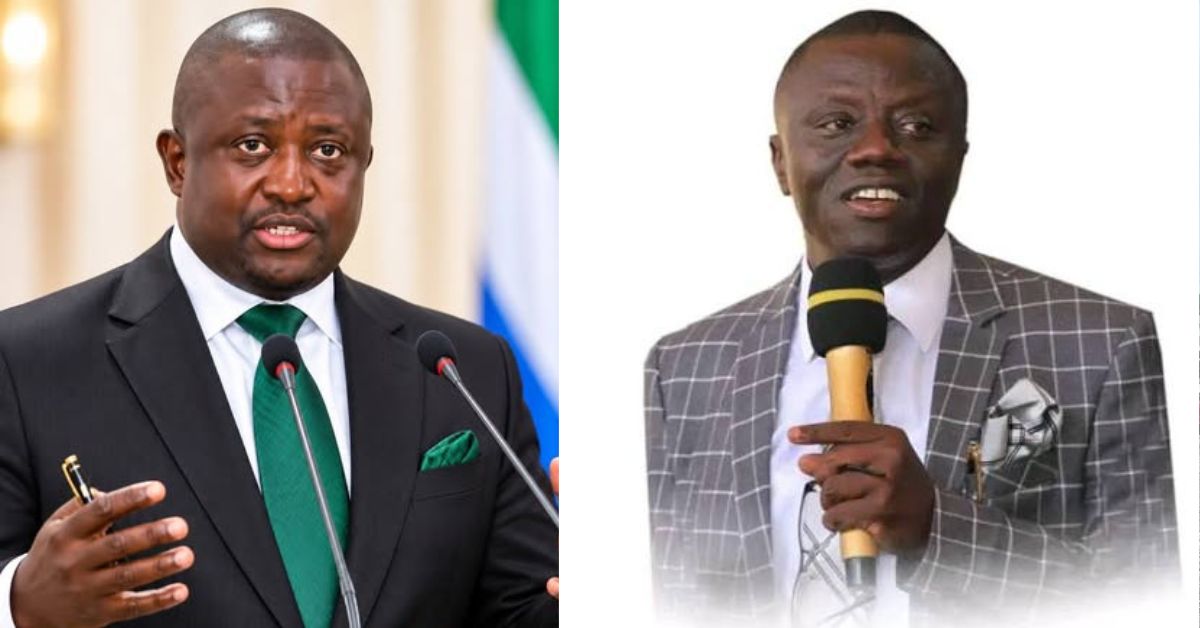
Calls are mounting for Sierra Leonean authorities to examine allegations attributed to Pastor Francis Mambu concerning alleged killings, disappearances, human remains and initiation practices.
The call centres on Attorney-General and Minister of Justice Alpha Sesay, with advocates arguing that the claims should be subjected to evidence-based scrutiny rather than left to social media debates.
Sesay is Sierra Leone’s current Attorney-General and Minister of Justice, according to the Office of the President.

The proposed inquiry would not amount to a presumption that Mambu’s allegations are true. Instead, those calling for an investigation say the pastor should be given an opportunity to identify the information, witnesses or other evidence supporting his claims.
Pastor Francis A. M. Mambu of Faith Healing Bible Church has strongly defended his recent remarks about secret societies, declaring that criticism and public backlash will not stop him from speaking about issues he believes are important to his Christian faith.
Pastor Mambu made the statement on Sunday, August 30, 2026, while responding to growing criticism over allegations he previously raised concerning the activities of the Wonde society. During his response, he publicly displayed several items he described as alleged fetish and lodge-related objects, claiming that some were brought to him by individuals associated with secret societies.
The pastor said his responsibility as a religious leader is to warn people against what he considers sin, evil and wickedness while encouraging them to turn to God. Citing Ezekiel 3:17, he described himself as a “watchman” entrusted with warning God’s people.
“I am not afraid. I will continue preaching so people can know the truth, which is Jesus Christ,” Pastor Mambu declared.
He also repeated a number of serious allegations he had previously made about the Wonde society, including claims that people had disappeared before its initiation ceremonies and that pregnant women, virgins and people with mental illness were allegedly targeted.
According to Pastor Mambu, some individuals who previously belonged to the society have since converted to Christianity and become pastors. He claimed that he had personally conducted deliverance sessions for some of them and had heard accounts of alleged ritual practices, including claims involving human remains.
He further alleged that the Wonde society operated across different parts of the country and described it as one of the most “terrible societies” he had encountered. He also claimed that a person he identified as “FM Mina” was responsible for bringing an end to the society’s activities in Sierra Leone in 1980.
Pastor Mambu went on to make further allegations concerning the society’s alleged practices, including claims of killings and the extraction of blood, oil and other substances from victims.
The allegations, as presented in the original commentary, include references to human blood, human remains, dead bodies, disappearances and initiation rituals. No independent evidence substantiating those allegations is presented in the material provided.
Supporters of an investigation argue that authorities should establish whether any identifiable incidents, victims or witnesses exist.
They say investigators could seek information about alleged deaths or disappearances, establish where and when the incidents supposedly occurred, identify potential witnesses and determine whether police or other official reports were made.
Any documentary, medical or forensic evidence that may exist could also be assessed as part of a proper investigation.
The argument is that questions of possible criminal conduct should be handled by law enforcement and justice institutions rather than determined through competing claims on Facebook or other social media platforms.
Sierra Leone’s Constitution gives the Attorney-General and Minister of Justice a significant role in the country’s justice system. Section 64 identifies the officeholder as the government’s principal legal adviser and provides that criminal offences prosecuted in the name of the Republic are brought at the suit of the Attorney-General or another person authorised under law.
Section 66 establishes the office of the Director of Public Prosecutions and gives the DPP authority to institute, take over, continue or discontinue criminal proceedings. The Constitution also states that the DPP is subject to the general or special direction of the Attorney-General and Minister of Justice.
Those constitutional provisions, however, do not establish that Mambu’s allegations are factual or that an investigation has been ordered. They instead define the respective legal responsibilities of the Attorney-General and DPP.
The proposed approach would therefore be to refer any credible information to the appropriate investigative authorities, allowing investigators to determine whether the allegations disclose possible criminal offences.
If evidence supports claims of unlawful killings, disappearances, abuse or unlawful handling of human remains, those matters could then proceed through the appropriate legal channels.
Conversely, if investigators find no evidence capable of supporting the allegations, an examination could help establish that as well.
The central argument is that neither Mambu’s position as a religious leader nor the identity or beliefs of those he allegedly criticised should determine the outcome.
Traditionalists, secret-society members, Christians and other members of the public would be entitled to the same standard of evidence.
The issue, ultimately, is whether the allegations can be supported by verifiable evidence.
For those calling for official scrutiny, the question is therefore no longer simply whether the public believes Pastor Mambu.
It is whether the claims can withstand an impartial examination of the facts.


