


 Post a comment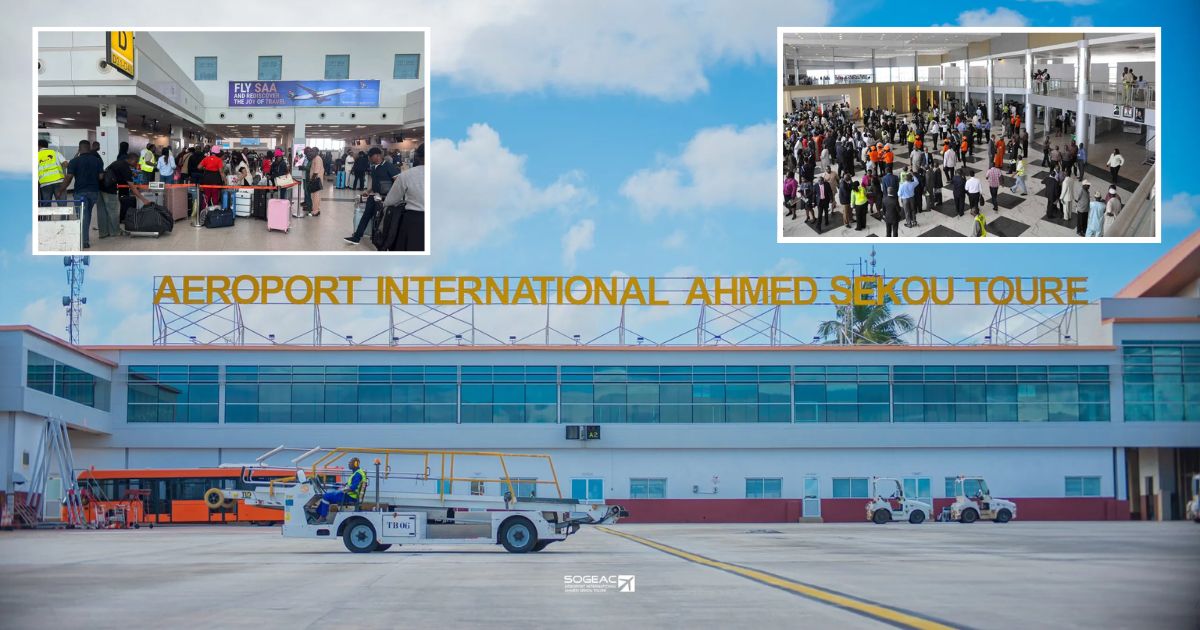
“When desperation creates the migrant, weak institutions create the opportunity, and traffickers create the route, closing the border alone will never solve the problem.”
Sierra Leone’s temporary suspension of overseas recruitment activities connected to the Guinea route should not be treated merely as an administrative restriction on travel. Nor should it degenerate into a diplomatic quarrel between two neighbouring countries bound by geography, commerce, culture and kinship. Something deeper demands attention.
The controversy exposes three interconnected challenges: economic desperation, weak regulation of labour migration, and the persistent danger of human trafficking—including the exploitation of children.

On 11 September 2026, the Ministry of Employment, Labour and Social Security suspended overseas recruitment connected to the Guinea route pending investigation, amid Guinean concerns about Sierra Leoneans transiting through Guinea for employment abroad, particularly in Arab countries.
The immediate question may be: Why is Guinea frustrating Sierra Leonean travellers? A more important one is: What has been happening along this corridor to generate such concern in the first place?
Follow the Route—and the Recruiters
Sierra Leoneans have every right to seek legitimate employment abroad. The economic pressures driving migration are undeniable. World Bank/ILO data estimate that around 30.8 percent of Sierra Leonean youth were not in employment, education or training in 2025, while the country needs tens of thousands of new jobs annually.
Where decent opportunities are scarce, promises of employment in Saudi Arabia, Oman, Kuwait, the UAE and elsewhere become attractive. But desperation also creates opportunities for unscrupulous intermediaries operating between legitimate recruitment, irregular migration and trafficking.
If Sierra Leoneans are recruited at home, transported across the border and flown from Conakry to overseas destinations, authorities must establish why.
Is Conakry simply more convenient, or are recruiters circumventing Sierra Leone’s labour-migration controls? Who recruits these travellers? Who buys their tickets? Who verifies their contracts and employers? What fees are charged? And who takes responsibility when promised employment becomes exploitation? These are the questions the investigation must answer.
But What About Our Children?
There is an even more troubling question. Why should trafficking acquire heightened urgency only when adults seeking overseas employment attract attention at Conakry Airport?
International assessments have long warned about the vulnerability of Sierra Leonean children. The 2025 U.S. Trafficking in Persons Report specifically describes Sierra Leonean children being sent to Guinea through traditional menpikin arrangements and identifies risks arising from informal migration and deceptive recruitment.
Traditional fostering is not inherently trafficking. Across Sierra Leone and Guinea, children have long lived with extended families for education and opportunity. But informality can be exploited.
A child may leave home supposedly to attend school and instead become an unpaid domestic worker—cooking, cleaning and caring for another family’s children while sacrificing his or her own education.
At what point does fostering become exploitation? How many children cross our borders under arrangements nobody subsequently monitors?
If authorities have long known these vulnerabilities, where has been the urgency?
The same 2025 assessment reported only 13 trafficking investigations by Sierra Leonean authorities during its reporting period. This does not establish official indifference or complicity, but it legitimately raises questions about detection, investigative capacity, prosecution and political prioritisation.
The Gulf Experience Should Have Warned Us
We already know where poorly regulated labour migration can lead.
The 2024 U.S. Trafficking in Persons Report cited research involving nearly 500 Sierra Leonean domestic workers in Oman, reporting that 99 percent of those interviewed were assessed as victims of forced labour, while approximately one-third reported sexual abuse.
That should fundamentally change how we understand “overseas employment.”
A passport, visa and airline ticket cannot exhaust government’s responsibility. Before departure, authorities should know the recruiter, employer, contract, salary and destination—and provide mechanisms for intervention when employment becomes servitude.
Guinea Has Legitimate Concerns—and Responsibilities
Guinea should not automatically be cast as the villain.
If thousands of Guineans entered Sierra Leone and systematically used Lungi Airport for overseas labour migration, Sierra Leonean authorities would reasonably ask who organised them and whether trafficking networks were involved. Guinea has the same sovereign right.
But Guinea equally bears responsibilities.
Sierra Leonean children or adults found in exploitative circumstances in Guinea should not simply be treated as immigration offenders. Potential trafficking victims require protection, investigation and, where appropriate, safe repatriation.
Trafficking networks operating across both countries demand intelligence sharing and prosecution on both sides of the border. This is a shared human-security problem.
Do Not Turn This Into Another Bilateral Crisis
The controversy comes at a sensitive moment in Sierra Leone–Guinea relations, with unresolved historical border sensitivities, including Yenga. Political restraint is therefore essential. Freetown should investigate before accusing Guinea. Conakry should enforce its laws without humiliating legitimate Sierra Leonean travellers.
Neither country benefits from converting trafficking and migration governance into nationalist confrontation.
Closing the Route Will Not Close the Problem
The suspension may be necessary as an emergency measure, but prohibition is not a migration policy.
If economic desperation remains, closing Guinea may merely redirect irregular movement elsewhere. The sustainable response is not to stop migration but to make it safe, legal and accountable.
Sierra Leone needs a transparent overseas-employment system through which recruiters, foreign employers, contracts, destinations and departing workers can be verified. Agencies deliberately circumventing these safeguards should lose their licences; where trafficking is established, prosecution must follow.
Enforcement must also target the network rather than merely its victims:
Who recruits? Who collects the money? Who arranges transport and documents? Who receives travellers across the border? Who connects them to foreign employers? Who profits? And does anyone within public institutions facilitate these networks—or knowingly look the other way? These questions demand investigation, not speculation.
Freetown and Conakry Must Act Together
Both governments should now establish a Sierra Leone–Guinea Joint Migration and Anti-Trafficking Compact, integrating immigration, police, labour, child-protection and diplomatic authorities to verify recruiters, exchange intelligence, prosecute traffickers and protect victims.
Most urgently, they need a cross-border child-protection protocol. Where reasonable safeguarding concerns arise, authorities should verify who accompanies a child, their relationship, parental or guardian consent, destination and purpose of travel.
This would not obstruct legitimate family movement. It would make exploitation considerably harder.
The Enemy Is Not Across the Border
The young woman promised employment abroad is not the enemy. The unemployed graduate searching for opportunity is not the enemy. The impoverished parent deceived into believing someone will educate their child is not the enemy.
And Guinea is not the enemy.
The trafficker is.
Freetown and Conakry should therefore resist turning against each other and instead turn together against those who profit from human vulnerability.
Because when a Sierra Leonean woman ends up trapped in domestic servitude abroad, or a child crosses into Guinea supposedly seeking opportunity but disappears into exploitation, it matters little on which side of the border the institutional failure occurred.
For the sake of humanity, the question confronting both governments is simple: If we know these vulnerabilities exist, what are we doing—together—to stop them?
Chernor Mohamadu Jalloh is a Lecturer of Governance, Public Policy & Development Studies at IPAM, University of Sierra Leone. He writes on governance, development, political economy, education and African affairs.


