

ECSL Puts 2025–2029 Strategic Plan Up for Stakeholder Scrutiny

 Sahid Bangura
 Chief Electoral Commissioner and Chairman of the Electoral Commission of Sierra Leone (ECSL), Edmond Sylvester Alpha, has urged political parties, civil society organisations, media practitioners and other stakeholders to subject the Commission’s 2025-2029 Strategic Plan to rigorous scrutiny before its final adoption.
Alpha said the plan must reflect the expectations of Sierra Leone’s wider democratic community and not merely the priorities of the electoral commission.
He made the call on Tuesday, September 29, 2026, while opening the validation workshop for the ECSL Strategic Plan in Bo, where he described stakeholder participation as critical to building a credible and resilient electoral institution.




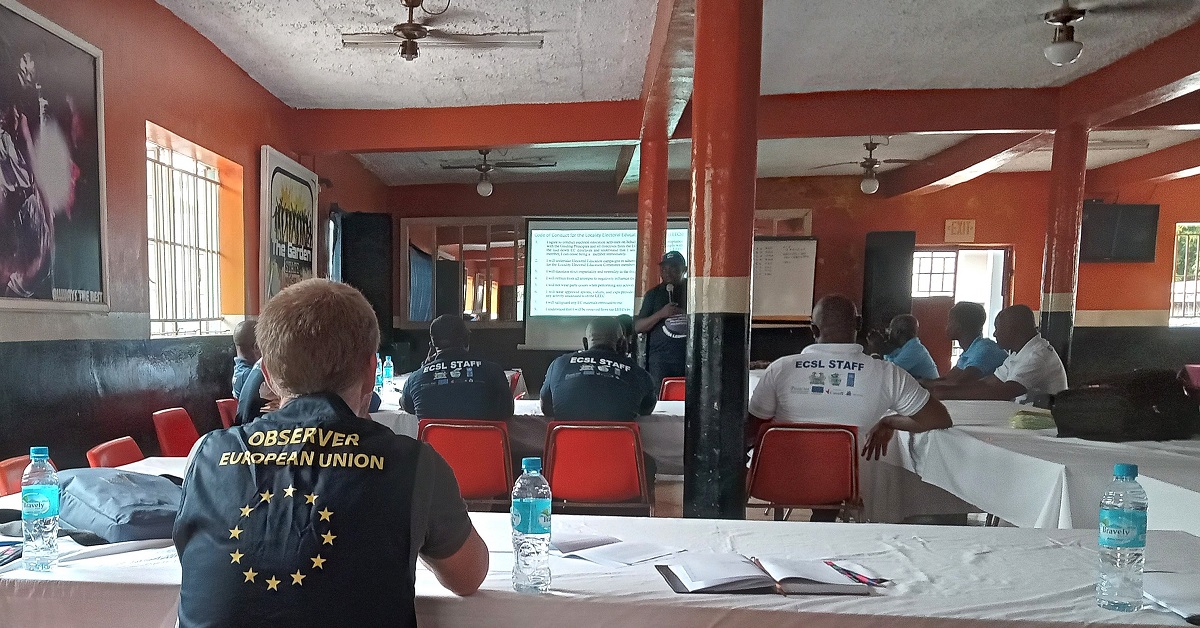
According to Alpha, the validation process provides an opportunity for stakeholders to ask difficult questions about the practicality, measurability and relevance of the Commission’s proposed strategic objectives.
He specifically challenged participants to assess whether the strategic goals are realistic and achievable, whether the proposed indicators can effectively measure progress and whether the plan adequately responds to the operational and public-trust challenges facing Sierra Leone’s electoral system.
“This is about collective ownership,” Alpha said, stressing that the strategic plan should not represent only the voice of the Commission but should also reflect the aspirations, standards and scrutiny of the country’s broader democratic ecosystem.

The ECSL Chairman said the draft plan was developed through internal assessments, technical consultations and reviews of previous electoral cycles, including recommendations from domestic and international election observation missions.
He said the proposed 2025–2029 framework places emphasis on institutional and staff development, electoral education and participation, ICT and data management, as well as constructive engagement with stakeholders.
Alpha also highlighted the need for stronger public communication and year-round civic and voter education, particularly in addressing electoral misinformation and improving the participation of women, young people, first-time voters and persons with disabilities.
On technology, he said the Commission’s priorities include modernising its digital infrastructure, protecting the integrity of voter data, strengthening cybersecurity and improving open-data transparency.

The ECSL has previously described stakeholder engagement as an important part of developing its 2025–2029 Strategic Plan, with the process intended to gather views from political parties, civil society, development partners and other electoral stakeholders.
Alpha said feedback from the validation workshop would directly inform the final costed strategic document that will guide the Commission’s operations through 2029.
He thanked political parties, civil society organisations, development partners and the technical drafting committee for their contributions, before formally declaring the validation workshop open.
He called for candid and constructive deliberations, saying broad stakeholder input would be important in shaping the final strategic direction of the Commission.