

Sierra Leone Launches Nationwide Cyber Hygiene and Online Safety Campaign
 Sia Lucy Kannah
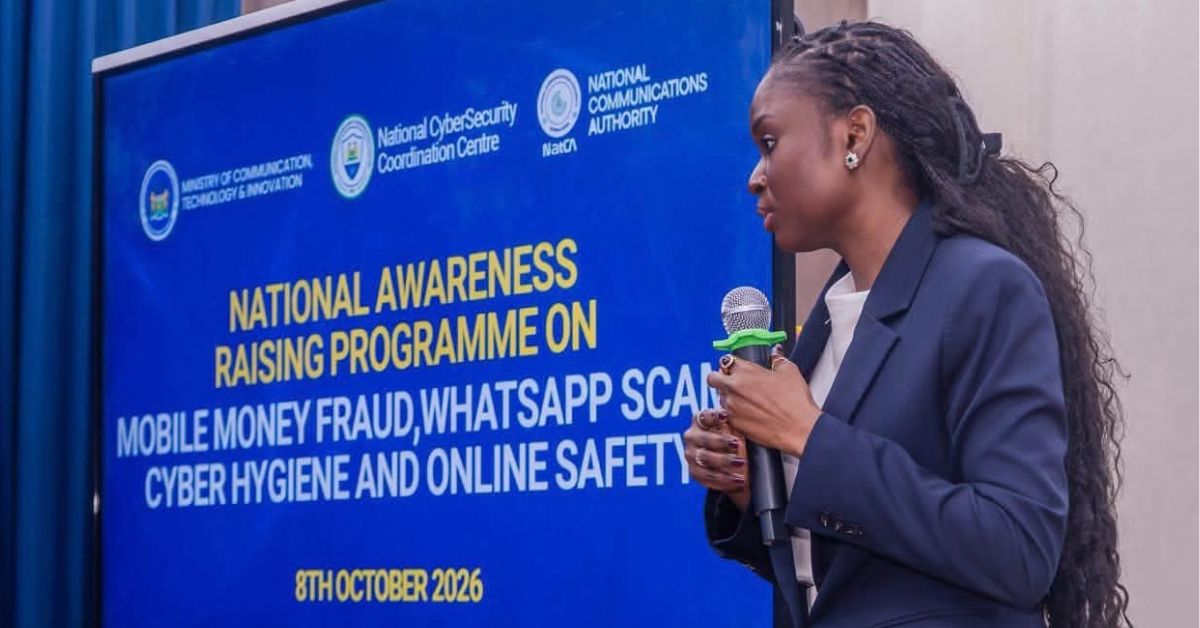
 The Ministry of Communication, Technology and Innovation (MoCTI) has spearheaded the launch of a nationwide Cyber Hygiene and Online Safety Campaign.
The multi-agency initiative, executed alongside the National Cybersecurity Coordination Centre (NC3), the Sierra Leone Digital Transformation Project (SLDTP), and the National Communications Authority (NatCA), aims to build digital resilience and curb the rapid rise of internet-driven fraud across the country.
As digital banking and mobile money services expand across Sierra Leone, so too have sophisticated online scams.

Officials emphasise that basic cyber habits can prevent the vast majority of these attacks. The public is being urged to practice key security routines: shielding personal identification numbers (PINs) and passwords, enabling multi-factor authentication (MFA), scrutinising links before clicking, and keeping private details off public forums.




The outreach campaign highlights key provisions under the Cyber Security and Crime Act, 2021, reminding citizens that digital misdeeds carry severe legal consequences: Unauthorised Password Disclosure (Section 39): Sharing a password or access code for unlawful gain or to cause financial harm carries a fine ranging from Le 10 million to Le 30 million, a prison term of 1 to 3 years, or both.
Computer Fraud (Section 41): Using computer networks to dishonestly cause financial loss carries penalties of Le 30 million to Le 50 million, 2 to 5 years in prison, or both; Identity Theft (Section 42): Impersonating another person or misusing their credentials carries a fine of Le 50 million to Le 100 million, 3 to 7 years in prison, or both.
Additionally, Cyber Stalking and Harassment (Section 44): Sending threatening, distressing, or menacing messages to incite fear incurs fines between Le 30 million and Le 50 million, 2 to 5 years imprisonment, or both; and Non-Consensual Sharing of Intimate Images (Section 48): Sharing or threatening to share intimate media without explicit consent attracts severe fines of Le 100 million to Le 250 million, a prison sentence of 5 to 10 years, or both.

Authorities urge victims of cybercrime to document all digital evidence, including screenshots, threat messages, and transaction logs,and report incidents immediately to the National Cybersecurity Coordination Centre.
The government’s overarching message to the public is simple: Think before clicking, protect your access codes, verify before trusting, and report suspicious activities immediately.