

Sierra Leone Judges Say Courts Alone Can’t Beat Kush, Push for Specialised Drug Court
 Ben Bassey
To fight against Kush, Sierra Leone’s most senior judges have asked the United Nations to help establish a specialised drug court and fund a justice-sector colloquium, acknowledging that the country’s courts cannot dismantle trafficking networks alone.
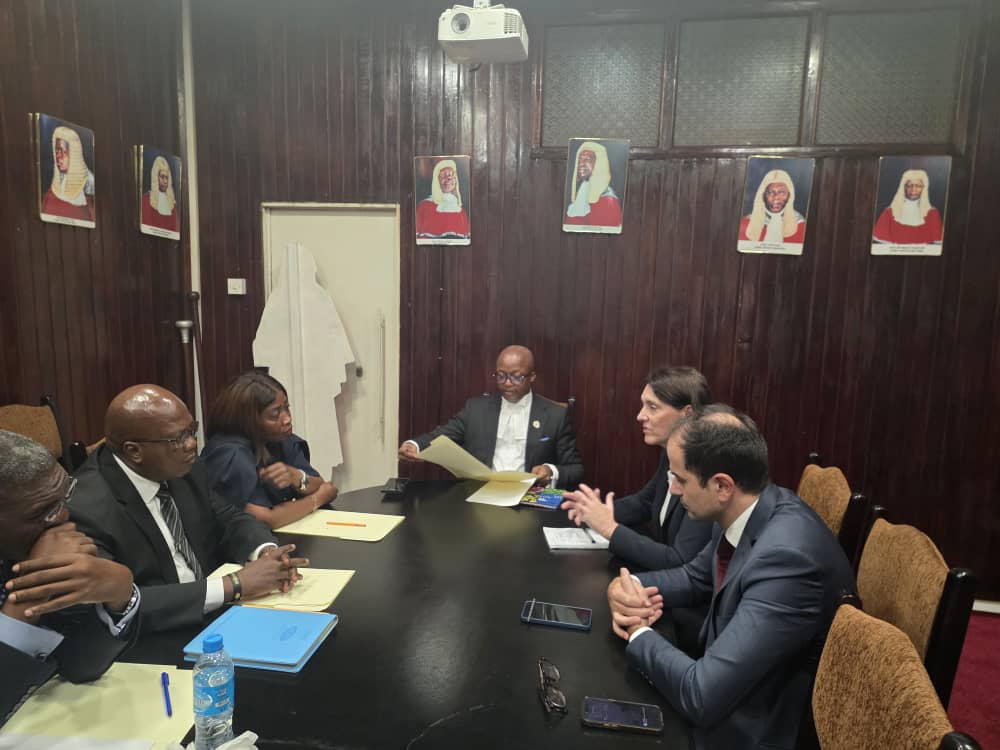
The requests came during a meeting between Chief Justice Komba Kamanda and a UN Office on Drugs and Crime delegation led by Regional Representative Sylvie Bertrand at the Chief Justice’s Chambers on Tuesday, November 24, 2026.
Court of Appeal Justice Tonia Barnett proposed the specialised court, describing the Chief Justice’s December 2025 Practice Direction as the foundation for faster trials and higher conviction rates. That directive, which took effect on December 1, 2025, bars bail for drug offences, mandates High Court trials, authorises Saturday sittings, and imposes a minimum 30-year sentence for offences under Sections 7(a) to 7(c) of the National Drugs Control Act 2008.

Justice Khalila Diana Kamara urged UNODC to engage the Attorney-General’s office and the Sierra Leone Correctional Service to identify where technical assistance could strengthen institutional capacity. Justice Andrew Johnson raised a practical bottleneck: the shortage of professional witnesses, particularly police officers required to testify in multiple courts, which frequently causes adjournments.

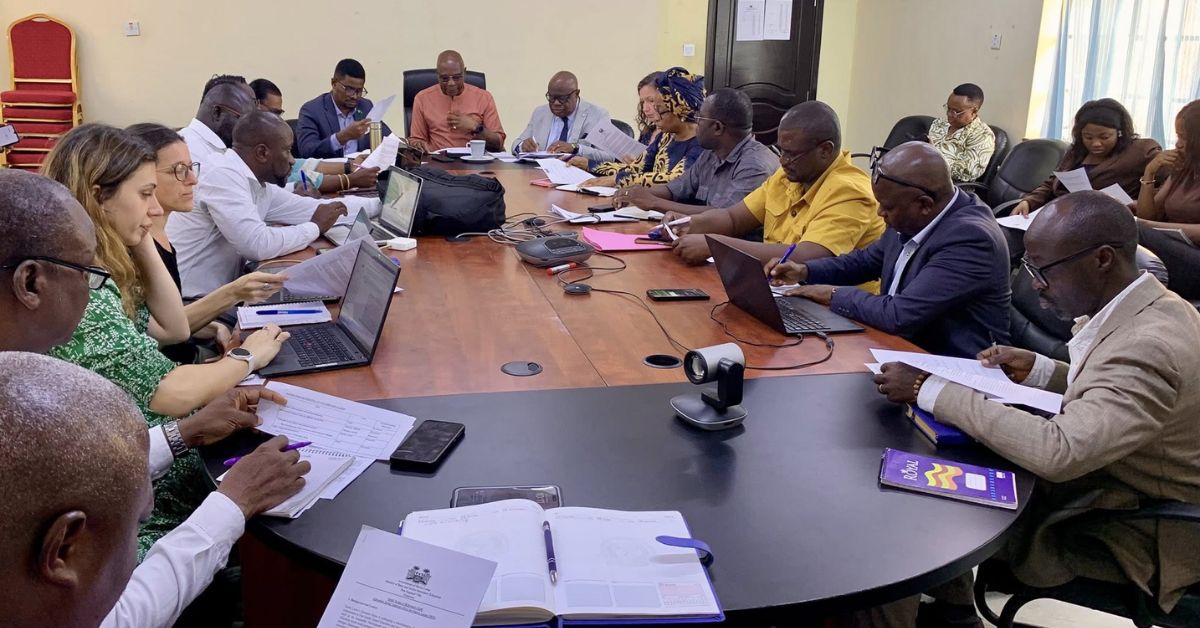
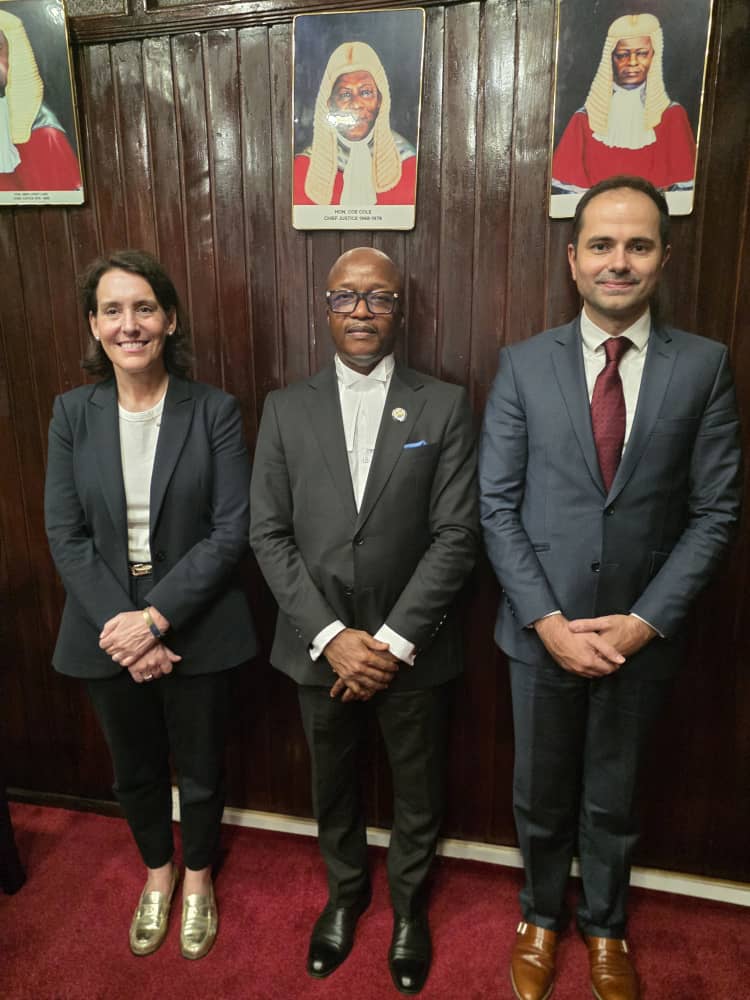
Justice Sulaiman Bah, a former Director of Public Prosecutions, called for technical assistance and a colloquium involving all justice-sector stakeholders to improve coordination.
Bertrand said the delegation was in Freetown to engage justice stakeholders, identify challenges and assess successes in addressing drug offences, financial crimes and law enforcement. Jonathan Bourguignon, UNODC’s adviser on corruption and financial crime for West and Central Africa, said the organisation was particularly interested in identifying gaps within the criminal justice chain.
The visit comes as Sierra Leone’s Kush crisis continues to strain both the justice and health systems. Kush-related admissions at the Sierra Leone Psychiatric Teaching Hospital rose approximately 4,000 percent between 2020 and 2023, reaching nearly 1,865 cases. The government declared a public health emergency in April 2024.
The Chief Justice’s Practice Direction represents one of the world’s harshest drug enforcement regimes. Aiah Nabieu Mokuwah, executive director of the Institute for Drug Control and Human Security, has argued the directive “prioritises punishment almost exclusively,” leaving little room for differentiated responses based on the nature of the offence or the offender.
Less than two months after implementation, the Judiciary announced 20 convictions, with sentences ranging from 10 years for possession to 40 years for a “collecting” offence.
President Bio has separately announced plans for a Special Court dedicated to drug cases, staffed by designated judges and magistrates to fast-track prosecutions.
The meeting did not produce a formal agreement. But the judges’ request for a specialised court and a stakeholder colloquium signals that the judiciary sees its punitive framework as incomplete without dedicated infrastructure and better coordination with police, prosecutors and corrections.
Whether UNODC responds with funding and technical support—and whether a specialised court materialises—will determine if Sierra Leone’s drug strategy moves beyond incarceration toward a functioning justice chain.