

Media, Civil Society Groups Urge Parliament to Reject Data Protection and Access to Information Bill
 Kanja Sesay
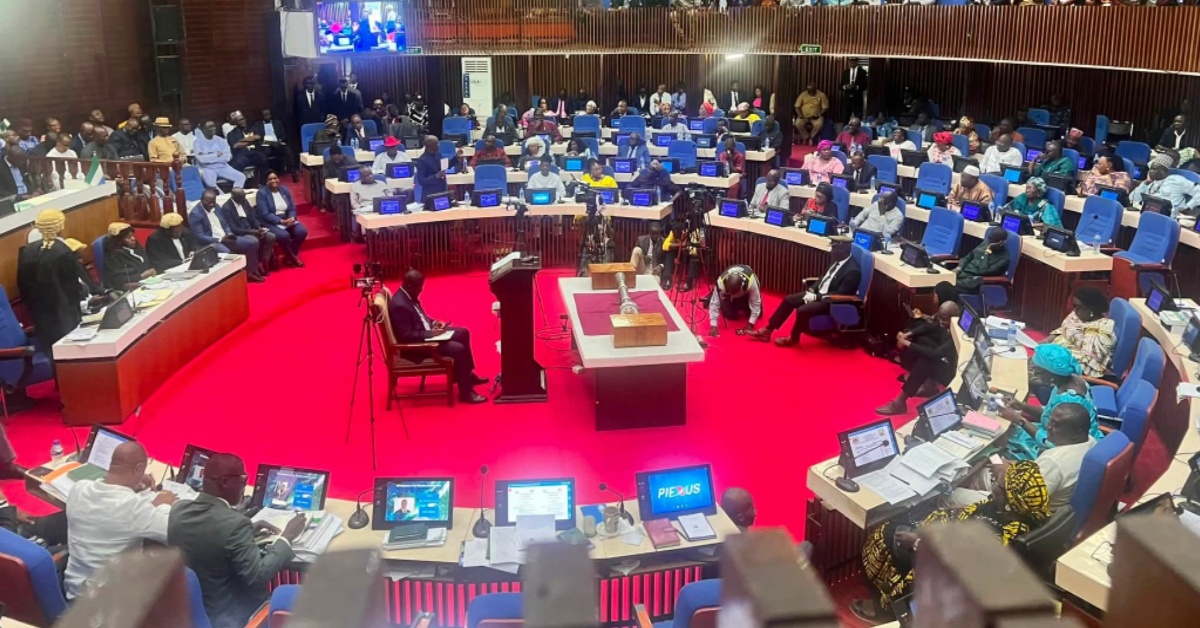
Leading media and civil society organisations in Sierra Leone have jointly called on Parliament to reconsider the Data Protection and Right to Access Information Bill 2026, warning that its proposed provisions could significantly erode the country’s access to information protections.
In a joint position paper submitted in Freetown on November 25, 2026, the Sierra Leone Association of Journalists (SLAJ), the Media Reform Coordinating Group (MRCG), the Society for Democratic Initiatives (SDI), and Forward Sierra Leone (F-SL) argued that while introducing data protection legislation is welcome, the Bill published as Gazette Supplement No. 62 of July 2, 2026, and laid before Parliament in November 2026, would repeal the Right to Access Information Act, 2013 under Section 92 and strip away vital enforcement mechanisms.
“In short, the right survives on paper while the machinery for enforcing it is dismantled,” the joint position paper stated.

The groups noted that Sierra Leone’s Right to Access Information Act, 2013 earned international acclaim, ranking jointly fifth globally on the Centre for Law and Democracy’s Right to Information Rating with 124 out of 150 points. That standing, they contended, rested not only on recognising the right to information but on enforceable safeguards including an independent Commission, binding disclosure orders, a reversed burden of proof, statutory criminal sanctions, mandatory information officers, whistleblower protections, and High Court appeals.



A central objection in the coalition’s critique targets the proposed oversight body’s governance structure. Under Section 37 of the 2013 Act, the Commission was shielded from the direction or control of any person or authority. The organisations warned that Section 22 of the 2026 Bill qualifies that protection with the phrase “except as provided by this Act or any other law,” potentially opening the door to external control.
The Bill would also replace the office of Information Commissioner with a Board under Section 7, comprising representatives from the Attorney General’s Office, the Ministry of Information and Civic Education, the Ministry of Communication, Technology and Innovation, the Bank of Sierra Leone, and a law enforcement agency, alongside private sector and civil society nominees selected by the Minister. The coalition noted that five of the eight proposed Board members would be serving government officials, enabling state representatives to conduct business without private sector or civil society participation.
The four organisations identified enforcement rollbacks as one of the Bill’s gravest flaws. Whereas the 2013 Act required the Commission to determine refusal appeals within 15 days, with powers to compel disclosure, award compensation, impose fines, and place the burden of proof on public authorities. The 2026 Bill allows complaints without a clear resolution deadline or explicit power to order the release of withheld records.
By contrast, the coalition noted that the Bill provides a stronger mechanism for personal data access requests, including a 14-day compliance order requirement, arguing the Bill protects personal data rights more robustly than public access to government information.
On criminal penalties, the groups observed that the 2013 Act set out clear sanctions, including fines of up to Le10 million for individuals and Le100 million for corporate bodies, as well as up to one year in prison. Under the proposed Bill, the Minister, in consultation with the Authority, would set penalties instead, which the coalition warned could create enforcement uncertainty and weaken deterrence.
The position paper further warned that the Bill omits clear definitions for key terms such as “public authority,” “private body,” and “information.” They highlighted the removal of mandatory appointments of Public Information Officers, the dropping of mandatory annual compliance reporting by public authorities, and the repeal of whistleblower protections under Sections 50 and 51.
SLAJ, MRCG, SDI, and F-SL urged Parliament to scrutinise the Bill thoroughly so that data protection reforms do not come at the expense of citizens’ established right to access public information.