

UNIMAK, London School of Hygiene Advance Disability Assessment Initiative in Sierra Leone
 Kanja Sesay
 The University of Makeni (UNIMAK), in partnership with the London School of Hygiene and Tropical Medicine (LSHTM), is advancing efforts to develop a comprehensive national system for identifying, assessing and certifying persons with disabilities in Sierra Leone.
The partnership is generating evidence through the second phase of the Disability Assessment, Determination and Certification (DADC) Pilot, with findings expected to support the development of a structured national disability assessment and certification framework.
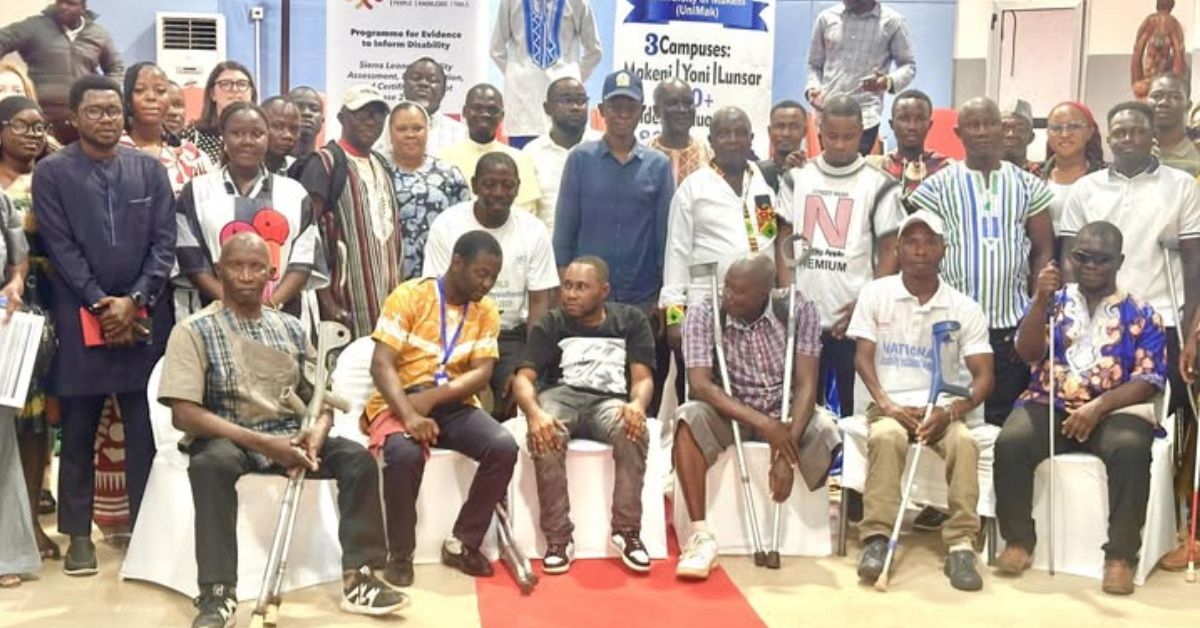
Stakeholders from various Ministries, Departments and Agencies gathered on Friday, September 11, 2026, at the University of Makeni Auditorium for the dissemination of the DADC Pilot Phase II protocol and findings.

Amjata Bayoh, Research Coordinator, said the study is focused on assessing persons with disabilities while identifying barriers that affect their participation in everyday activities and access to essential services.


She said the research is intended to provide a clearer understanding of the challenges faced by persons with disabilities and generate evidence that can guide policy development and improve service delivery.
Bayoh explained that Paki Massabong in Bombali District was selected as one of the pilot communities based on statistical evidence indicating a significant population of persons with disabilities.
Representing LSHTM, Sara Rotenberg said the initiative seeks to ensure that the health and well-being of persons with disabilities are adequately recognised and protected.
The collaboration between UniMak and LSHTM is expected to provide evidence that can help establish a more systematic approach to disability assessment and certification across Sierra Leone.
Augustine Santigie Conteh, Coordinator of the Sierra Leone Union on Disability Issues (SLUDI) in Bombali District, welcomed the initiative but called for the findings to move beyond research into practical policies, programmes and services.
Conteh stressed the importance of ensuring equal opportunities for persons with disabilities to participate fully in society and access essential services.
He noted that the long-term value of the pilot would depend on how its findings are translated into concrete interventions that respond to the needs and challenges of persons with disabilities.
The findings are expected to contribute to efforts to strengthen disability policies, improve service delivery and inform the development of a national assessment and certification framework.
Through the DADC Pilot, UniMak and LSHTM are working to provide an evidence-based foundation for a national system capable of identifying disability more consistently and guiding access to appropriate services and protections for persons with disabilities in Sierra Leone.