

SLAJ Celebrates Graduation of 80 Female Journalists from Digital Media Training
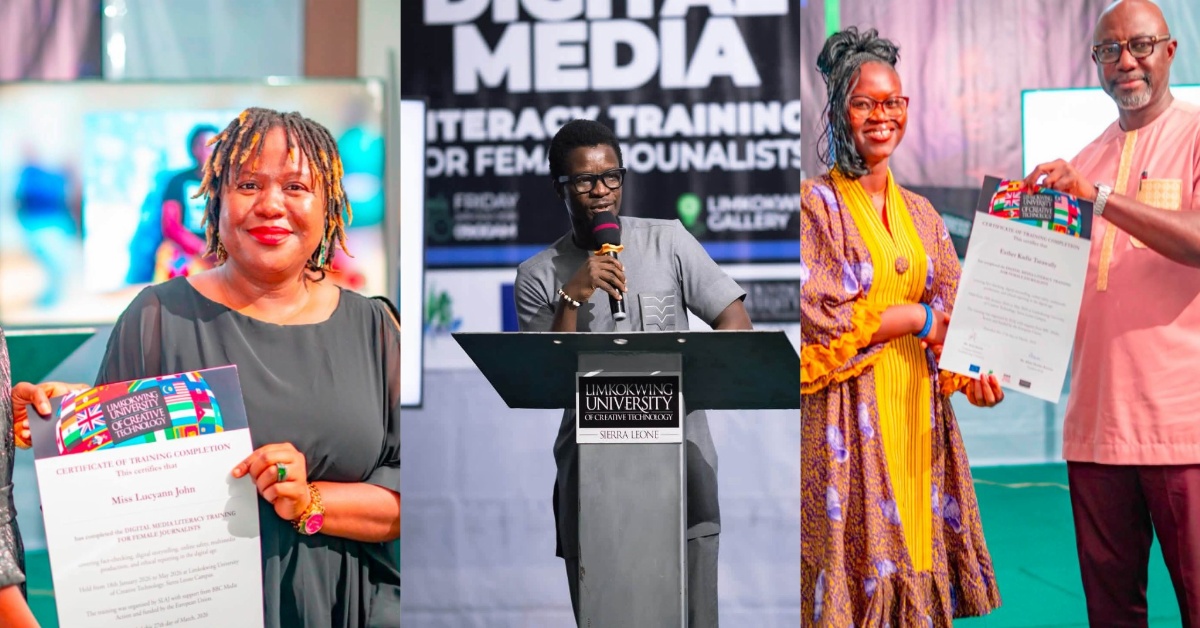
 Aaron Parker
 The President of the Sierra Leone Association of Journalists (SLAJ), Alhaji Manika Kamara, has called on development partners and stakeholders to continue investing in capacity building for journalists as the media landscape continues to evolve through digital transformation.
He made the call during the graduation ceremony for 80 female journalists who successfully completed a Digital Media Literacy Training programme held under the theme “Amplifying Voices for Social Transformation.”
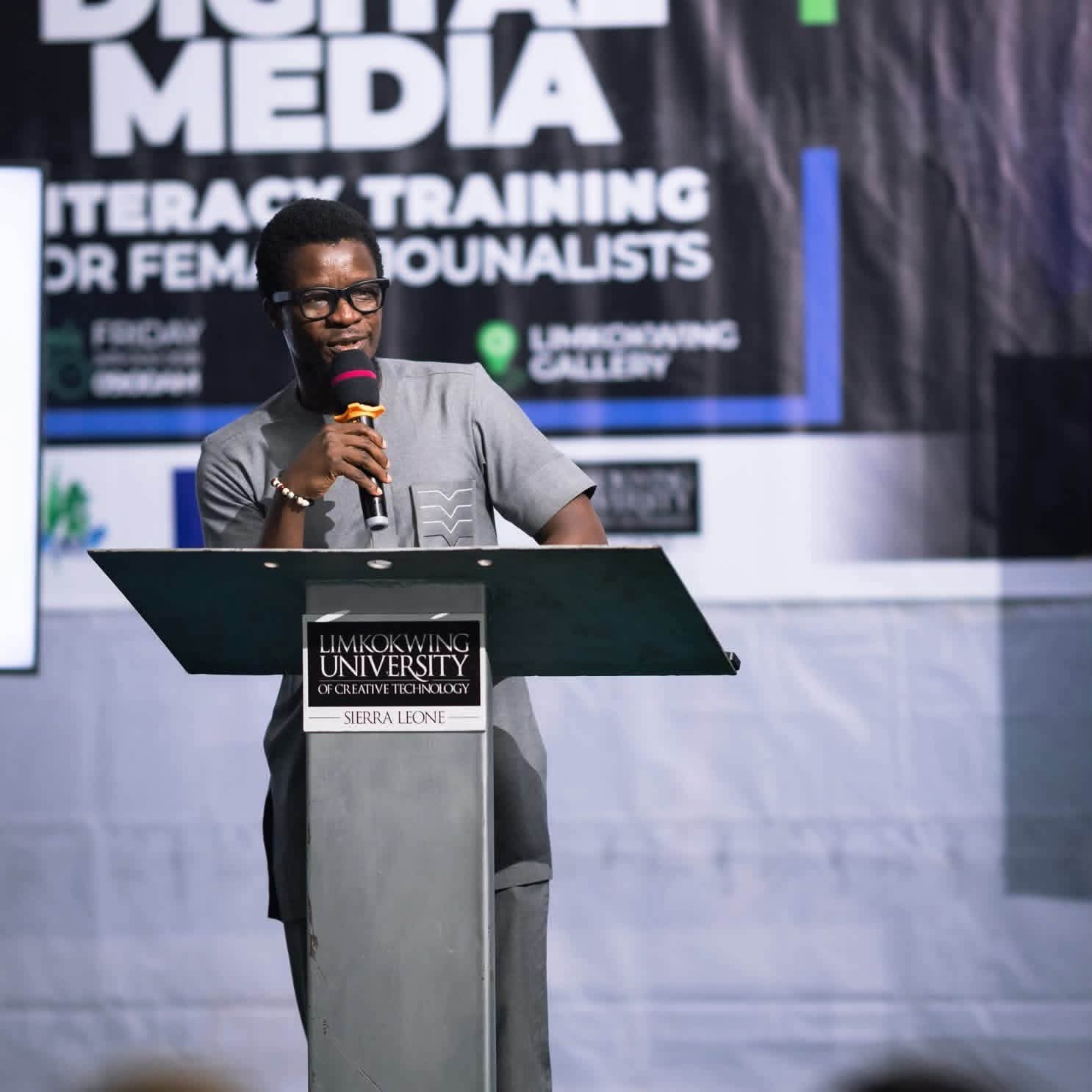

Addressing graduates, media practitioners, partners and guests, Alhaji Kamara congratulated the female journalists for their commitment and dedication to acquiring new skills needed to navigate the changing media environment.
He noted that the rapid growth of digital platforms, emerging technologies and new media tools has transformed the way news is produced, distributed and consumed, stressing that journalists must embrace continuous learning and adaptation to remain relevant.
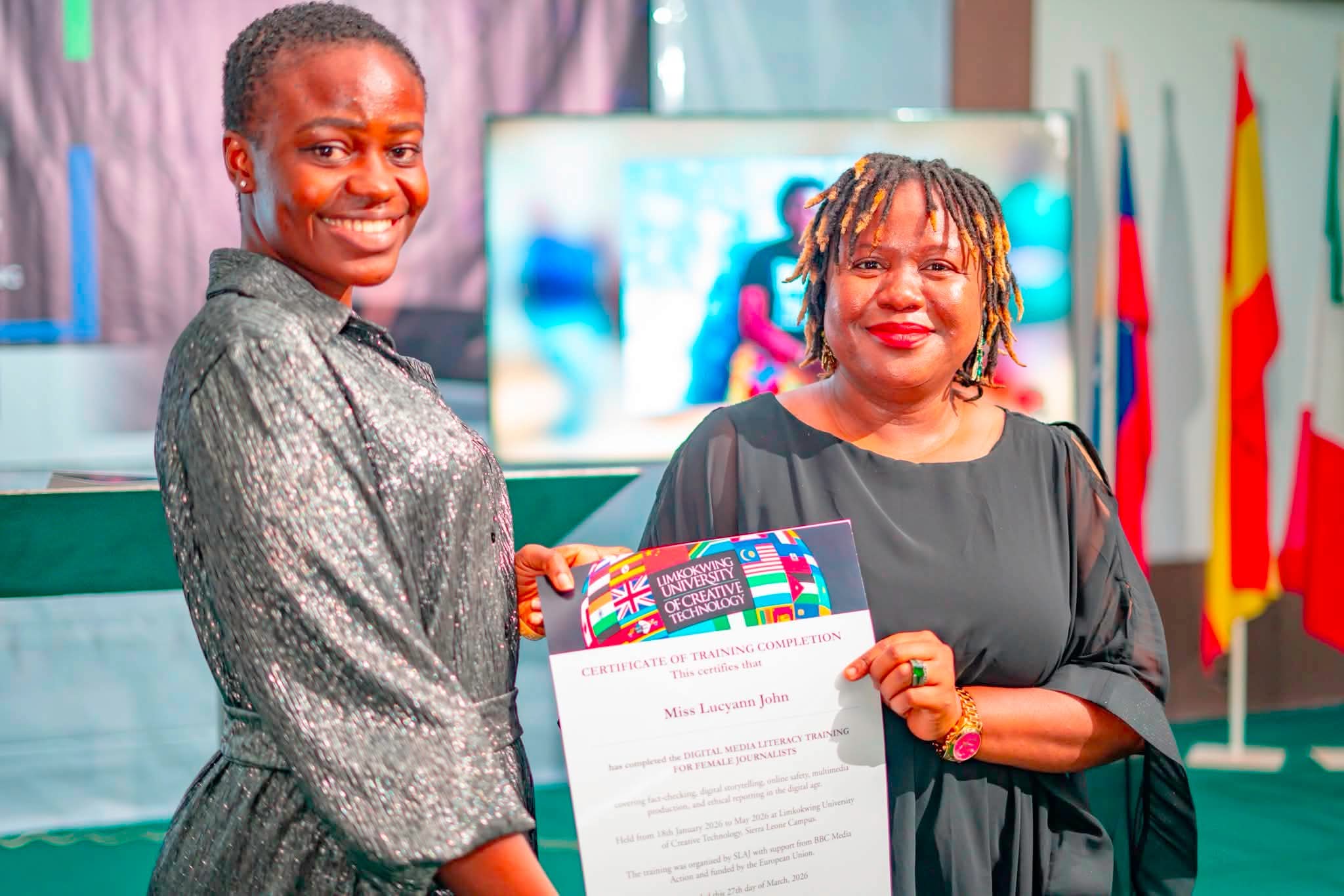
According to the SLAJ President, the training was not only focused on improving technical abilities but also aimed at empowering women journalists to tell impactful stories, reach wider audiences and contribute to positive social change.
He expressed appreciation to partners, including the European Union, BBC Media Action, Women in the Media Sierra Leone (WIMSAL), and Limkokwing University, for supporting the initiative and strengthening the capacity of journalists in Sierra Leone.
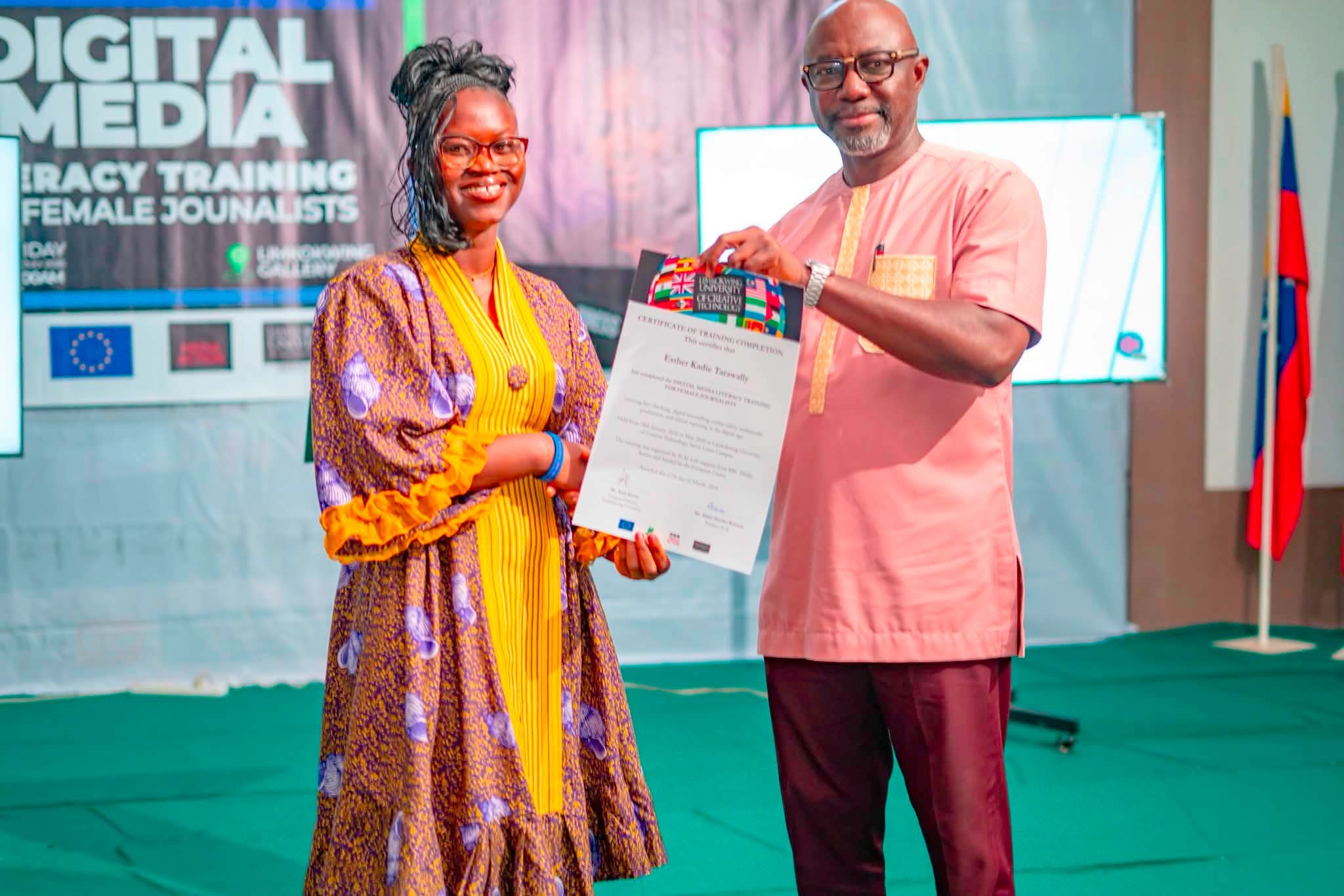
Alhaji Kamara further appealed to development partners and other stakeholders to sustain their support towards media development, highlighting the growing need for journalists to acquire skills in areas such as artificial intelligence, fact-checking, data journalism, multimedia storytelling, online safety and the responsible use of emerging technologies.
“Investing in the skills of journalists is ultimately an investment in the quality of information available to citizens and in the strength of our growing democracy,” he said.

He assured that SLAJ remains committed to collaborating with partners to ensure that Sierra Leonean journalists are equipped to meet the demands of the rapidly changing digital media environment.
The SLAJ President encouraged the graduates to utilise the knowledge and skills gained from the programme to advance their careers and amplify the voices of communities and individuals whose stories often remain unheard.
“Your voices and stories matter. And your journalism can contribute to building a more informed, inclusive and democratic society,” he told the graduates.
He also commended the SLAJ project team, particularly Project Coordinator and ex-officio member Ahmed Sahid Nasralla, for successfully coordinating the programme.
The Digital Media Literacy Training was designed to strengthen the capacity of female journalists and enhance their participation in the digital media space