

Nearly 6 Million Sierra Leoneans Remain Without Electricity Access, Data Shows
 Sorie Abubakar
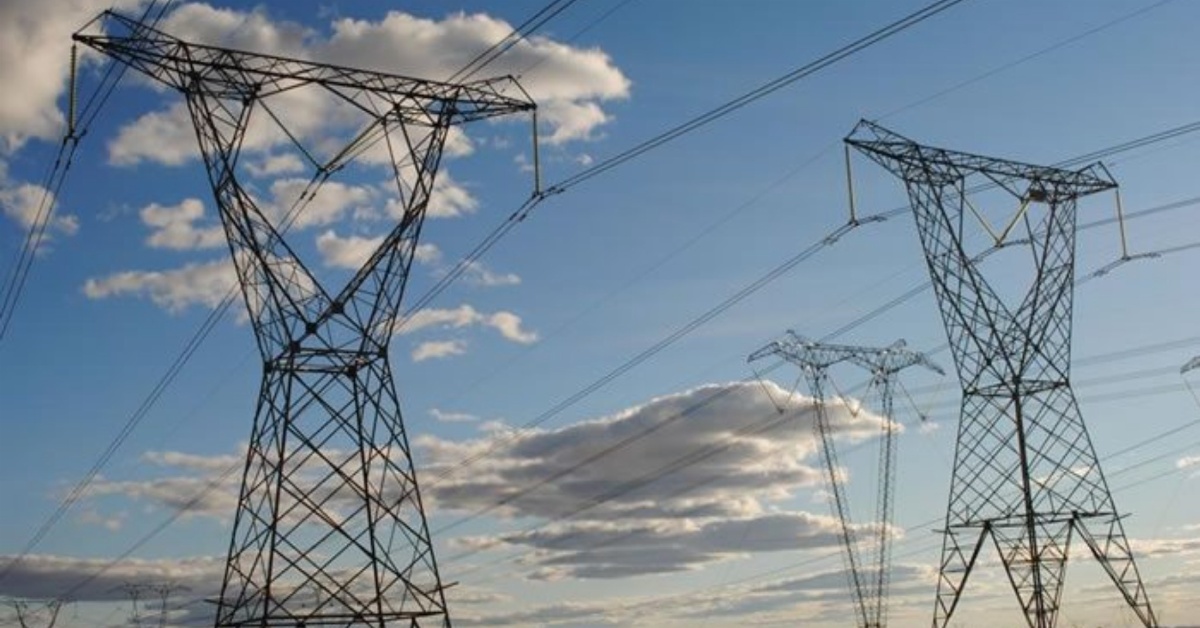
 Nearly six million people in Sierra Leone were without access to electricity in 2025, according to data published by Infotrix. The data shows that there is a major energy-access gap that continues to affect communities across the country, particularly in rural areas.
Infotrix estimates that 5,981,016 people in Sierra Leone lacked access to electricity in 2025, placing the country among those with substantial electricity-access deficits in the African region.
The figure is broadly consistent with the country’s historically low electricity-access levels. World Bank data indicate that electricity coverage in Sierra Leone stood at approximately 36 percent in 2023, meaning that about 64 percent of the population did not have access to electricity at the time.

A separate World Bank energy-access diagnostic provides further insight into the nature of the gap. It found that 21.1 percent of households had access through the national grid or mini-grids, while another 14.7 percent had off-grid access, predominantly through solar products such as solar lanterns and solar home systems.
The Infotrix figures place Sierra Leone below several other African countries in terms of the absolute number of people without electricity. Nigeria recorded the highest figure at 88.1 million, followed by the Democratic Republic of Congo with 80.4 million and Ethiopia with 55.9 million.
Tanzania recorded about 35.1 million people without electricity access, while Uganda had approximately 25 million. Mozambique, Niger, Madagascar, Angola and Sudan also recorded more than 18 million people without access.
Within West Africa, Sierra Leone’s estimated 5.98 million people without electricity access was higher than neighbouring Liberia, with about 4.79 million, and Guinea, with approximately 4.48 million, according to the Infotrix data.
The electricity-access deficit has major implications for Sierra Leone’s development. Limited and unreliable power supply affects households, businesses, schools and health facilities, while inadequate electricity infrastructure has also been identified as a constraint on economic growth and private-sector development.
The World Bank has noted that limited electricity access remains a major development challenge for Sierra Leone. Its 2024 Sierra Leone Economic Update stressed that the energy sector as a critical area for reform, while recognising government efforts under Action Plan 2030, which aims to achieve financial sustainability and universal electricity access by 2030.
Despite the scale of the challenge, Sierra Leone has in recent years intensified efforts to expand electricity access beyond Freetown and other major urban centres.
One of the major interventions is the Enhancing Sierra Leone Energy Access Project (ESLEAP), supported by the World Bank. The project combines grid expansion with solar mini-grids and standalone solar systems to reach vulnerable communities and public facilities that lack access to the national grid. The project aims to provide “new or improved electricity services to 276,000 people and installing standalone photovoltaic systems in 700 schools and health facilities,” according to the World Bank.
The government has also been expanding the use of renewable energy solutions in rural communities. Solar mini-grids and standalone solar systems are being deployed in areas where conventional grid extension is less feasible, helping to bring electricity to communities that have historically remained underserved.
More recently, the World Bank approved a US$200 million financing package in June 2026 for the first phase of the Regional Distributed Access through Renewable Energy Solutions (DARES) programme, which includes Sierra Leone. The programme is expected to design and accelerate electrification in underserved rural and remote communities in the West African country through renewable energy technologies like solar and mini-grids.
Through the West Africa Power Pool and projects including the Côte d’Ivoire–Liberia–Sierra Leone–Guinea (CLSG) interconnector, Sierra Leone has been able to expand electricity access to some rural communities and district headquarter towns.
Experts believe that although the government and development partners are making major progress, closing the electricity gap will depend not only on expanding the national grid but also on accelerating rural electrification through solar mini-grids, standalone renewable-energy systems and other decentralised solutions.