
ECOWAS Endorses Nigeria-Morocco Gas Pipeline in Freetown
 Aminata Koroma
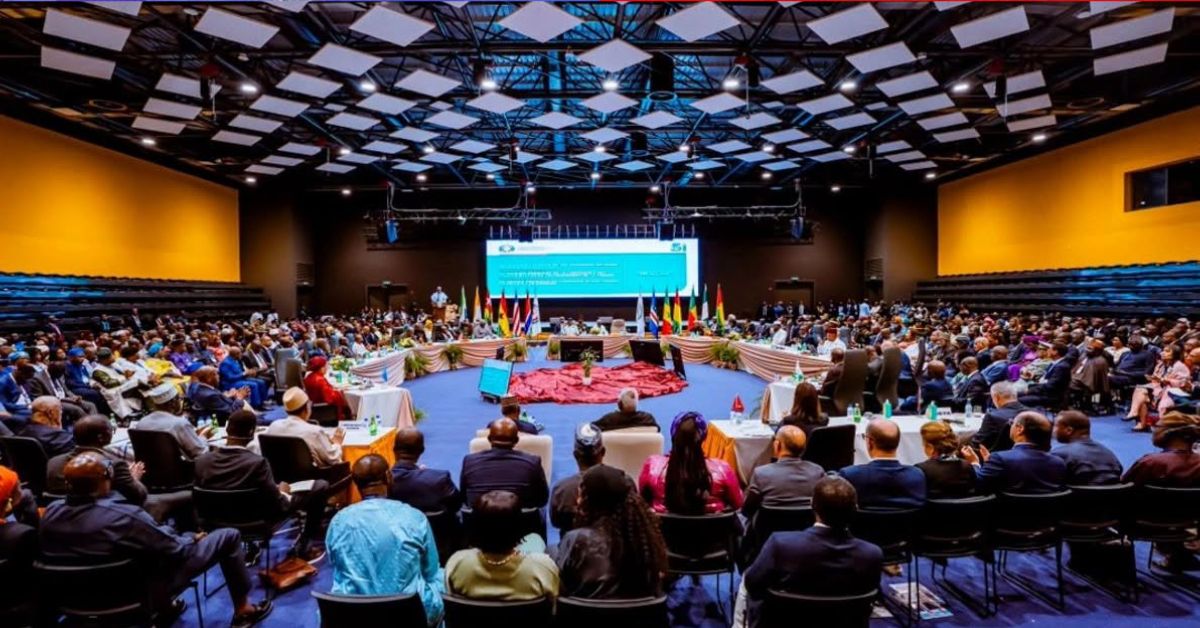
 The Summit of Heads of State and Government of the Economic Community of West African States (ECOWAS) on Sunday hosted the signing of an Intergovernmental Agreement (IGA) for the development of the Nigeria-Morocco African Atlantic Gas Pipeline (AAGP) in Freetown.
The nearly 6,800-kilometre pipeline will transport natural gas from Nigeria to Morocco, where it will connect to the European gas network, marking a major step in regional energy integration.
The signing represents a collective endorsement by ECOWAS Member States of the ambitious project, originally launched by King Mohammed VI of Morocco and former Nigerian President, the late Muhammadu Buhari, and now supported by Nigeria’s current President, Bola Ahmed Tinubu.

The pipeline is being jointly developed by Morocco’s National Office of Hydrocarbons and Mines (ONHYM) and the Nigerian National Petroleum Company Limited (NNPC Ltd.).


Under the agreement, the project will move into its next implementation phase, including the establishment of a Project Company to be headquartered in Casablanca and a Pipeline Higher Authority to be based in Abuja. These steps will precede investor mobilisation and the preparation of the Final Investment Decision (FID).
A final ceremony is expected to be held in Morocco, where the Kingdom of Morocco and the Islamic Republic of Mauritania will formally sign the agreement in the presence of Nigeria’s President.
Once completed, the pipeline will traverse 13 countries along Africa’s Atlantic coast and link to the Maghreb-Europe gas pipeline in northern Morocco. These countries include Benin, Togo, Ghana, Ivory Coast, Liberia, Sierra Leone, Guinea, Guinea-Bissau, Gambia, Senegal, Mauritania (with branches to Mali, Burkina Faso, and Niger). It is projected to transport up to 30 billion cubic metres of natural gas annually, with about half designated for export to Morocco and Europe, while the remainder will serve regional markets.
Estimated at $25 billion, the AAGP aims to establish an integrated regional gas market across West Africa, boost electricity generation, support industrialisation, and enhance the development of the continent’s natural resources.
The commissioning of the first pipeline segments is expected at the beginning of the next decade.
Initially conceived as a bilateral initiative between Morocco and Nigeria, the project has evolved into a region-wide undertaking, now fully embraced by ECOWAS Member States.
Officials say this collective ownership strengthens the project’s political and institutional foundation, while reinforcing its role in advancing Africa’s energy security, economic integration, and shared prosperity.
The Freetown Summit’s endorsement underscores the continental scope of the initiative and its strategic importance to Africa’s integration agenda.
ONHYM and NNPC Ltd. also confirmed that key engineering, environmental, and technical studies have been completed, enabling the project to enter its operational development phase.
Beyond energy supply, the pipeline is expected to serve as a major development corridor, linking African economies and enhancing regional competitiveness.