
Environment Ministry, UNDP Validate GIS Maps for Sustainable Land Management in Northern Districts
 Aminata Koroma
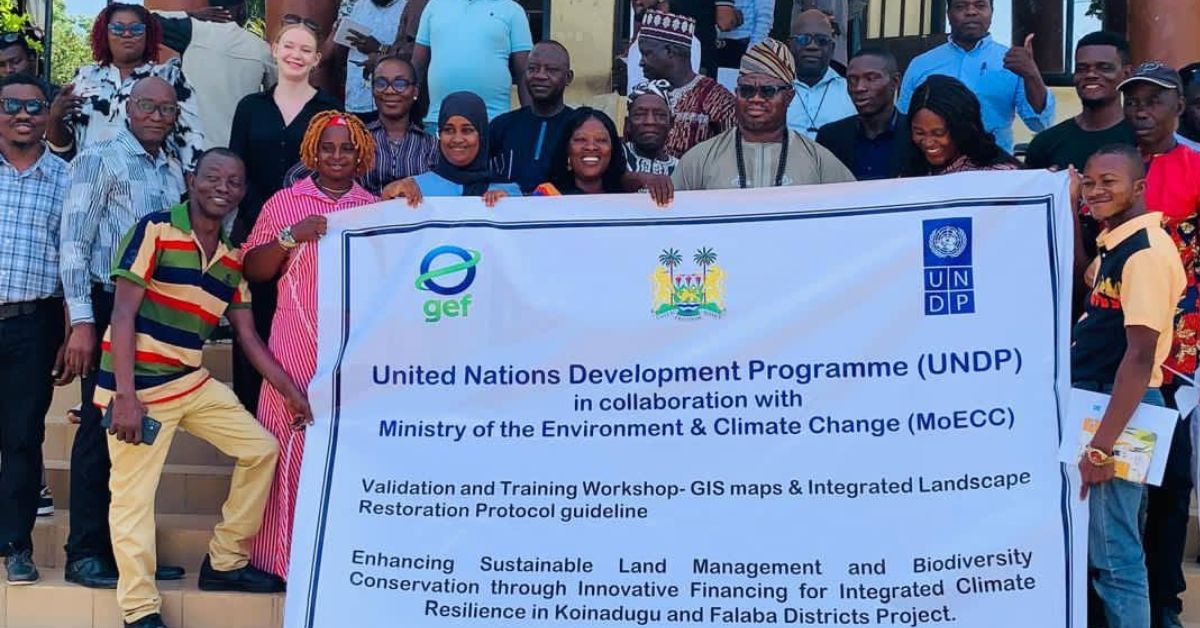
 The Ministry of the Environment and Climate Change, in collaboration with the United Nations Development Programme (UNDP), has successfully conducted a two-day Validation and Training Workshop on Geographic Information System (GIS) mapping and Integrated Landscape Management and Biodiversity Conservation.
The training workshop was held on June 17-18, 2026, at the Koinadugu District Council Hall in Kabala. The workshop forms part of the project titled “Enhancing Sustainable Land Management and Biodiversity Conservation through Innovative Financing for Koinadugu and Falaba Districts.”
The event brought together a broad spectrum of stakeholders, including representatives from the Ministry of Agriculture and Food Security, the UNDP Sierra Leone technical team and Project Management Unit, technical staff from the Environmental Protection Agency Sierra Leone (EPA-SL), Tacugama Chimpanzee Sanctuary, Conservation Society of Sierra Leone (CSSL), Paramount Chiefs, Senior Section Chiefs, and Ward Councillors.

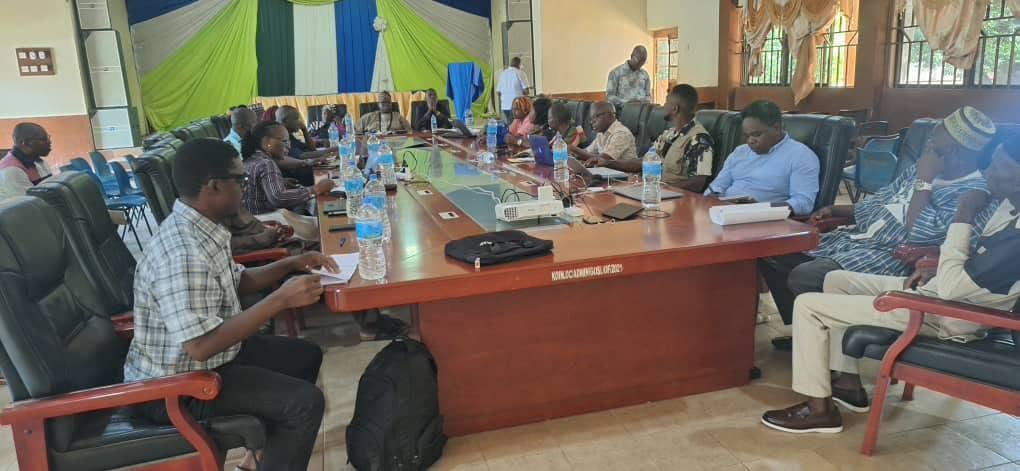

The primary objective of the workshop was to review and validate draft GIS maps and Integrated Landscape Management and Biodiversity Conservation protocols developed under the UNDP-funded initiative. The process aimed to ensure technical accuracy, strengthen local ownership, and adequately prepare stakeholders for effective project implementation.
Facilitating the sessions was International Consultant Chris Magero, who presented draft GIS maps generated through satellite data analysis and field surveys. Participants engaged in detailed discussions, using their local knowledge to cross-check and validate spatial data.
Key environmental concerns highlighted during the validation process included the degradation of the Wara Wara Mountains, the ecological state of Lake Sonfon, and the presence of previously unmapped cross-border settlements.
Throughout the workshop, participants focused on validating data related to land use patterns, degradation hotspots, forest cover, and community boundaries. The sessions also provided training on Integrated Landscape Restoration Protocol Guidelines, while stakeholders collectively identified priority intervention areas and agreed on next steps for field verification and project implementation.
The workshop concluded with significant outcomes and practical recommendations. Participants noted that the exercise has laid a strong foundation for evidence-based and community-driven implementation of the project. It also reinforced collaboration among district authorities, traditional leaders, and technical partners, an essential factor for the long-term sustainability of land management and biodiversity conservation efforts in Koinadugu and Falaba Districts.