

Government Moves to Implement Electronic Transactions Act After Seven Years

 Aminata Koroma
 The Government of Sierra Leone has launched a high-level public-private dialogue aimed at operationalising the Electronic Transactions Act 2018, a law that has remained largely unimplemented for seven years.
The July 27–28 engagement was led by the Ministry of Communication, Technology and Innovation (MoCTI) and the Ministry of Trade and Industry (MTI), with support from the International Trade Centre (ITC) and the Korea International Cooperation Agency (KOICA). It brought together government institutions, financial and telecommunications sectors, private businesses, development partners, and civil society to address regulatory gaps affecting digital commerce.
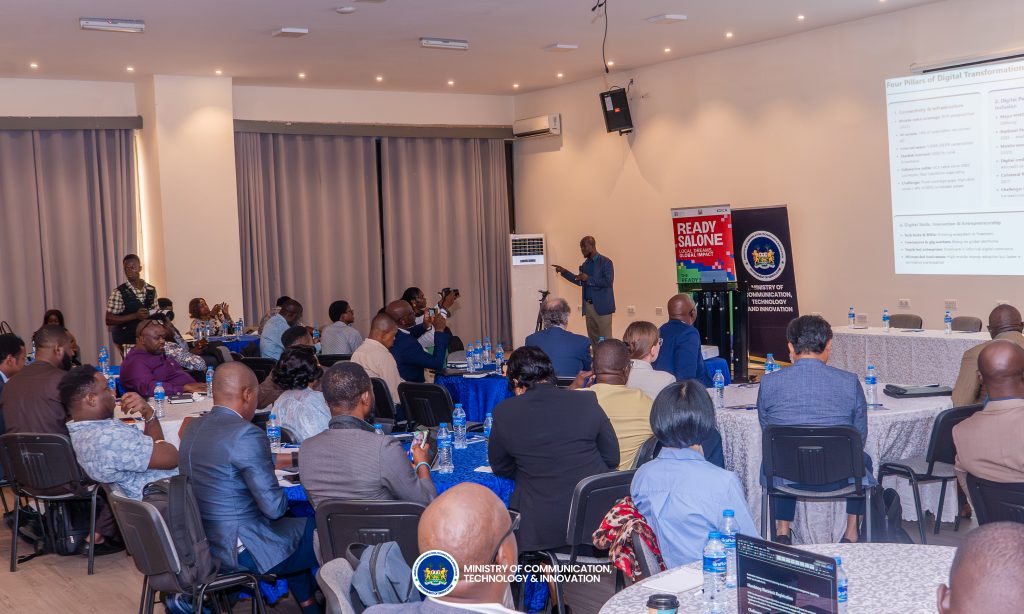

Speaking at the forum, Minister of Trade and Industry Hon. Alpha Ibrahim Sesay stressed the importance of building trust in the digital marketplace, stating that a reliable e-transactions ecosystem is vital for expanding trade, improving the ease of doing business, and unlocking Sierra Leone’s digital economy.


The Electronic Transactions Act, passed in 2018 and enacted in January 2019, provides legal recognition for electronic signatures, consumer protection, and digital communications in courts. However, key enforcement structures, including digital certification authorities, electronic evidence procedures, dispute resolution mechanisms, and penalties for violations, have not been fully established.

Through the dialogue, government ministries are working to define regulatory responsibilities and develop a roadmap for implementation. MoCTI’s Director of Policy, Planning and Research, Mr. James Kanja Cobba, highlighted the need to align legal frameworks with the rapid growth of mobile money and online commerce.
The government is expected to produce a gap analysis report, policy memorandum, and strategic roadmap to guide the transition from legislation to effective regulation. Officials believe the initiative could position Sierra Leone as a model for other African countries facing similar digital regulation challenges.

The dialogue is supported under the READY Salone project, which runs until 2028 and involves MoCTI, the Ministry of Youth Affairs, the Ministry of Trade and Industry, and the International Trade Centre.
Government officials say establishing a functional electronic transactions framework will strengthen investor confidence, protect consumers, and support inclusive economic growth as Sierra Leone expands its digital economy.