
HRCSL Brings Human Rights Services Closer to Rural Communities
 Aminata Koroma
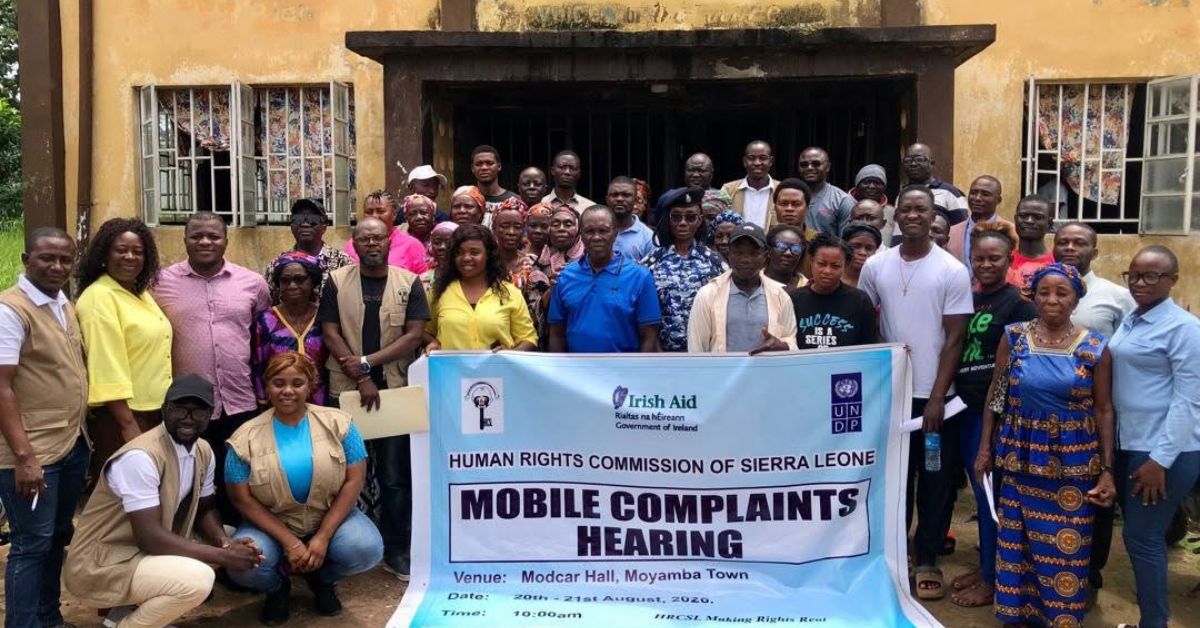
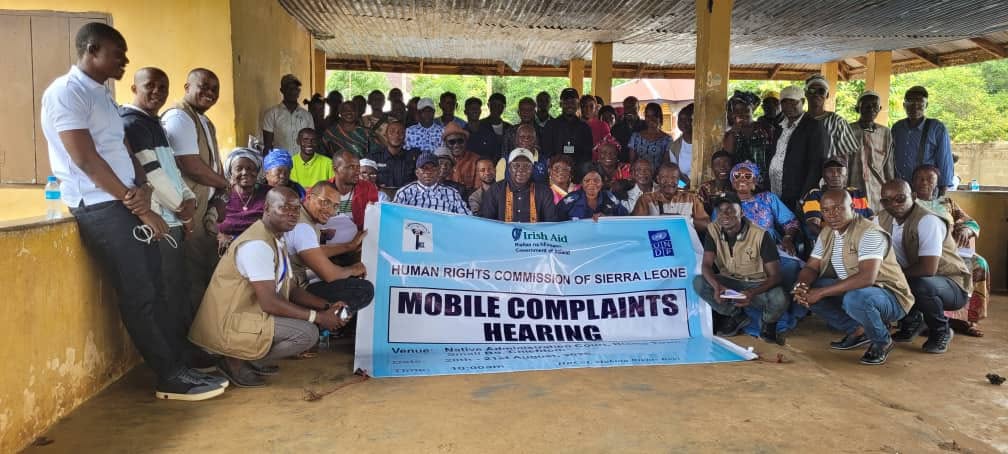
 The Human Rights Commission of Sierra Leone (HRCSL) has intensified efforts to make justice and human rights services more accessible to rural communities through a two-day Mobile Complaints Hearing in Moyamba Town and Blama Town in Small Bo Chiefdom, Kenema District.
Supported by the United Nations Development Programme (UNDP) and Irish Aid, the initiative provides residents in hard-to-reach communities with an opportunity to raise human rights concerns directly with the Commission without having to travel long distances to access its services.
Speaking during the engagement, HRCSL Commissioner Hassan Samba Yarjah stressed that human rights are closely connected to people’s everyday lives, highlighting the relationship between rights to food, health, education and employment.

He encouraged citizens not only to demand their rights but also to recognise their responsibilities to protect the rights of others and contribute to peaceful and stable communities.
“To every right, there is a corresponding responsibility,” Commissioner Yarjah emphasised.
The Commission acknowledges that despite having regional offices in Makeni, Bo, Kenema, Port Loko, Waterloo and Freetown, residents in remote chiefdoms continue to face challenges accessing its services due to distance, difficult terrain and limited institutional presence.
The Chiefdom Speaker of Small Bo Chiefdom, Ishmael S. Koroma, welcomed the initiative and urged residents to use the complaints hearing responsibly. He cautioned participants against making false allegations while encouraging them to contribute to the development of their communities.
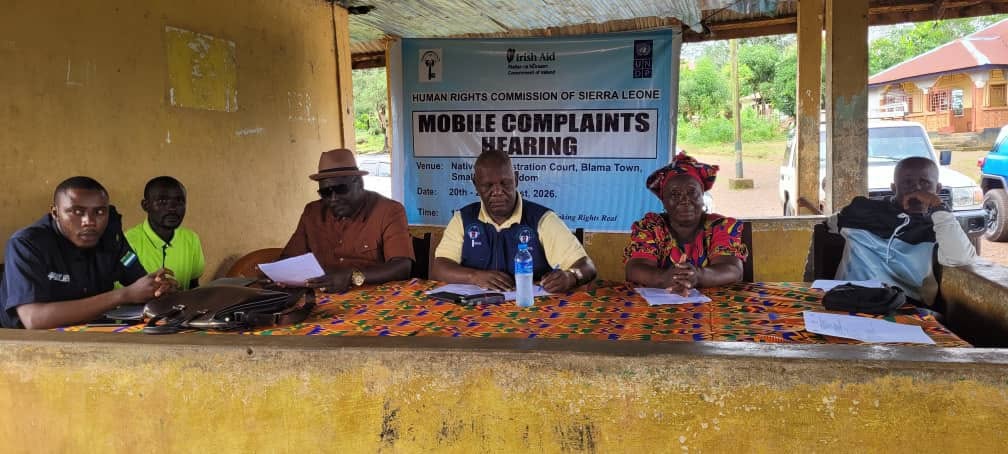
Similarly, Moyamba Town Women’s Head, Marie Mustapha, commended the Commission for prioritising the protection and promotion of women’s rights. She called for continued engagements, stressing that residents need sustained awareness of both their rights and responsibilities.
During the two-day exercise, HRCSL will receive complaints from community members, engage local authorities and stakeholders on its mandate and complaints-handling procedures, and monitor detention facilities and health centres.
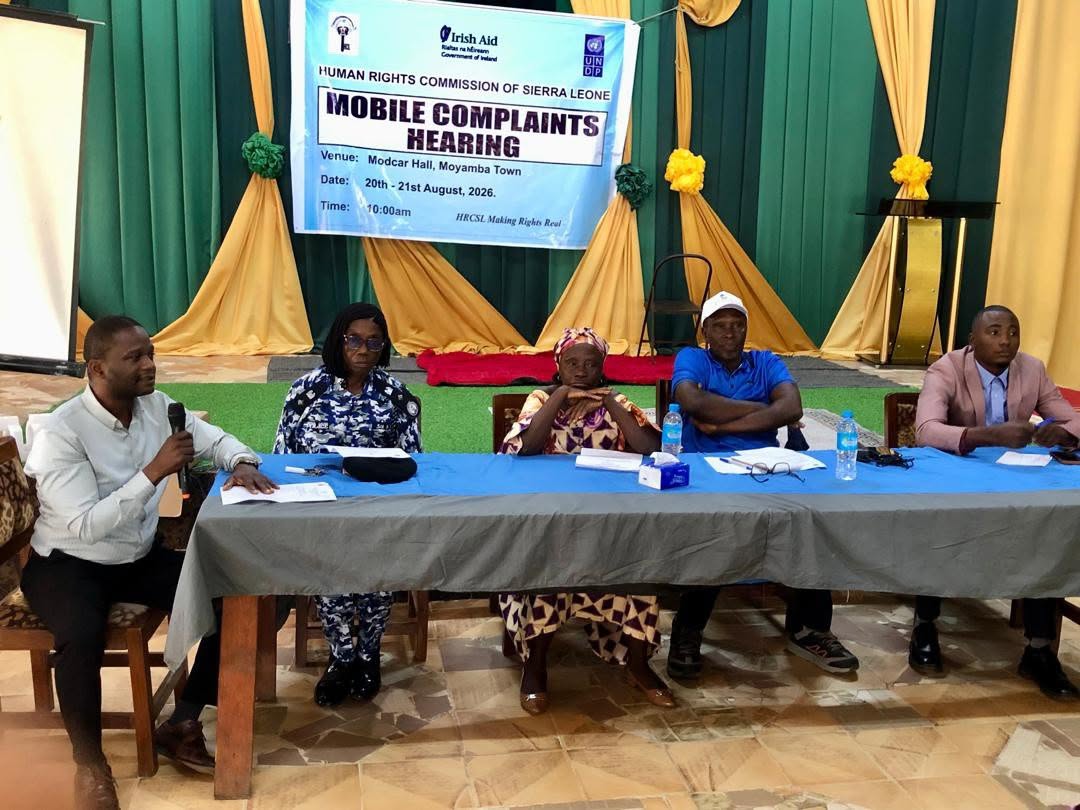
The Mobile Complaints Hearing programme, which began in 2016, forms part of HRCSL’s broader efforts to increase human rights awareness, facilitate faster resolution of complaints and close the access-to-justice gap affecting hard-to-reach communities.
Through the initiative, HRCSL continues to reinforce the message that development goes beyond infrastructure and economic growth-it must also guarantee human dignity, accountability and equal access to justice for all citizens, regardless of where they live.