

IMF Says Sierra Leone’s Public Debt Remains at High Risk of Distress Despite Economic Gains
 Tolulope Aina
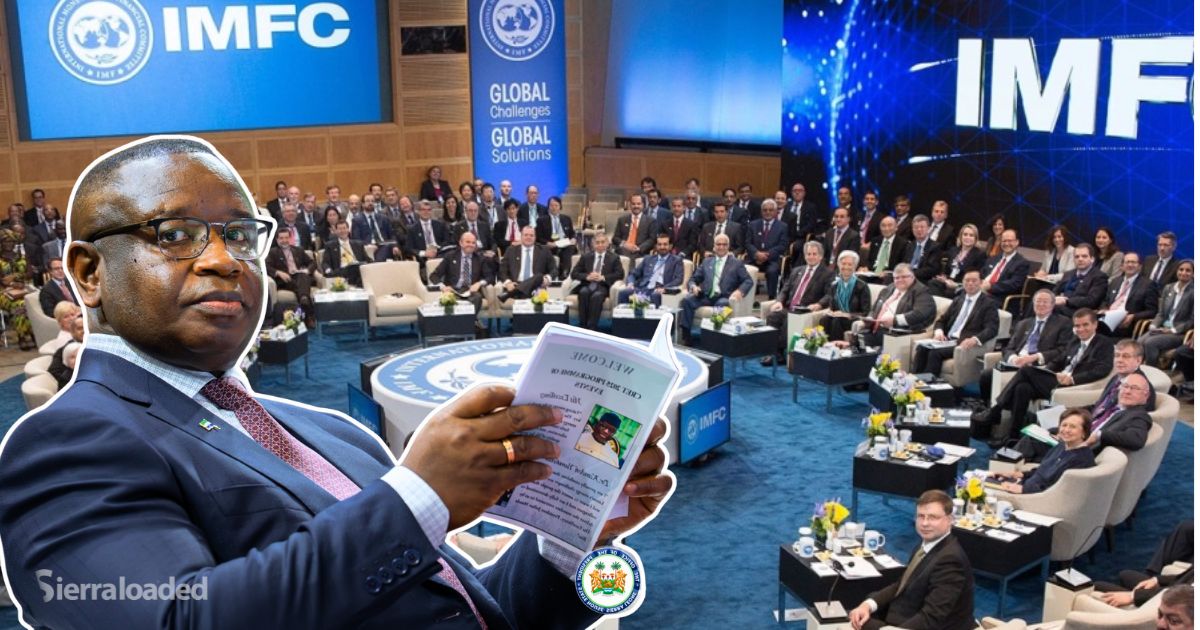
 The International Monetary Fund (IMF) has warned that Sierra Leone’s public debt remains at a high risk of distress, emphasizing the need for continued fiscal discipline and prudent borrowing.
The warning is contained in the IMF’s latest Country Report on Sierra Leone, released following the completion of the third review of the country’s Extended Credit Facility (ECF) programme. While the Fund commended the government for restoring macroeconomic stability through ambitious fiscal and monetary reforms, it cautioned that debt vulnerabilities remain significant and could worsen if reform momentum slows or external shocks intensify.
According to the IMF, Sierra Leone has made measurable progress in reducing borrowing, strengthening public finances and improving debt indicators. However, the country’s limited foreign exchange reserves, high debt servicing obligations and exposure to global economic shocks continue to pose considerable risks.

“The authorities’ policy tightening has helped stabilise the exchange rate, lower borrowing costs and inflation, and restore private credit access. However, reserve coverage remains low, and debt is at high risk of distress,” the IMF Executive Board said in its assessment of Sierra Leone’s economy.


The IMF projects that Sierra Leone’s public debt will continue on a downward trajectory over the medium term if current reforms are sustained.
According to the report, public debt is projected to decline from 49.3 percent of non-iron ore GDP in 2025 to 47.3 percent in 2026, before falling further to 31.1 percent by 2031. External public debt is also expected to reduce gradually during the same period.
While these projections reflect improving fiscal management, the Fund stressed that Sierra Leone’s debt remains vulnerable because debt servicing obligations are still consuming a significant share of government revenues.
The IMF’s Debt Sustainability Analysis concluded that the country’s debt is sustainable, but remains at a high risk of distress, meaning that while Sierra Leone is currently able to meet its debt obligations, its fiscal position remains vulnerable to adverse shocks.
“Under the baseline, the external debt service-to-revenue ratio would breach its threshold until 2028, and the present value of the public debt-to-GDP ratio would breach its threshold in 2026,” the report stated.
The Fund projects that total debt service as a share of government revenue will only fall below 100 percent by 2028, highlighting the continuing pressure debt repayments place on public finances.
Go ahead. This is what will happen to Sierra Leone government whether APC or SLPP, other opposition leaders. Foreigners will claim that the national debt is very high and very much at risk. Then, they will take all the minerals resources from the country and citizens can’t do not a damn about it. So much minerals resources but Sierra Leone still continue to borrow money from Saudi Arabia, IMF, TURKEY ,FRANCE, AMERICA, UK, etc, etc ,etc, etc. For developments. Sickening. For me this is very shameful and painful. Why the government and opposition leaders don’t sell Sierra Leone to foreigners forget about it. Just do it. The country and governments not independent but depends on those exploiters to develop Sierra Leone. This is my country, I just really can’t stand it. Please correct me if I am wrong. Government, you don’t need to borrow money to develop Sierra Leone. My opinion all of the above. Peace, respect and love. God bless Sierra Leone.