

Sierra Leone’s $480M MCC Energy Compact Yet to See Full Implementation Until September 2027
 Deborah Sorie
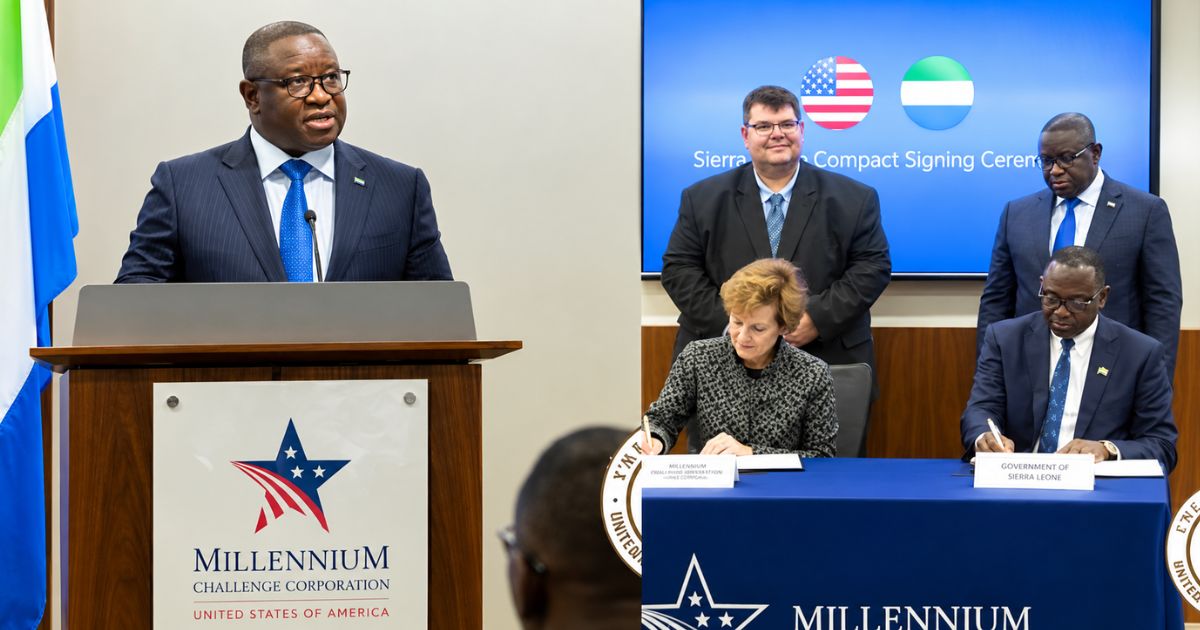
 Sierra Leone’s landmark $480 million Millennium Challenge Corporation (MCC) Energy Compact will remain in its preparatory phase for at least another year, with full implementation not expected to begin until September 2027, according to the programme’s Chief Executive Officer.
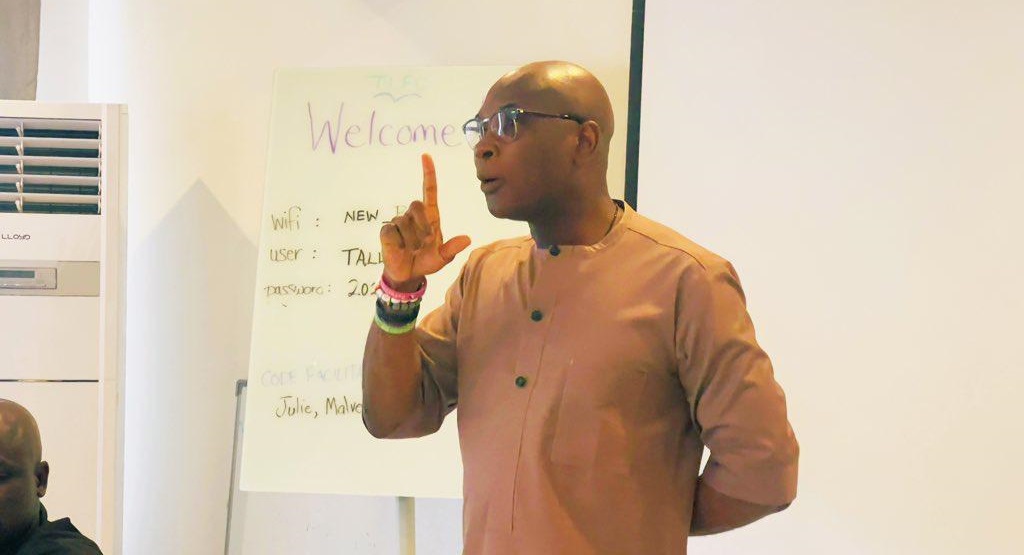
Nyede Sesay, CEO of the Millennium Challenge Account Sierra Leone (MCA-SL), disclosed the timeline during an oversight engagement with Parliament’s Committee on Energy on 15 September 2026, revealing that the programme signed in September 2024 has yet to move beyond what she termed the “pre-Entry Into Force” phase.
“I can’t come with contractors because we’re not in the implementation phase,” Sesay told the Committee. “We’re in what we call the pre-Entry Into Force.”

The pre-Entry Into Force period, running from February 2026 to September 2027, is focused on feasibility studies, detailed engineering designs, recruitment, procurement of consultants, and fulfilment of the Conditions Precedent required for the compact to become effective. Only after these requirements are met will the five-year implementation window open, extending from September 2027 to September 2032.

Sesay warned that any delays in completing studies, engineering designs, or procurement could place significant pressure on the five-year implementation timeline.
Sierralaoded reports that the compact, signed in September 2024 comprises three major projects designed to address Sierra Leone’s chronic electricity constraints. The Transmission Backbone Project, allocated approximately $226.7 million, includes roughly 244 kilometres of 225-kilovolt transmission lines connecting Newton, Bo, Kenema, and Potoru, alongside four new substations at Newton, Moriba Town, Moyamba, and Potoru.
Two electricity dispatch centres are planned—a main facility at Newton and a backup at Kingtom—intended to introduce merit-order dispatch and improve grid reliability. Additional substations are planned for Makeni and Lunsar, with the Makeni intervention expected to address electricity delivery constraints linked to the Bumbuna generation system.
The Distribution and Access Project, valued at approximately $123.6 million, aims to increase reliable electricity delivery and expand connections in underserved communities. The Power Sector Reform Project, budgeted at $50.5 million, focuses on improving the financial sustainability of the sector through capacity building for the Electricity and Water Regulatory Commission and the Ministry of Energy.
The journey to full implementation has been marked by multiple prerequisites. In May 2026, MCC’s Acting Deputy Vice President for Africa, Alicia Robinson-Morgan, visited Freetown and acknowledged progress in procurement and recruitment processes, while noting that clarity on Sierra Leone’s counterpart contribution remained a discussion point.
Land acquisition for transmission corridors has emerged as a significant operational hurdle. Government officials and MCC representatives held talks in May 2026 on resettlement frameworks, with MCC advocating for easement arrangements while Sierra Leonean authorities pushed for outright acquisition, citing weak enforcement capacity and risks of encroachment.
MCC Team Lead Yared Debele emphasised that “no construction can begin until affected persons are compensated and project corridors are cleared,” highlighting the strict five-year delivery timetable.
In April 2026, MCC’s Acting Managing Director Carrie Monahan urged the government to finalise its outstanding contributions to clear the way for the Entry into Force agreement—the final requirement before full disbursement of funds. Sierra Leone’s counterpart contribution stands at $14.2 million.
The compact represents one of the largest MCC grants ever approved for any country and is designed to address a binding constraint on Sierra Leone’s economic growth: insufficient availability of affordable and reliable electricity. Approximately 30 percent of the population has access to electricity, with less than five percent coverage in rural areas.
This is just another grave digging debts to be paid by the next-generations coming. Does Sierra Leone really need to get into this debts, upon all the minerals resources Sierra Leone have?. I don’t know what to say here. May God help Sierra Leone.