Government Unveils Digital Protection Plans for Four Critical Sectors

 Jayah Koker
 Sierra Leone, through the Ministry of Communication, Technology and Innovation (MoCTI), has unveiled draft plans to protect the digital systems powering critical national services as part of the country’s National Digital Transformation Agenda.
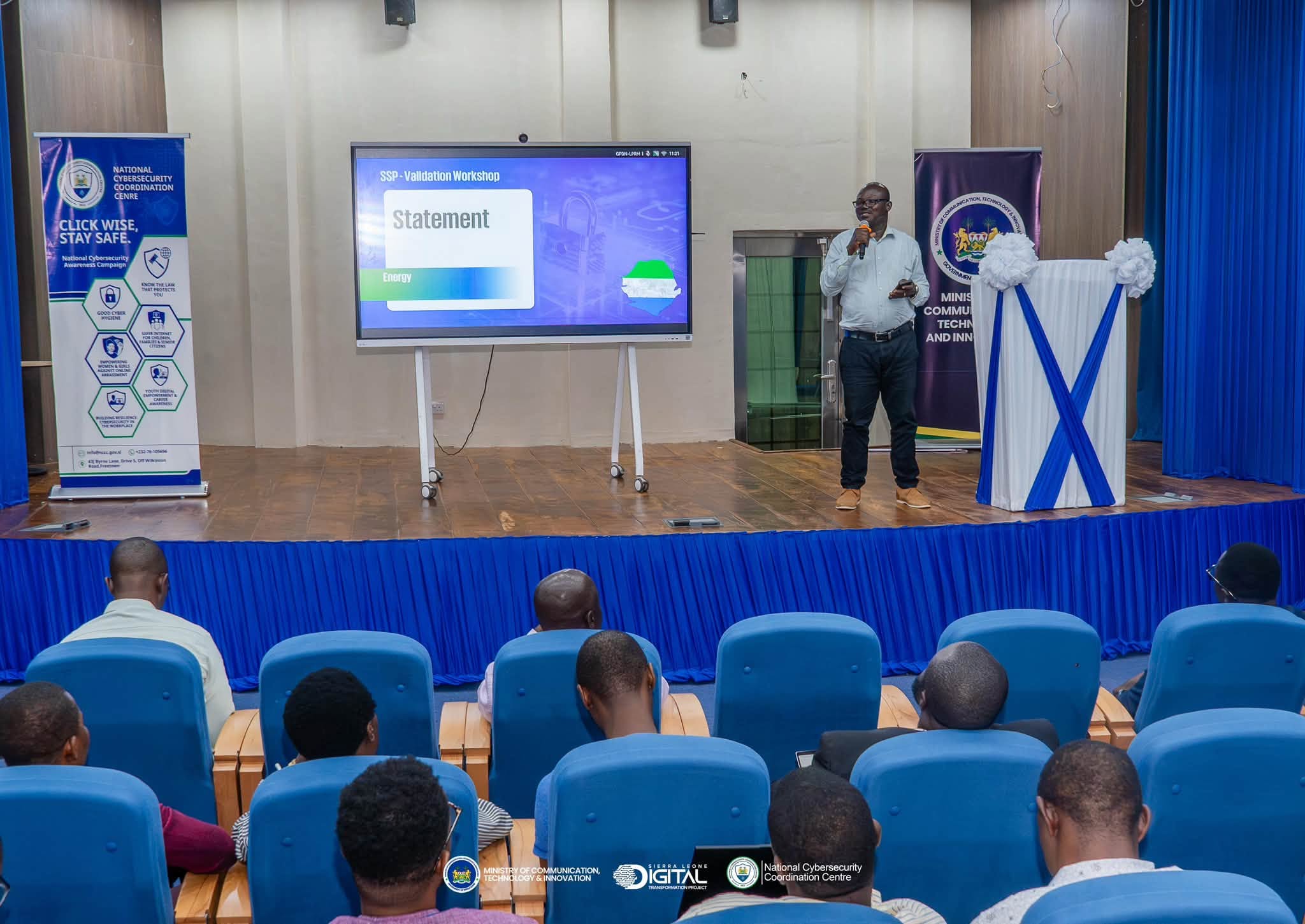
The draft Sector-Specific Critical Information Infrastructure (CII) Protection Plans cover four priority sectors: Energy, Health, Education, and Defence and Security. The plans were presented for stakeholder validation at a workshop held on Wednesday, August 26, at NatCA Tower in South Ridge, IMATT.
The initiative comes as public services increasingly rely on interconnected digital platforms, ranging from power grids and hospital records to school examination systems and national security communications. While these systems have improved efficiency and service delivery, they also face growing risks from cyberattacks, technical failures and power disruptions that could affect essential services.





Under the Cyber Security and Crime Act 2021, critical national information infrastructure, including communications, banking, utilities and emergency services, is subject to mandatory protection.
To meet this requirement, the National Cyber Security Coordination Centre (NC3) and MoCTI, with support from the World Bank through the Sierra Leone Digital Transformation Project and technical expertise from KPMG, developed the sector-specific protection plans.
Officials at the workshop emphasised the importance of strengthening resilience against cyber threats to ensure continuity of essential services and protect the gains made under Sierra Leone’s digital transformation efforts.