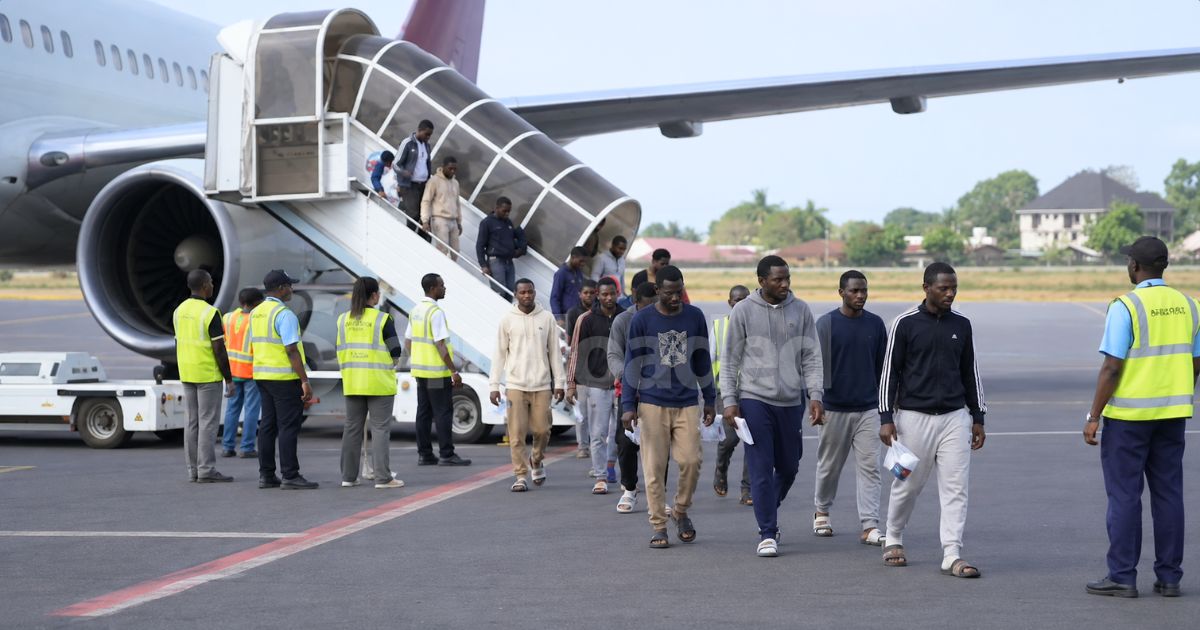
The third group of third-country nationals deported from the United States has arrived in Sierra Leone under the Third Country National Agreement (TCNA), landing at Freetown International Airport on July 31, 2026.
The latest batch comprises 10 ECOWAS nationals, including six Ghanaians, one Liberian, one Beninese, one Nigerian, and one Togolese. Authorities confirmed that nine of the arrivals are male and one is female.
Upon arrival, the individuals underwent mandatory immigration, health, and security screening coordinated by multiple state institutions, including the Sierra Leone Police, the Office of National Security, the Sierra Leone Immigration Department, the Ministry of Health, and the Ministry of Foreign Affairs and International Cooperation. Following the completion of these procedures, the group was transferred to Kenvah Solutions (SL) Ltd, the private firm contracted by the government to manage reception and care services under the agreement.
With this latest arrival, Sierra Leone has now received a total of 32 individuals under the TCNA since the programme commenced in May 2026. Of these, 22 from the first and second groups have already been repatriated to their respective countries after completing documentation and consular processes.
The agreement allows Sierra Leone to host up to 25 deportees per month and a maximum of 300 annually. It is supported by a US$1.5 million grant from the United States government to cover operational and humanitarian costs associated with the programme.
Kenvah Solutions continues to oversee reception, temporary accommodation, welfare support, and case management for the deportees while working with government agencies and foreign missions to facilitate timely onward repatriation. Authorities have maintained that all individuals are being treated in accordance with humanitarian standards and with respect for their dignity.
The TCNA, signed earlier in 2026, is intended as a structured and temporary arrangement to ensure safe transit for deportees pending their return to their home countries. However, the agreement has generated debate among legal experts and human rights advocates, who have raised concerns about its legal framework and broader implications.
Government officials have defended the arrangement as part of Sierra Leone’s bilateral cooperation with the United States on migration management, noting that similar third-country deportation agreements exist between the U.S. and several other countries across Africa, as well as in Latin America, the Caribbean, and Europe.


 Kanja Sesay