

Why Alfred Peter Conteh May be the Best Thing to Happen to the APC in Recent Times

 Sorie Abubakar
 The latest ruling by High Court Judge Justice Adrian Fisher against the suspended leadership of Sierra Leone’s All People’s Congress (APC) is more than another episode in the party’s long-running internal dispute.
It is the latest chapter in a question that has followed the APC for years: who ultimately owns the party — its leadership or its members?
For Alfred Peter Conteh, that question has been at the heart of his political journey.

Conteh’s rise within the APC is not simply that he has repeatedly challenged party leaders in court. His broader argument has been that the party should be governed by its constitution, that leadership should have a legitimate mandate and that ordinary members should have a meaningful voice in deciding the party’s future.

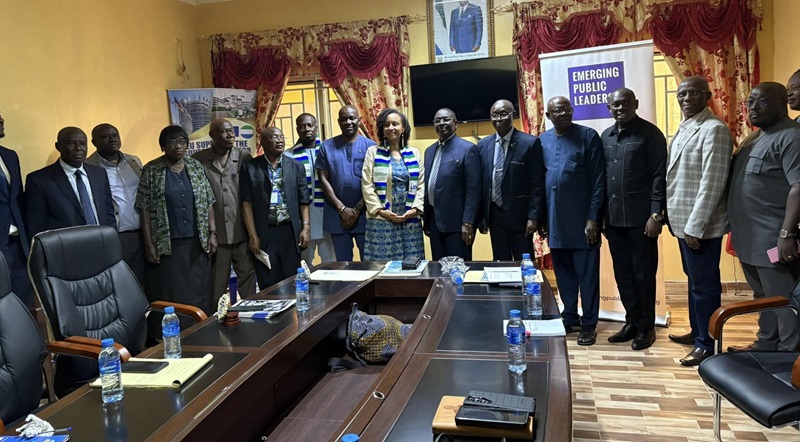
That argument can be traced back to the era of the National Reformation Movement, or NRM.
From reform movement to courtroom
The NRM emerged as a powerful vehicle for demands for change within the APC. Among its concerns were the controversial selection provisions, the concentration of power in party structures, the separation of the offices of national chairman and president, term limits and stronger mechanisms for internal elections.
Conteh was part of that reform movement. He had previously established an APC Reformation Movement in the diaspora and later became vice-chairman of the NRM.
His stated objective was reform rather than destruction of the party.
To his critics, Conteh’s interventions have at times appeared confrontational or factional. To his supporters, however, they represent a consistent attempt to challenge arrangements that they believe have limited participation by ordinary party members.
When the NRM’s initial legal challenge was withdrawn following negotiations, Conteh pursued a separate case. That decision would have consequences far beyond the immediate dispute.
The 2021 injunction
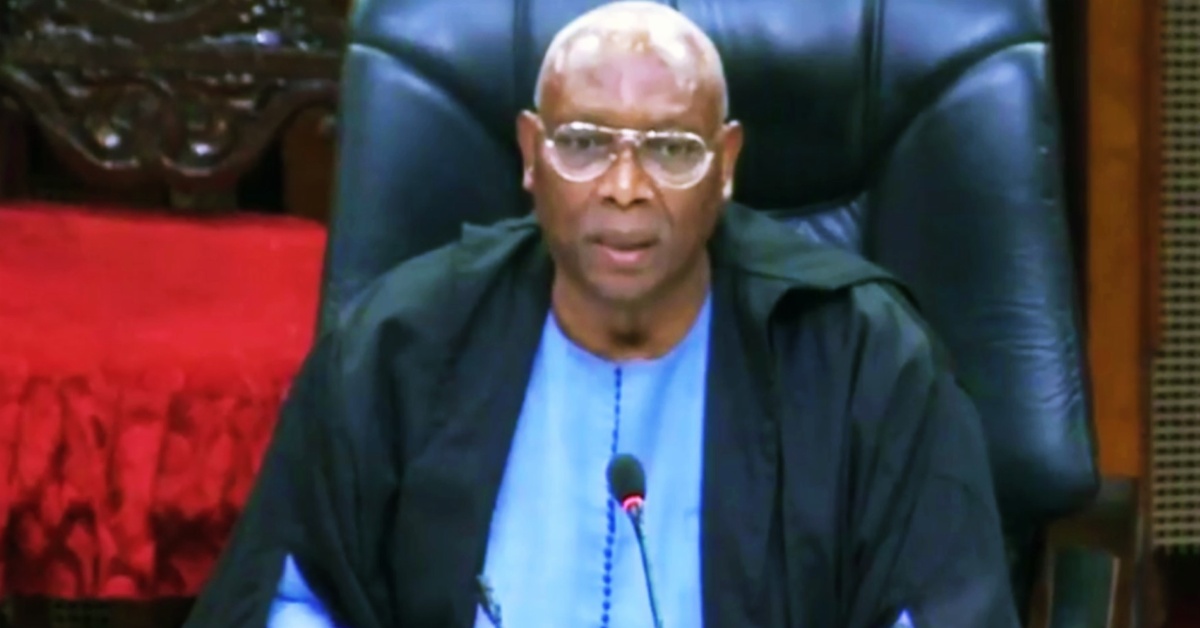
On 26 February 2021, Justice Adrian Fisher granted an interim injunction restraining the APC leadership from organising conferences, conventions, meetings or rallies intended to select or elect delegates or candidates to the party executive.
The court action brought the APC’s internal governance crisis into the legal arena.
Justice Fisher subsequently identified serious issues concerning the legitimacy and tenure of some party officials. But the more consequential development was what followed.
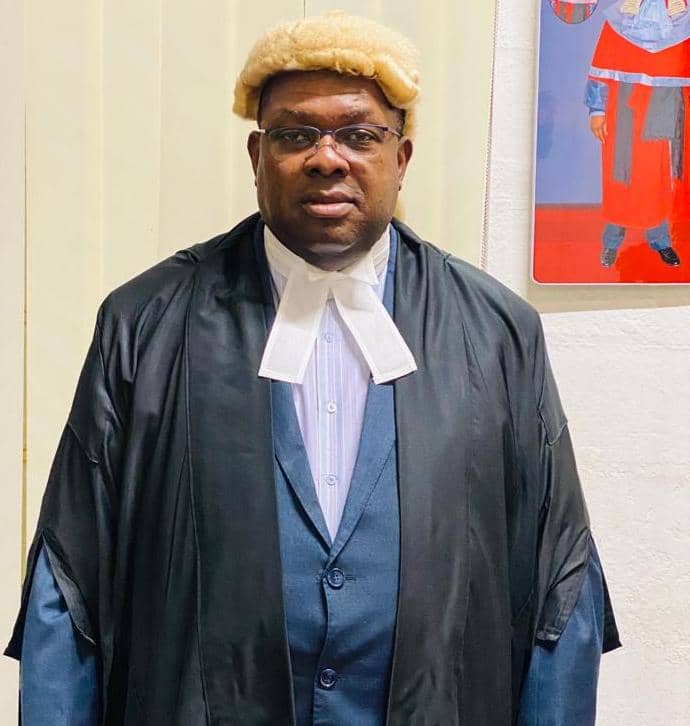
Rather than allowing the injunction to leave the party permanently paralysed, the court varied the order to facilitate the process of adopting a new constitution.
The underlying principle was significant: if the APC was prepared to reform its internal structures along democratic lines, that process should be allowed to proceed within the law.
This is arguably where Conteh’s challenge became bigger than the individual who brought it.
It helped turn a leadership dispute into a broader institutional debate about the kind of political party the APC wanted to become.
From confrontation to constitutional reform
The subsequent process led to an Emergency National Delegates Conference in Makeni in September 2021, where a proposed new constitution was considered and adopted, with delegates making their own contributions.
The reform process did not end there.
The Political Parties Regulation Commission (PPRC) later received objections concerning various provisions of the proposed constitution. Those concerns included representation, delegate allocation, youth and women’s participation, the role of former office holders, internal elections, disciplinary procedures and the rights of party members.
That is important because democratic reform is rarely about changing one clause or replacing one group of leaders.
It is about creating institutions in which different interests can be heard.
Seen from that perspective, Conteh’s legal battle was not simply about winning a case against the APC establishment. It helped force the party to confront questions that political organisations often prefer to avoid:
Who gets represented? Who gets to vote? Who can challenge leaders? How long can leaders remain in office? And what happens when the constitution is ignored?
These are questions of inclusion, not merely questions of personalities.
The same question returns in 2026
There is a striking circularity to the current dispute.
The constitutional principles that emerged from the reform period are now being invoked against the leadership structures that operated under that new framework.
On 28 August 2026, Justice Fisher ruled on an application brought by Alfred Peter Conteh and Mohamed Sheridan Kamara challenging the continued tenure of the Yansaneh-led APC executive.
The court held that the executive’s three-year mandate had expired on 13 February 2026 and that its members were therefore no longer mandated to remain in those positions.
Justice Fisher also ordered Alhaji Osman Foday Yansaneh and Secretary General Lansana Dumbuya to provide a detailed financial account of APC funds held in other accounts.
The judgment further rejected the argument that an extension associated with the PPRC could override the authority of the APC Constitution, finding that the Commission did not have the statutory power to transfer the party’s management authority in the circumstances before the court.
The thrust of the ruling therefore goes beyond the immediate leadership dispute.
It returns the APC to the same fundamental question raised five years earlier:
Does the constitution govern the party, or does the leadership govern the constitution?
A constitutional legacy rather than a personal one
It would be wrong to suggest that Conteh alone created the APC’s democratic constitution.
The NRM, reformers within the party, constitutional drafters, delegates, lawyers, the courts, the PPRC and many other APC members all contributed to the process.
But it would be equally difficult to tell the story of the APC’s constitutional transformation without acknowledging Conteh’s role.
His challenge helped create pressure for institutional reform. And the court’s subsequent intervention helped provide space for a new constitutional process to take place.
That may ultimately be his most important contribution.
Conteh’s political legacy, therefore, may have less to do with any particular court victory than with the principle behind his repeated challenges: no individual should be more powerful than the constitution, and no ordinary member should be so insignificant that their demand for inclusion can simply be dismissed.

Why that matters to the APC
For a political party that seeks national power, internal democracy is not a luxury.
An opposition party cannot credibly demand accountability, constitutionalism and respect for institutions from a government while tolerating the opposite principles within its own organisation.
The APC’s credibility depends partly on whether it can practise internally the democratic values it promises to uphold nationally.
That is where Conteh’s contribution may prove significant.
His interventions have kept alive debates about term limits, elected versus selected officials, delegate representation, internal elections, separation of party offices, constitutional supremacy, financial accountability and the right of ordinary members to participate in determining the party’s direction.
None of this means Conteh is necessarily right on every issue. Nor does it mean his methods should be beyond scrutiny.
But democratic politics is often strengthened by individuals willing to challenge established power.
The APC’s journey from the NRM era, through the 2021 injunction and constitutional reform process, to the latest 2026 ruling demonstrates a simple truth: political parties do not become democratic merely by describing themselves as democratic. Democracy has to be built into their institutions and defended when those institutions are tested.
That is perhaps why Alfred Peter Conteh can, from the perspective of his supporters, be described as one of the best things to have happened to the APC in recent times.
His contribution is not simply that he has challenged leaders. It is that he has repeatedly challenged the idea that leadership should exist without limits, accountability or meaningful participation by members.
At its best, his politics represents inclusion over exclusion, constitutionalism over personality, accountability over impunity and democratic participation over permanent incumbency.
And if that is the standard by which his political contribution is ultimately judged, Alfred Peter Conteh may well deserve to be remembered as a true democrat and an inclusive APC politician — someone whose battles have not merely been about who leads the party, but about creating a party in which its members genuinely have a say.
Aluta-continua
God bless sierra leone, God bless the APC and god bless Mr. Alfred Peter Conteh