
SLPP Official Says Presidential Term Limits Should Remain Open to National Debate
 Alusine Ahmed Kargbo
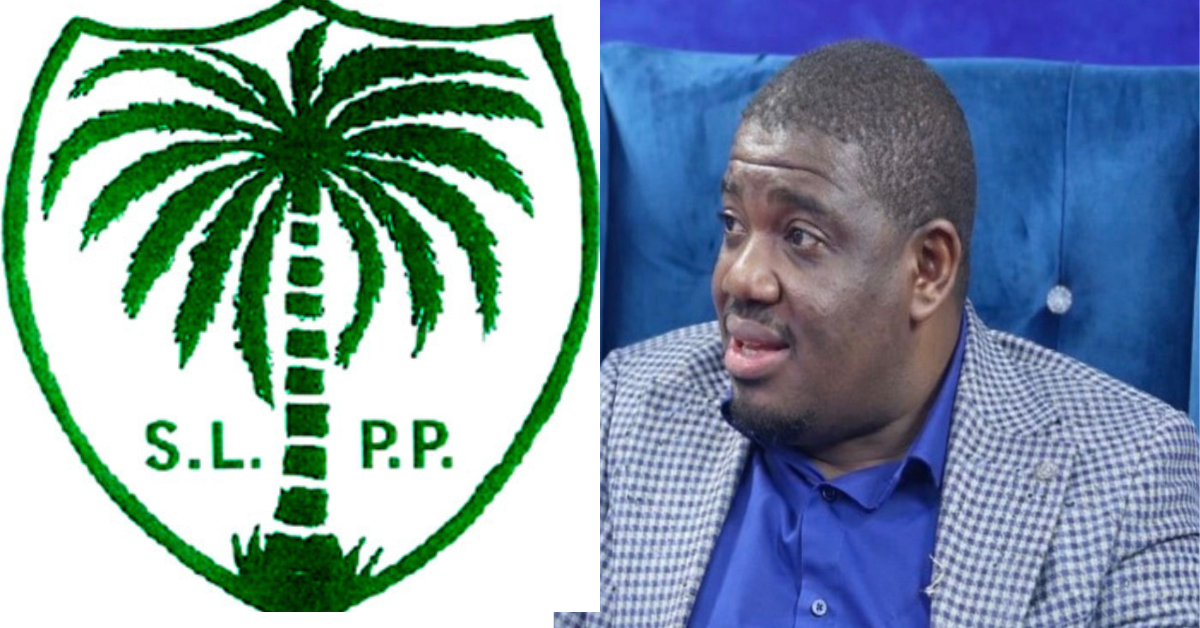
 SLPP National Publicity Secretary Moses Mambu has defended calls for a national debate on presidential term limits, citing election costs and the need for broader constitutional discussion.
Mambu made the comments during a virtual interview with Liberty Online TV, where he argued that considering changes to presidential tenure should not automatically be dismissed as an illegitimate political discussion.
He said Sierra Leone should examine the financial demands of holding elections at regular intervals, particularly the resources political parties and independent candidates must mobilise to compete.

Mambu argued that the country should therefore keep constitutional reform on the national agenda, including a discussion about whether the existing presidential term framework should be changed.

He referred to other African countries, including Liberia, Kenya and Ivory Coast, during his argument for examining different approaches to presidential tenure.
However, the examples do not establish that those countries have identical constitutional arrangements to Sierra Leone, and Mambu’s comments were presented as part of his broader argument rather than as evidence of a uniform African model.
Sierra Leone’s 1991 Constitution currently provides that no person may serve as president for more than two five-year terms.
The country’s Electoral Commission is also preparing for the next general elections in 2028, with its official website describing current electoral preparations in connection with the 2028 polls.
Mambu’s remarks come after controversy surrounding his earlier reference to both 2028 and 2030 when discussing the SLPP’s prospects in the next election cycle. Sierra Leonean media subsequently reported that the 2030 reference had generated questions about whether the election timetable could change.
In the Liberty Online TV discussion, Mambu pushed back against treating the broader term-limit debate as a joke or political distraction. He argued that Sierra Leoneans should be able to discuss constitutional reform as a national issue.
He was also asked whether President Julius Maada Bio would permit or encourage such a discussion.
Mambu defended Bio’s democratic credentials, arguing that the president had previously placed national interests ahead of personal political considerations and had peacefully handed over power after his earlier period in government.
Mambu’s comments, however, do not by themselves establish that the SLPP or the government has formally adopted a policy to extend the president’s tenure.
Any change to the constitutional limit would require a lawful constitutional process. The existing framework remains a maximum of two five-year presidential terms.
The debate consequently raises two separate questions: whether Sierra Leone should consider constitutional changes to presidential tenure, and whether such changes should be pursued while the country prepares for its next scheduled election cycle.
For now, the Electoral Commission continues to identify 2028 as the country’s next general-election horizon, while Mambu’s comments have added renewed political attention to the question of whether presidential term limits should remain unchanged.
Ernest Koroma in his presidency increase salaries for lectures three times and complete the payment of severance benefit to the northern polytechnic when it was upgrade to a university, and president Bio has declared MMTC and Eastern polytechnic to a university, uptill now they are paying severance benefit in bits, some colleagues have died without getting a single penny what a shameful practice to the SLPP government, let it be known that our vote will be going to another person since you have failed us.