


 2 Comments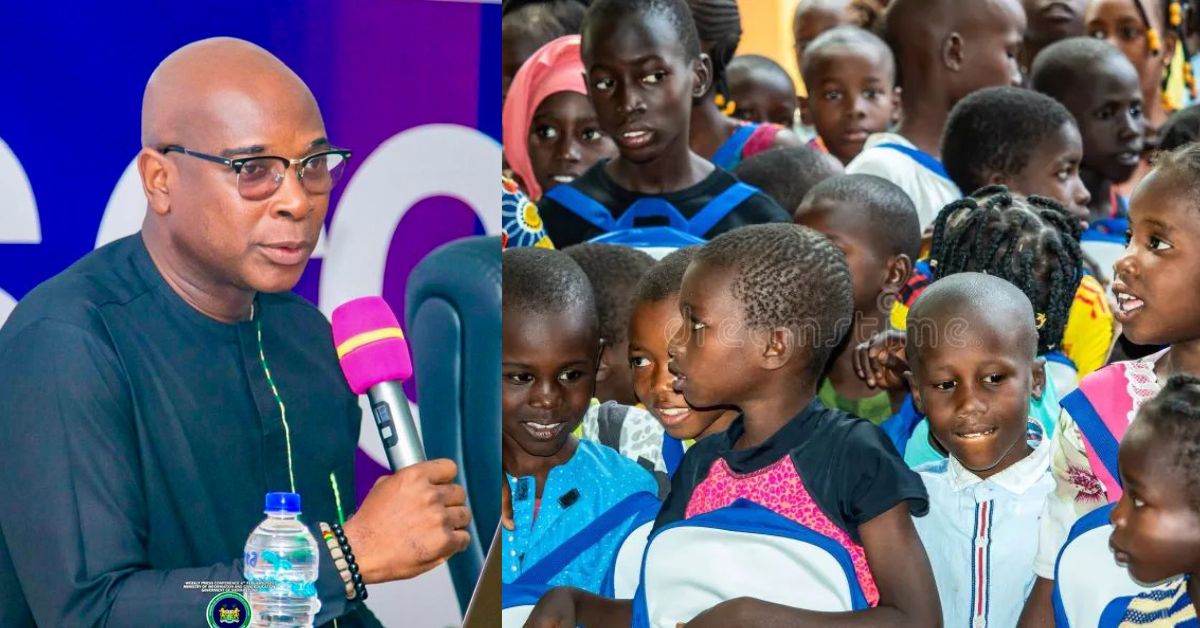
The Ministry of Basic and Senior Secondary Education (MBSSE) has taken another bold step toward advancing inclusive education in Sierra Leone with a new initiative aimed at reintegrating 120,000 out-of-school children into the formal education system.
With support from Education Above All (EAA) and funding from the World Bank, the programme targets boys and girls aged 7 to 14 who, for various reasons, have been unable to attend school. The initiative underscores the government’s commitment to ensuring that no child is left behind in the pursuit of quality education.
Recognizing education as a fundamental human right, the MBSSE said the programme is rooted in the belief that every child, regardless of background, deserves the opportunity to learn.

By focusing on out-of-school children, the ministry seeks to address a pressing challenge in Sierra Leone’s education sector providing learning opportunities to those most at risk of educational exclusion, poverty, and limited skills development.
To accurately locate and support these children, the ministry will implement a comprehensive identification and data collection strategy. Enumerators will visit communities, including slums, markets, and public spaces, to identify out-of-school children.
The exercise will be conducted in close collaboration with local stakeholders such as Paramount Chiefs, Section Chiefs, Councillors, Education District Directors (DDs), School Quality Assurance Officers (SQAOs), and Free Quality School Education (FQSE) Coordinators.
The Ministry has also introduced a toll-free hotline (8060) to encourage citizens to report cases of children not attending school, thereby promoting community participation and shared responsibility in advancing the national education agenda.
Running until December 2027, the reintegration programme will leverage the existing teaching workforce, with primary school teachers conducting lessons for out-of-school children after regular school hours using available school facilities.
To ensure effective learning, MBSSE has designed an accelerated curriculum that compresses six years of primary education into a three-year programme, divided into three progressive levels:
Level 1: Primary 1–2
Level 2: Primary 3–4
Level 3: Primary 5–6
This structure will allow learners to catch up efficiently and transition smoothly into mainstream schooling.
The MBSSE emphasized that the reintegration of 120,000 out-of-school children is not only an educational initiative but also a social investment in Sierra Leone’s future.
By bridging educational gaps and promoting inclusivity, the Ministry reaffirmed its commitment to transforming lives through education and ensuring that every child, regardless of circumstance, has a fair chance to succeed.


Thank you for your intentions is a good one, hope the implications will not be a white elephant. How is the school feeding program? In the Bagbo chiefdom particular momajo schools have not received anything yet from the ministry and the school CTA has requested the payment of Nle 25 per child.
Thanks to the ministrie and the donor’s for such development program, indeed every child suppose to get access to education. Many well to do people are going through a lot today because, of lack of education, which they have the financial strength, connections and more to create more employment and investment, but education limit them to do so. Am feeling pain in a community am working at Bathbai Village, Ribbi Chiefdom, Moyamba District as am seeing more than 200 people without going to school, because of uniforms, books ( school materials). Only few have the opportunity to attend schooling,, with this initiative I hope this children’s will be capture to save their future.